Our Pick: Osprey
Check price →The Best Backpacking Packs (2026)
The pack is the one piece of gear that touches everything else: it carries your shelter, your sleep system, your food, and your mistakes. We ranked the 2026 field of 60 to 65 liter haulers by the thing that actually decides a good trip, how a loaded pack carries at mile ten, from the suspended-mesh benchmark most fitters reach for first to the $90 entry pack that gets beginners onto the trail at all.
By The WorldHike Gear Desk · ~14 min read · Updated 2026-07-02
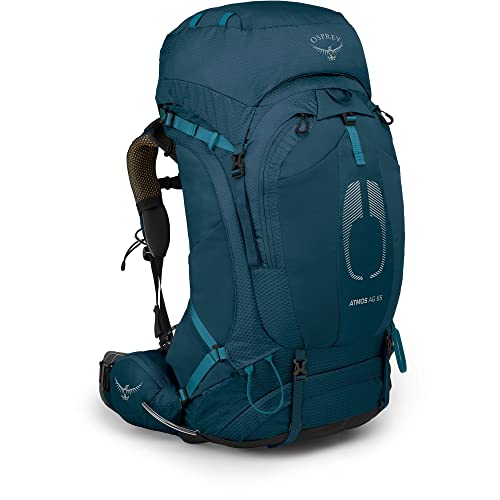
Osprey Atmos AG 65
Osprey
The benchmark comfort hauler: AntiGravity suspended mesh that makes a real load carry lighter than it is.
Check price★ Our Top Pick
Best Overall
Osprey Atmos AG 65
The benchmark comfort hauler: AntiGravity suspended mesh that makes a real load carry lighter than it is.
Not sure yet? Compare all 6 picks below ↓
A backpacking pack has a strange job: it needs to make 30-plus pounds feel like less than it is, for hours, without wrecking your shoulders or your hips. The technology that does this is suspension, the frame, backpanel, hipbelt, and harness that move weight off your shoulders and onto your hips, and it is the single biggest thing your money buys as you move up the price ladder. A $340 pack and a $90 pack can hold the same gear. They will not carry it the same way, and by the last miles of a long day the difference is not subtle.
The 60 to 65 liter class this guide covers is the workhorse of backpacking: big enough for multi-day trips with three-season gear, small enough to keep you from packing your fears. Within it, the picks below split along honest lines. The premium tier, Osprey's Atmos and Aether and Gregory's Baltoro, buys sophisticated suspension and years of refinement. The middle buys most of that comfort with a simpler feature set. The budget tier buys a functional harness and an open trailhead door, which for a beginner is the only spec that matters. We tell you which trade each pack makes, because a pack that is wrong for your load or your torso is wrong at any price.
One disclosure, plainly and up front: no brand paid to appear here, no placement was sold, and no manufacturer saw this guide before publication. WorldHike is independent. Some links go to Amazon, and if you buy through one we may earn a small commission at no extra cost to you; that never moves a ranking. Every capacity, feature, and design claim in this guide is a listed or claimed manufacturer figure from our verified dataset, hedged as such throughout. We do not invent measurements, and when we have not carried something, we do not pretend we have.
The short version
- Our pick is the Osprey Atmos AG 65 (~$340): the benchmark comfort hauler, built around Osprey's AntiGravity suspended-mesh suspension. The women's counterpart is the Aura AG.
- For genuinely heavy loads, the Gregory Baltoro 65 (~$360) with its FreeFloat suspension is the Atmos's great rival and the heavy-hauler pick. Women's version is the Deva.
- The Osprey Rook 65 (~$230) is the value sweet spot: Osprey build quality with a simpler feature set for about $110 less than the Atmos.
- The Kelty Coyote 60-105 (~$190) is the budget multi-day pick, with an adjustable torso that fits growing hikers and shared households.
- The TETON Sports Scout 65 (~$90) is the honest entry point: not a premium carry, but a real trailhead door for a tenth-tier price.
- Fit beats features, always. Torso length and hipbelt fit determine comfort more than any spec, so measure before you buy any of these.
| Pack | Best for | Volume | Suspension (listed) | Price |
|---|---|---|---|---|
| Osprey Atmos AG 65 | Our Pick | 65 L | AntiGravity suspended mesh | ~$340 |
| Gregory Baltoro 65 | Best Heavy Hauler | 65 L | FreeFloat | ~$360 |
| Osprey Rook 65 | Best Value | 65 L | AirSpeed-style ventilated frame | ~$230 |
| Kelty Coyote 60-105 | Best Budget Multi-Day | 60-105 L range | Adjustable torso | ~$190 |
| TETON Sports Scout 65 | Best Cheap Entry | 65 L | Basic internal frame | ~$90 |
| Osprey Aether 65 | Best Burly Osprey | 65 L | Heavy-load Osprey harness | ~$375 |
The 2026 shortlist at a glance. Volumes and suspension names are listed manufacturer figures; prices are approximate street figures from our verified dataset, checked July 2026.
01 · Best Overall
Our PickOsprey Atmos AG 65
The benchmark comfort hauler: AntiGravity suspended mesh that makes a real load carry lighter than it is.
Field check: 65 L (listed) · AntiGravity suspended-mesh suspension · the comfort benchmark the class is judged against
Every category has one product that fitters reach for first. In 65 liter packs, this is it. The Atmos AG 65 is built around AntiGravity, Osprey's listed suspended-mesh design in which a single tensioned mesh panel spans the entire back and wraps into the hipbelt, so the pack rides against a ventilated trampoline rather than pressing foam flat against your spine. The design goal is to spread load across the whole contact area and keep air moving behind you, and it is the feature this pack's entire reputation stands on. Years of the Atmos being the default recommendation at gear desks did not happen by accident.
The rest is mature, refined Osprey: a listed 65 liters that swallows a real multi-day kit, the adjustability to dial fit, and the build quality behind the brand's famous All Mighty Guarantee reputation. Women's-specific fit lives in the Aura AG, the same design built on a women's chassis. At about $340 it is a considered spend, but it is the least risky one in the class: the Atmos AG 65 is the pack we would hand most backpackers, most of the time, for most trips. That is what a benchmark means.
- Volume
- 65 L (listed)
- Suspension
- AntiGravity suspended mesh (listed)
- Women's version
- Osprey Aura AG
- Best use
- Multi-day backpacking, typical loads
- Price
- ~$340
What we like
- AntiGravity suspended mesh is the class benchmark for carry comfort
- Excellent back ventilation from the trampoline-style panel
- Mature, refined design with strong fit adjustability
- The default recommendation for good reason
Worth noting
- About $340, a considered spend
- Happiest under typical loads; heavy haulers should look at the Baltoro or Aether
- Feature-rich design carries some strap-and-pocket complexity
Who should buy it: Buy the Atmos AG 65 if you want the class-standard carry for regular multi-day backpacking and are ready to invest in the pack you will keep. It suits hikers with typical three-season loads who prize all-day comfort and back ventilation. Women should look at the Aura AG, the same design on a women's-specific chassis.
What we don't like: About $340 is real money, and the suspended-mesh design that makes it comfortable also makes it happiest under typical loads rather than expedition-heavy ones. The curved backpanel eats a little effective packbag depth, and feature-rich Osprey design brings more straps and pockets than minimalists want to manage.
Bottom line: The Atmos AG 65 is the pack the rest of this guide is measured against. Its AntiGravity suspension, a continuous suspended mesh that runs from the top of the backpanel through the hipbelt, is Osprey's signature answer to the only question that matters: how does a loaded pack feel five hours in? The consistent answer, and the reason this pack has anchored the category for years, is lighter than it has any right to.
02 · Best Heavy Hauler
Best Heavy Hauler
Gregory Baltoro 65
The Atmos's great rival: FreeFloat suspension built to make heavy loads carry like manageable ones.
Field check: 65 L (listed) · FreeFloat suspension (listed) · the heavy-load comfort rival to the Atmos
The Atmos versus Baltoro debate is the Coke versus Pepsi of backpacking, and the honest tiebreaker is your load. The Baltoro 65 is built around FreeFloat, Gregory's listed suspension in which the hipbelt panels pivot independently and the harness flexes with your gait instead of fighting it. The engineering intent is specific: when the pack is genuinely heavy, week-long food carries, bear canisters, group gear, winter kit, the load stays glued to your hips through uneven terrain rather than swaying against your rhythm. That load-coupled stability is the Baltoro's entire personality, and it is why gear desks send heavy packers here.
The rest of the package is classic Gregory: burly build, a full feature set, and fit refinement from one of the two brands that have spent decades trading blows at the top of this category. The women's counterpart is the Deva, the same heavy-hauler philosophy on a women's chassis. At about $360 it is the most expensive pack in this guide except the Aether, and it is worth it for exactly one kind of hiker: the one whose pack is never light. If that is you, the Baltoro 65 is your benchmark.
- Volume
- 65 L (listed)
- Suspension
- FreeFloat dynamic suspension (listed)
- Women's version
- Gregory Deva
- Best use
- Heavy multi-day and expedition-style loads
- Price
- ~$360
What we like
- FreeFloat suspension keeps heavy loads coupled and stable (listed design)
- The heavy-hauler benchmark and the Atmos's only true rival
- Burly, full-featured Gregory build
- Women's-specific counterpart in the Deva
Worth noting
- About $360, the second-priciest pack here
- More pack than moderate loads require
- Burly build makes no attempt at minimalism
Who should buy it: Buy the Baltoro 65 if your loads run genuinely heavy: long food carries, bear-canister country, group or family gear hauling, or simply a packing style that never met a luxury item it did not bring. It is the pick for hikers who want maximum load control and stability, and the Deva brings the same design to a women's fit.
What we don't like: At about $360 it costs more than the Atmos, and its heavy-hauler mission means it is more pack than a light packer needs, in both build and price. The full-featured design is on the burlier end, and hikers with consistently moderate loads will be paying for load-control headroom they rarely use.
Bottom line: The Baltoro 65 is the other giant of this class, and the one to pick when your loads run heavy. Gregory's FreeFloat suspension is a listed dynamic design in which the hipbelt and harness pivot and flex with your stride, keeping a serious load coupled to your hips as your body moves. Where the Atmos optimizes for ventilated all-day comfort, the Baltoro optimizes for control under weight, and hikers who carry big have sworn by it for years.
03 · Best Value
Best Value
Osprey Rook 65
Osprey quality with a simpler feature set, about $110 under the Atmos. The smart-money pick.
Field check: 65 L (listed) · Osprey build at a friendlier price · the simpler-feature-set value play
Value is not the cheapest thing. It is the thing where the price-to-performance curve bends, and in this class it bends right here. The Rook 65 gives you Osprey's build quality, warranty reputation, and fit know-how in a 65 liter hauler at about $230, roughly two-thirds the price of the Atmos AG. What Osprey trims to get there is stated plainly in our dataset: a simpler feature set. Fewer pockets and adjustments, a more conventional ventilated-frame backpanel instead of the full AntiGravity mesh, and less of the detailing that premium buyers pay for and occasional hikers rarely miss.
This is also the pack we would point at the improving beginner: the hiker one season past their first budget pack who now knows they love this and wants the brand-name durability without the flagship invoice. It shares the trail-worthiness that makes Osprey the default name in packs, and at about $230 it leaves real money in the kit budget. The Rook 65 is not the best pack in this guide. It is very possibly the best purchase in it.
- Volume
- 65 L (listed)
- Class
- Value multi-day hauler, simpler feature set (listed)
- Best use
- Multi-day backpacking on a smart budget
- Price
- ~$230
What we like
- Genuine Osprey build and fit at about $230
- The price-to-performance sweet spot of the class
- Leaves ~$110 in the budget versus the Atmos for the rest of the kit
- The right upgrade for improving beginners
Worth noting
- Simpler feature set than the flagship Ospreys
- Conventional backpanel, not the AntiGravity mesh
- High-mileage hikers will eventually want the refinement upstairs
Who should buy it: Buy the Rook 65 if you want brand-name build and a real multi-day carry without flagship pricing: improving beginners, five-to-ten-nights-a-year hikers, and anyone building a complete kit on a fixed budget where $110 saved here upgrades the sleep system. It is the rational middle of the market.
What we don't like: The simpler feature set is the deal, and you should know it going in: fewer organizational niceties, a more conventional backpanel than the AntiGravity mesh, and less refinement in the touchpoints. Heavy-mileage hikers who live in their pack will notice what is missing; occasional ones mostly will not.
Bottom line: The Rook 65 is Osprey's own answer to the question smart shoppers ask about the Atmos: what does $110 less buy? The answer is the same brand, the same 65 listed liters, and a ventilated frame carry, minus the AntiGravity suspension and some feature refinement. For a huge share of backpackers, that is the right trade, which is exactly why the Rook is the value pick of this guide.
04 · Best Budget Multi-Day

Kelty Coyote 60-105L
A value multi-day hauler with an adjustable torso, from the brand that helped invent the category.
Field check: 60-105 L line (listed) · adjustable torso fit · Kelty's value multi-day workhorse
At the budget end of the market, fit is where corners usually get cut. This pack cuts a different corner. The Kelty Coyote line, listed across a 60 to 105 liter range with this 60-65 class version as its core, spends its budget on an adjustable torso harness, the feature that decides whether a pack at any price actually carries well on your particular back. A fixed-torso budget pack that does not match your torso length is a bad pack for you at any discount. An adjustable one can be dialed to you, and re-dialed to the next hiker in the household. That is a genuinely unusual priority at about $190, and it is the reason the Coyote is our budget multi-day pick.
Kelty has been building packs since the 1950s, and the Coyote carries that lineage's personality: unfussy, durable-first, value-priced, and unbothered by trends. The trades are real: it is heavier and less refined than the premium tier, and its carry under big loads is honest rather than luxurious. But it is a true multi-day pack from a true backpacking brand at a price that leaves the rest of your kit fundable. The Coyote earns its place the old-fashioned way: by doing the job for years and not costing much.
- Volume
- 60-105 L line (listed; this is the core multi-day size)
- Fit
- Adjustable torso (listed)
- Best use
- Budget multi-day trips and shared households
- Price
- ~$190
What we like
- Adjustable torso, the rarest and most valuable budget feature
- True multi-day capacity from a legacy backpacking brand
- The right pack for shared gear closets and growing hikers
- About $190 leaves the rest of the kit fundable
Worth noting
- Heavier and plainer than the premium tier
- Carry is competent, not luxurious, under big loads
- Serious-mileage hikers will eventually upgrade
Who should buy it: Buy the Coyote if you need real multi-day capacity around $190, if the pack will be shared or is fitting a still-growing hiker, or if you want a legacy brand's durability-first value play. The adjustable torso makes it the best budget pack to buy when you are not one hundred percent sure of your fit yet.
What we don't like: It carries its budget honestly: heavier than the premium tier, plainer materials and detailing, and a carry that is competent rather than cushy under big loads. Hikers who log serious annual mileage will outgrow it, which is fine, because it will still be working as the loaner pack when they do.
Bottom line: The Coyote is Kelty's value workhorse, and its quiet superpower is the adjustable torso: where most packs at this price fit one body length, the Coyote's listed adjustable harness fits a range of them. That makes it the budget pick that grows with a teenager, passes between housemates, and survives your own fit experiments. From the brand that helped invent American backpacking, it is a lot of honest pack for about $190.
05 · Best Cheap Entry

TETON Sports Scout 65
The $90 trailhead door: a real 65 liter internal-frame pack for the price of a tank of gas and dinner.
Field check: 65 L (listed) · ~$90 (about) · the budget entry point to overnight packs, and honest about it
The most expensive pack is the one that convinces you not to start. The TETON Sports Scout 65 exists for the moment before you know whether backpacking is your thing, when spending $340 on a benchmark hauler would be absurd and spending nothing means staying home. About $90 buys a real 65 liter pack with a real frame and a real hipbelt, the minimum viable machine for an overnight or a weekend, from a budget brand that has moved enormous numbers of new hikers onto trails. Our dataset calls it the budget entry point to overnight packs, and that is exactly the honest label.
Our advice is to use the Scout the way it is designed to be used: pack moderate loads, take the shakedown trips, and let it teach you what you want from your next pack, because there will be a next pack if the trail takes. And if it turns out backpacking is a twice-a-year thing for you, the Scout may simply keep being the pack, which thousands of casual hikers can confirm it does perfectly well. Either way, $90 to find out is the best deal in this guide.
- Volume
- 65 L (listed)
- Class
- Entry-level internal frame (listed)
- Best use
- First overnights and occasional weekends
- Price
- ~$90
What we like
- A real 65 L framed pack for about $90
- The lowest-risk way to find out if backpacking sticks
- Perfectly serviceable for moderate loads and short trips
- Great spare or starter for scouts and visiting friends
Worth noting
- Basic suspension; comfort declines as load climbs
- Price-point materials and hardware
- Limited fit adjustment versus the Coyote
Who should buy it: Buy the Scout 65 if you are brand new and unwilling to bet flagship money on an untested hobby, if you are outfitting a scout-aged or occasional hiker, or if you need a spare pack for visiting friends. It is the honest minimum viable pack, and being that is a legitimate and valuable thing to be.
What we don't like: Everything entry-level implies: basic suspension that fades under heavier loads, price-point materials and hardware, and limited fit adjustment. Load it moderately and it does its job; load it like a Baltoro and it will remind you what it cost. Plan for it to be your first pack, not your last.
Bottom line: The Scout 65 is the cheapest pack we would actually point someone toward, and we want to frame it precisely: this is not a premium carry, it is an entry ticket. For about $90 you get a listed 65 liters on a basic internal frame, which is everything a first overnight actually requires and nothing it does not. Its job is to get you out the door and let the trail tell you whether this hobby is yours. At that job, it is superb.
06 · Best Burly Osprey

Osprey Aether 65
The Atmos's burlier sibling: Osprey's heavy-load harness for hikers who love the brand and haul big.
Field check: 65 L (listed) · the burlier heavy-hauler sibling to the Atmos in Osprey's own line
Osprey answers its own benchmark, and the answer is the Aether. Where the Atmos AG optimizes for ventilated, floaty all-day comfort under typical loads, the Aether 65 is Osprey's listed heavy-hauler: the burlier build, the stouter suspension, the pack the brand itself points big carriers toward. That within-lineup positioning is worth trusting, because nobody knows where the Atmos's comfort zone ends better than the company that built it. When Osprey loyalists start hauling bear canisters, week-plus food, or mountaineering-adjacent kit, this is the internal upgrade path.
The trades mirror the mission. The Aether is the most expensive pack in this guide, and its stout build means light packers are buying capability they will not use; for them the Atmos remains the better Osprey. But packs in this tier are decade purchases, and hikers whose loads are never small should buy the harness built for that truth. For the heavy-hauling Osprey faithful, the Aether 65 is exactly the pack the brand intends it to be: the Atmos's big sibling, sent when the load gets serious.
- Volume
- 65 L (listed)
- Class
- Heavy-load hauler, burlier Osprey build (listed)
- Best use
- Heavy multi-day loads within the Osprey line
- Price
- ~$375
What we like
- Osprey's own heavy-load answer, positioned above the Atmos
- Stout harness and build for serious carries
- The natural in-brand upgrade for Atmos owners who haul big
- A true rival to the Baltoro at the top of the class
Worth noting
- The most expensive pack in this guide at about $375
- Overbuilt for moderate loads; the Atmos serves those better
- Burly construction brings its own carried weight
Who should buy it: Buy the Aether 65 if you carry heavy and want to stay inside the Osprey ecosystem: long food carries, dense loads, trips where group or family gear lands in your pack. It is the natural upgrade for Atmos owners whose trips outgrew their suspension, and the brand-side rival to the Baltoro for everyone else.
What we don't like: At about $375 it is the priciest pack in the guide, and its burly mission is wasted on moderate loads, where the Atmos is more comfortable and $35 cheaper. Stout builds also carry their own weight, a fair price for load control but a real one. Buy it for the loads you actually carry, not the ones you imagine.
Bottom line: The Aether 65 is what Osprey builds for the hiker the Atmos is too gentle for. It is the burlier sibling in the brand's own lineup, listed and positioned as the heavy-load hauler: a stouter harness and build meant to keep serious weight controlled and close. If the Baltoro is the heavy-hauler answer from the Gregory side of the aisle, the Aether is the same answer with an Osprey accent, at about $375.
More gear worth comparing
Beyond this guide: the highest-rated gear across every category and budget, with a live price check on each.




As an Amazon Associate we may earn from qualifying purchases, at no cost to you.
Quick shop: every pick
Skip the scroll — the whole lineup, with a live price check on each.
- Osprey Atmos AG 65Best OverallOsprey · ~$340Check price →
- Gregory Baltoro 65Best Heavy HaulerGregory · ~$360Check price →
- Osprey Rook 65Best ValueOsprey · ~$230Check price →
- Kelty Coyote 60-105LBest Budget Multi-DayKelty · ~$190Check price →
- TETON Sports Scout 65Best Cheap EntryTETON Sports · ~$90Check price →
- Osprey Aether 65Best Burly OspreyOsprey · ~$375Check price →
How we chose
How this guide is built, stated plainly: every product, price, and image comes from our PA-API-verified dataset, so nothing here is scraped, stale, or invented. Feature and suspension descriptions are the manufacturers' listed designs, and we hedge them that way on purpose, because we did not put these six packs through a weighed-load lab protocol and will not dress editorial judgment up as measurement. What we bring instead is category knowledge: what each suspension design is engineered to do, what the long public record of trail use around each model consistently reports, and where each pack sits in its maker's own lineup, which is often the most honest signal of intended use a product carries.
Our ranking lens is the WorldHike one: every ounce earns its place, and for packs that cuts two ways. The pack's own weight rides on your back, but so does everything it fails to carry well, so we rank carry quality and fit adjustability ahead of feature counts and gram totals. We also rank within budgets rather than across them. A $90 pack is judged on whether it is the right first pack, not on whether it embarrasses a $340 one, because those two packs are answering different questions for different hikers. Where a cheaper pick involves real trade-offs, and it always does, we name them specifically instead of waving at them.
Key terms
- Suspension
- The system that transfers pack weight to your body: frame, backpanel, hipbelt, and harness working together. It is the main thing premium pack money buys, and the difference between a load that rides on your hips and one that hangs off your shoulders.
- Torso length
- The measurement from the C7 vertebra at the base of the neck to the top of the hip bones, and the number that determines pack size. It is largely independent of height. Packs come in fixed sizes or with adjustable harnesses; a mismatched torso length ruins any pack's carry.
- Load lifters
- The small angled straps connecting the top of the shoulder straps to the pack frame. Properly tensioned, they pull the load's top mass toward your back, keeping the pack from pulling you rearward. If they are vertical or slack, the pack likely does not fit your torso.
- Suspended mesh backpanel
- A tensioned mesh panel, like Osprey's listed AntiGravity design, that holds the packbag slightly away from your back so air circulates and load spreads across the whole contact area. Excellent for comfort and ventilation under typical loads; burlier direct-contact harnesses keep the heaviest loads closer.
- Pack volume (liters)
- The listed capacity of the packbag, measured in liters. The 60 to 65 liter class is the standard for multi-day, three-season backpacking. Bigger is not better: unused volume invites overpacking, and a disciplined kit in a right-sized pack carries best.
Questions, answered
What is the best backpacking pack in 2026?
Our pick is the Osprey Atmos AG 65 at about $340, built around Osprey's AntiGravity suspended-mesh suspension, the comfort benchmark of the 65 liter class. For heavy loads we point instead to the Gregory Baltoro 65 (about $360) or Osprey's own burlier Aether 65 (about $375). The value pick is the Osprey Rook 65 at about $230, and budget buyers should look at the Kelty Coyote (about $190) or the TETON Sports Scout 65 (about $90).
What size backpacking pack do I need?
For most multi-day, three-season backpacking, the 60 to 65 liter class this guide covers is the standard answer: room for shelter, sleep system, kitchen, layers, and several days of food without inviting overpacking. Weekend hikers with compact modern gear can go smaller; expedition trips, winter kit, and bear-canister country push bigger. Buy for the trips you actually take, and remember that empty liters have a way of getting filled with weight you did not need.
Osprey Atmos vs Gregory Baltoro: which should I buy?
The honest tiebreaker is your typical load. The Atmos AG 65's suspended-mesh AntiGravity design excels at ventilated, all-day comfort under typical multi-day weights. The Baltoro 65's FreeFloat suspension is built to keep genuinely heavy loads stable and coupled to your hips. Moderate loads and hot-weather ventilation point to the Atmos; heavy food carries, bear canisters, and group gear point to the Baltoro. Fit is the final referee, so try both loaded if you can.
How much should I spend on a backpacking pack?
Spend according to your nights out. Frequent backpackers should buy the premium tier ($230 to $375 in this guide) because suspension quality pays off on every mile. Occasional hikers are well served around $190 by the Kelty Coyote, whose adjustable torso also fits shared households. Beginners unsure the hobby will stick should start near $90 with the TETON Scout 65 and let the trail decide. The wrong answer at every budget is a pack that does not fit your torso.
How do I measure my torso length for a pack?
Find the C7 vertebra, the bony bump at the base of your neck when you tilt your head forward, and the top of your iliac crest, the shelf of your hip bones. The distance between them along your spine is your torso length, and it determines your pack size far more than your height does. Measure with a friend and a flexible tape, or have any outfitter do it in two minutes. Then match it to the maker's size chart, or choose an adjustable-torso pack like the Kelty Coyote.
How heavy should my loaded backpack be?
The common outfitter guidance is to keep a loaded multi-day pack in the neighborhood of twenty percent of your body weight, and it is a useful target even if real trips flex around it. The bigger lever is your gear list: a modern kit with a roughly 3 pound listed shelter and a compressible sleep system makes that target easy, while heavy legacy gear makes it impossible. If your loads keep landing heavy, that is when the load-hauling suspensions of the Baltoro and Aether earn their price.
Are women's-specific backpacking packs worth it?
Generally yes, because they are real engineering rather than marketing: shorter torso ranges and differently shaped hipbelts and harnesses matched to different body geometry. Osprey builds the Atmos's women's counterpart as the Aura AG, and Gregory builds the Baltoro's as the Deva, per their listed lineups. The right answer is always the harness that fits your torso and hips best under load, whichever label is on it, so fit with weight in the pack whenever possible.
Filed under Buyer's Guide
Part of Best Hiking Gear
Keep reading
The Best Backpacking Chairs & Camp Seats (2026)
The cheapest morale multiplier in backpacking: nine camp seats ranked by the ounces-versus-comfort math, from a $10 pad to the 1.1 lb Chair Zero.
The Best Backpacking Tents (2026)
The biggest thing your pack carries. Our ranked shelter picks from the ultralight benchmark to the honest budget buy.
The Best Sleeping Bags for Backpacking (2026)
Down versus synthetic, temperature ratings decoded, and the bags that compress kindly into any pack in this guide.
Ultralight Backpacking 101
The cheapest suspension upgrade is a lighter load. Where the real weight savings hide and how to claim them.
Osprey Talon 22 Review
The daypack side of the Osprey story: our full review of the benchmark 22 liter for the days you are not hauling.