Our Pick: Trtl
Check price →The Airport Survival Kit: What Frequent Flyers Actually Carry (2026)
The airport is not an ordeal, it is a gear problem, and gear problems have solutions. For about $150 you can sleep on planes, keep your ears sane, and land with a charged laptop, and the kit pays for itself on every flight you ever take again. Here are the nine items frequent flyers actually carry, built around the sleep triad: neck, eyes, ears, plus power.
By The WorldHike Gear Desk · ~16 min read · Updated 2026-07-02

Trtl Travel Pillow
Trtl
The scarf that ended the horseshoe era: real sideways head support that packs flat.
Check price★ Our Top Pick
The Neck: Our Pick
Trtl Travel Pillow
The scarf that ended the horseshoe era: real sideways head support that packs flat.
Not sure yet? Compare all 9 picks below ↓
There are two kinds of people on a red-eye. One spends seven hours negotiating with a seatback, lands gray, and loses the first day of the trip to recovery. The other snaps on a pillow that actually holds their head, blacks out the cabin, mutes the engines to a hum, and wakes up on approach with a phone at 90 percent. The difference between them is not luck, status, or seat 2A. It is about $150 of gear, chosen once. We treat hiking discomfort as a solvable problem on this site, and the airport deserves the same respect: it is not an ordeal to be endured, it is a gear problem, and gear problems have answers you can put in a tote.
The spine of the kit is what flyers call the sleep triad: neck, eyes, ears. Sleep on a plane fails at one of those three joints, a head that falls, light that leaks, noise that drills, and fixing two of three does not work; the surviving leak wins every time. So the kit funds all three: a real neck answer (the scarf-style Trtl at about $65, or the memory-foam Cabeau Evolution S3 at about $40), a true blackout mask (the Manta at about $39), and ears (the Loop Quiet 2 at about $25, with a 24 dB SNR listed). Then comes the fourth leg the triad stands on: power, because no amount of sleep fixes landing at 4 percent, and the Anker Nano II 65W (about $30) charges a laptop from a plug the size of your thumb. Around that core, the cult and insurance items that separate frequent flyers from occasional ones: the AirFly Pro that marries your AirPods to the seatback screen, compression socks for the long-haul legs, a $10 luggage scale that has paid for itself a hundred times over, and the collapsible bottle that beats the $6 airport water racket.
Why does this kit deserve real money when each item looks skippable? Because it compounds. A tent serves the trips you camp; this kit rides on every flight you take for the rest of your life, both directions, plus the train naps, the road trips, and the guest-room nights in between. Comfort per dollar, amortized over a decade of travel, makes this the best-value gear category we cover. One disclosure before the picks, plainly: no brand paid for a spot in this guide, nobody placed a product, and no manufacturer saw it before publication. Some links go to Amazon; if you buy through one we may earn a small commission at no extra cost to you, and that never moves a pick up or down. Specs below are the manufacturers' listed figures, hedged as such, and prices are approximate street prices at publication, so always check the live listing.
The short version
- The whole kit is about $150, and it rides on every future flight: the best comfort-per-dollar gear category we cover.
- Sleep on planes is a triad: neck, eyes, ears. Fix all three or the surviving leak wins. Our triad: Trtl or Cabeau for the neck, Manta for the eyes, Loop Quiet 2 (24 dB SNR listed) for the ears.
- Neck pillows are a fork, not a ladder: the scarf-style Trtl (about $65) packs flat and braces sideways sleepers; the memory-foam Cabeau Evolution S3 (about $40) is the plusher all-rounder that straps to the seat wings.
- The Anker Nano II 65W (about $30) is the power answer: one pocket-size GaN plug that charges the laptop and the phone, which is what landing functional actually requires.
- The Twelve South AirFly Pro (about $55) is the cult item that earns the cult: it lets your AirPods play the seatback screen, ending the airline-earbud era of your life.
- The under-$20 tier is pure insurance: a ~$10 luggage scale that dodges one overweight fee and retires, ~$14 compression socks for long-haul legs (with the medical caveat below), and a ~$18 collapsible bottle that beats airport water pricing forever.
| Item | Job in the kit | The short version | Approx. price |
|---|---|---|---|
| Trtl Travel Pillow | The Neck (Our Pick) | Scarf-style brace, packs flat | ~$65 |
| Cabeau Evolution S3 | The Neck (Memory Foam) | Plush foam, straps to seat wings | ~$40 |
| Manta Sleep Mask | The Eyes | Adjustable eye cups, true blackout | ~$39 |
| Loop Quiet 2 | The Ears | Reusable, 24 dB SNR listed | ~$25 |
| Twelve South AirFly Pro | The Cult Item | AirPods, meet the seatback screen | ~$55 |
| Anker Nano II 65W | The Power | Laptop-class GaN charging, pocket size | ~$30 |
| DANISH ENDURANCE Compression Socks | The Long-Haul Legs | Graduated knee-high, 3-pack | ~$14 |
| Etekcity Luggage Scale | The Fee Insurance | Weighs the bag before the airline does | ~$9.88 |
| HydraPak Stow 1L | The Hydration | Flat through security, full at the gate | ~$18 |
The 2026 airport kit at a glance: the sleep triad, the power leg, and the insurance tier. Specs are the manufacturers' listed figures; prices are approximate street prices at publication, verified against our dataset in July 2026.
01 · The Neck: Our Pick
Our PickTrtl Travel Pillow
The scarf that ended the horseshoe era: real sideways head support that packs flat.
Field check: Scarf-style internal brace · packs flat in a seat pocket · the anti-horseshoe
The classic U-shaped neck pillow has one job and fumbles it: the moment you fall asleep, your head falls off the pillow. The Trtl attacks the actual physics. Inside a soft fleece wrap is a curved internal support; you position it on whichever side your head tips, wrap the scarf, and secure it. Now the weight of your sleeping head transfers down the brace to your shoulder instead of snapping your neck sideways at 2 a.m. It looks like you are wearing a cozy scarf; it works like a discreet head splint, in the best way.
The frequent-flyer details are what earn it the top slot. It packs flat, genuinely flat, into a seat pocket or a laptop sleeve, where every inflatable and memory-foam horseshoe is a permanent bulge on your carry-on. The fleece is machine-washable, which matters for an object that lives against your face in economy class. And because it is a wrap rather than a collar, it doubles on trains, buses, and the passenger seat, everywhere the lean-and-nap problem follows you. The honest limits: it supports one side at a time, so committed straight-back sleepers get less from it, and warm sleepers will notice the fleece on hot routes.
- Format
- Scarf-style wrap with internal support brace
- Packing
- Folds flat, seat-pocket size
- Care
- Machine-washable fleece (listed)
- Approx. price
- ~$65
What we like
- Actually supports a sleeping head, which horseshoes do not
- Packs flat: no pillow-barnacle on your carry-on
- Machine-washable, and it lives against your face
- Works on planes, trains, buses, and passenger seats
Worth noting
- About $65 is the top of the neck-pillow market
- One side at a time: straight-back sleepers gain less
- Fleece is warm on hot routes
Who should buy it: Buy the Trtl if your airplane sleep is the sideways lean, if you refuse to clip a foam horseshoe to the outside of your bag like a trophy, or if your naps happen on trains and buses as often as planes. It is the pick for minimalist packers who want the neck problem solved in the space of a folded scarf.
What we don't like: About $65 is real money for a scarf with a skeleton, and the one-side-at-a-time design genuinely favors sideways sleepers over head-bobbers. Fleece runs warm on tropical routes and crowded cabins. And there is a short learning curve: the first-time setup takes a minute of adjusting brace position, which the horseshoe crowd never has to think about, because their pillow is not really holding anything anyway.
Bottom line: The Trtl is what happened when someone finally admitted the classic horseshoe pillow does not hold a sleeping head. It is a fleece scarf hiding a stiff internal brace: wrap, position the support under your jaw or cheek, and your head has somewhere to actually rest when it tips. It packs flat instead of riding your luggage like a growth, and for sideways-leaning sleepers it is the best neck answer we know.
02 · The Neck: Best Memory Foam

Cabeau Evolution S3
The memory-foam horseshoe done right: seat straps stop the 2 a.m. head-flop forward.
Field check: Memory foam · straps to the seat wings · the plush all-rounder
If the Trtl is the clever answer, the Cabeau is the comfortable one. The Evolution S3 starts where cheap horseshoes fail: the foam. This is dense, slow-recovery memory foam that supports instead of squishing flat, shaped with a flat back panel so it does not wedge your head into the chin-down crash posture the airport-kiosk pillows cause. Raised bolsters catch the sideways lean on both sides at once, which is exactly the coverage a one-side brace like the Trtl cannot offer.
The headline feature is the seat straps. The S3 anchors to the wings of the seat's headrest, and that single idea fixes the horseshoe's other classic failure: the slow midnight slide where pillow and passenger ooze sideways until something jolts you awake. Anchored, the pillow becomes part of the seat, your head has a fixed cradle in every direction, and forward-bobbers, the sleepers the Trtl serves least, finally have something holding the whole system upright. The bill is bulk: memory foam does not fold flat, so it travels compressed into its carry case and clipped to your bag, the classic frequent-flyer barnacle. At about $40 it is also $25 cheaper than the Trtl, which makes the plush pick the value pick, a rare alignment.
- Format
- Memory-foam horseshoe with flat back panel
- Seat straps
- Anchors to headrest wings (listed)
- Packing
- Compresses into carry case, clips outside bag
- Approx. price
- ~$40
What we like
- Plushest sleep surface in the kit
- Seat straps actually stop the midnight slide and forward flop
- Covers sideways and forward sleepers at once
- About $40: cheaper than the Trtl while doing more directions
Worth noting
- Bulky even compressed: the carry-on barnacle lives
- Strap trick needs a seat with headrest wings
- Memory foam sleeps warm
Who should buy it: Buy the Evolution S3 if your airplane sleep fails forward, if you want plush surround comfort rather than a clever brace, or if you are buying your first real neck pillow and want the option that covers the most sleep styles for the least money. It is also the pick for anyone who found a scarf-wrap fussy and just wants to strap in and sleep.
What we don't like: Memory foam means bulk: even compressed in its case, it rides outside your bag, and minimalist packers will resent it. The seat-strap trick depends on the seat having grippable headrest wings, which most modern economy seats do and some older ones do not. And dense foam sleeps warm on long-haul cabins, the same tax the Trtl's fleece pays in a different fabric.
Bottom line: The Evolution S3 is the redemption of the horseshoe format. Dense memory foam with flat back profile so it does not shove your head forward, raised side bolsters for the lean, and the trick that defines it: straps that anchor the pillow to the seat's headrest wings, so the whole system, pillow and head included, stops sliding at 2 a.m. At about $40 it is the plush pick and the better answer for head-bobbers.
03 · The Eyes

Manta Original Sleep Mask
True blackout with zero eye pressure: adjustable cups turn the cabin lights off for good.
Field check: Adjustable eye cups · zero pressure on the lids · true blackout listed
Cheap sleep masks fail the same way: they press on your eyes, leak light at the nose, or both, and you abandon them by hour two. The Manta fixes both failures with one idea: modular eye cups. Two padded rings attach to the head strap with hook-and-loop, so you slide each cup until it seals around your eye socket, not against it. The cups are deep enough that your lashes never touch fabric; you can open and blink inside the darkness, which sounds trivial and is the difference between a mask you tolerate and one you forget you are wearing.
On a plane this earns its seat in the kit the first time the cabin crew runs a meal service through your night. Aircraft cabins are hostile light environments: seatback screens, aisle lights, the one open shade over the wing. A true blackout mask makes your sleep schedule yours instead of the cabin's, and it keeps working at the destination, where hotel blackout curtains are a coin flip and jet lag recovery is begging for dark. The costs are honest ones: at about $39 it is premium pricing for a sleep mask, and the cup design is bulkier on the face than a silk band, a look you stop caring about at hour nine exactly.
- Format
- Head strap with adjustable padded eye cups
- Eye pressure
- None: cups seal around the socket (listed)
- Blackout
- True blackout fit (listed)
- Approx. price
- ~$39
What we like
- Genuine blackout, adjustable to your face
- Zero pressure on eyelids: you can blink inside it
- Doubles for hotels, jet lag, and home naps
- The triad leg most travelers wrongly skip
Worth noting
- About $39 is premium sleep-mask money
- Bulkier on the face and in the bag than a flat band
- Cup mounts can snag hair while adjusting
Who should buy it: Buy the Manta if light is any part of why you cannot sleep on planes, if you have quit flat masks because of eye pressure, or if your travel includes hotels whose curtains negotiate with the sunrise. Side sleepers and nappers get bonus value at home; this is one of the kit items that quietly becomes an everyday object.
What we don't like: About $39 is a lot of sleep mask, and it looks like it: the cups give it a goggles-adjacent profile that packs bulkier than a silk band and photographs about as gracefully. The hook-and-loop cup mounts can grab hair during adjustment. And true blackout cuts both ways: you will not see the meal cart coming, which is either the feature or the bug depending on your relationship with airplane food.
Bottom line: The Manta is the eyes leg of the triad, and it wins on one design decision: instead of a flat band pressing on your eyelids, it uses two independently positionable padded eye cups that seal around your eye sockets. The result is real darkness with zero pressure, you can blink freely inside it, and the cabin's reading lights, service lights, and window-shade renegades all stop being your problem.
04 · The Ears

Loop Quiet 2 Earplugs
Reusable earplugs with a 24 dB SNR listed: the engine drone dies, the announcements survive.
Field check: 24 dB SNR listed · reusable silicone · sleeps-on-side friendly
An airplane cabin is a noise machine that runs all night, and the biggest component is not the crying baby, it is the constant broadband engine drone that keeps your nervous system idling awake. The Loop Quiet 2 attacks it with soft, flexible silicone in a round loop shape that sits flush with the ear. The listed attenuation is a 24 dB SNR, which in practice moves the cabin from roar to distant hum: the drone and rumble fall away hardest, while nearby voices and announcements stay audible enough that you will not sleep through a gate change or a descent briefing.
The flush profile is the sleeper feature, literally: with a neck pillow holding your head sideways, traditional foam plugs and earbuds become pressure points within an hour. The Quiet 2 has nothing protruding to press on, comes with multiple ear-tip sizes to get the seal right (the seal is the whole game with passive plugs), and being washable, reusable silicone, one pair replaces the sad lineage of yellow foam cylinders lost in seatback pockets across your travel history. The honest limits: passive attenuation is not active cancellation, so it will not erase a seatmate's conversation the way $250 headphones can, and it plays no audio. It just does the one triad job, quietly, for a tenth of the price.
- Listed attenuation
- 24 dB SNR
- Format
- Flush round loop, soft silicone
- Reusable
- Yes, washable, multiple tip sizes (listed)
- Approx. price
- ~$25
What we like
- 24 dB SNR listed kills the drone that kills sleep
- Flush fit works with side-sleeping and neck pillows
- Reusable and washable: one pair, years of flights
- About $25: the cheapest leg of the triad
Worth noting
- Passive attenuation softens, never silences
- Fit and seal require dialing in the right tip size
- Tiny and losable without the case
Who should buy it: Buy the Loop Quiet 2 if engine drone is what keeps you awake, if you sleep with your head against anything (pillow, window, shoulder of a forgiving stranger), or if you want the triad's ears leg solved for about $25 instead of headphone money. Light-sleeping travelers will also find they migrate into hotel nights and noisy hostels.
What we don't like: Passive plugs obey physics: a 24 dB SNR listed softens the world, it does not delete it, and voices nearby remain part of your evening. Getting the right tip size seated correctly takes a few tries, and a bad seal quietly refunds most of the attenuation. They are small enough to lose, so treat the case as part of the product. And they play nothing: this is silence-only hardware.
Bottom line: The Loop Quiet 2 is the ears leg of the triad: soft silicone rings that sit flush in the ear, cut a listed 24 dB SNR off the world, and cost about $25 instead of noise-cancelling-headphone money. Flush matters because heads on airplane pillows are heads on their sides; these do not drill into your skull the way foam cylinders and earbuds do. The drone dies, and enough voice survives to catch your boarding call.
05 · The Cult Item

Twelve South AirFly Pro
The dongle with a fan club: your AirPods, connected to the seatback screen at last.
Field check: Bluetooth transmitter for headphone jacks · the seatback-screen fix · the kit's cult item
Some gear earns devotion out of proportion to its size, and the AirFly is the reigning example in a carry-on. The AirFly Pro is a thumb-sized Bluetooth transmitter that plugs into any 3.5 mm headphone jack, most relevantly the one under the seatback screen, and beams the audio to your own wireless earbuds or headphones. The airline's crackling pouch earbuds are retired; the noise-cancelling earbuds you already own take over the in-flight movie. Ten seconds of setup at the start of the flight, and the single worst audio experience in travel is simply gone.
The Pro trim is the one to buy because of what it adds over basic transmitters: it pairs two sets of headphones at once, which is the couples-and-kids feature, one screen, one movie, two people, no splitter, and it also works in reverse as a receiver, turning a rental car's aux-only stereo into a Bluetooth one. That second trick means it earns its place on the ground between flights, which is exactly the amortization logic this kit runs on. It charges over USB and holds a long listed battery life, more than a long-haul's worth; the habit to build is topping it up alongside your earbuds the night before a trip.
- Format
- Bluetooth transmitter/receiver, 3.5 mm jack
- Dual pairing
- Two headphones at once (listed)
- Charging
- USB rechargeable (listed)
- Approx. price
- ~$55
What we like
- Your good earbuds finally play the seatback screen
- Pairs two headphones: the couples-and-kids feature
- Receiver mode Bluetooth-enables rental cars
- The most-evangelized item in the entire kit
Worth noting
- About $55, and useless on screenless budget carriers
- One more device to charge and to lose
- Receiver-mode setup takes a manual read
Who should buy it: Buy the AirFly Pro if you fly airlines with seatback entertainment and own AirPods or any Bluetooth headphones, full stop. The dual-headphone pairing makes it near-mandatory for couples and parents flying with kids, and the receiver mode is a quiet bonus for anyone who meets aux-only rental cars and gym treadmills.
What we don't like: About $55 is real money for a dongle, and its whole job assumes a seatback screen with a headphone jack; budget carriers with no screens strand it in your bag. It is another small thing to charge and another small thing to lose, so it should live clipped in your tech pouch, not loose. And in receiver mode the pairing dance has a learning curve the packaging undersells.
Bottom line: The AirFly Pro solves the most modern of travel indignities: you own excellent wireless earbuds, and the seatback entertainment system speaks only headphone jack. Plug the AirFly into the screen's jack, pair your AirPods or any Bluetooth headphones to it, and the airline's pouch earbuds stay in their pouch forever. Every gear community has a cult item, and in travel it is this dongle.
06 · The Power
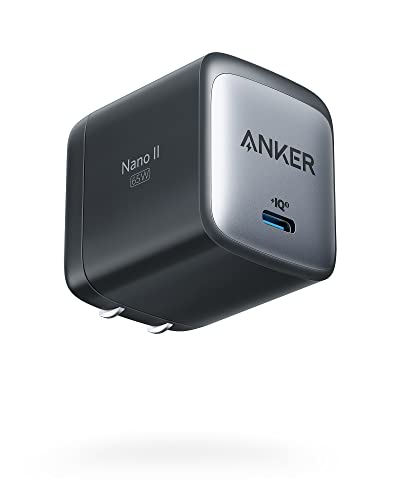
Anker Nano II 65W
Laptop-class charging from a plug the size of your thumb: the fourth leg of the triad.
Field check: 65W GaN charging listed · laptop + phone from one pocket brick · ~$30
Sleep gets you through the flight; power gets you through the landing. Arriving rested with a dead laptop just relocates the crisis. The Nano II 65W is the compression of an entire charging kit into one object: gallium nitride (GaN) electronics run cooler and denser than old silicon chargers, which is how a plug this size pushes a listed 65 watts, full-speed laptop charging, from a wall wart smaller than the one your phone came with. One charger, one USB-C cable, and the laptop, tablet, phone, earbuds, and the AirFly above all drink from the same tap.
The airport translation is opportunistic charging. Layovers and delays hand you outlets in twenty-minute fragments, and a 65-watt listed charger turns those fragments into real battery: a fast laptop top-up at the gate instead of a trickle that loses the race to your screen brightness. The travel math is just as kind, since it replaces the OEM laptop brick that weighs more and does less, meaning this is that rare gear purchase that makes your bag lighter. Pair it with a spare cable, ours lives with a tech kit that never gets unpacked, and the power problem is retired as a category.
- Listed output
- 65W USB-C (GaN)
- Ports
- 1x USB-C
- Size
- Pocket wall plug, replaces the laptop brick
- Approx. price
- ~$30
What we like
- Listed 65W: full-speed laptop charging from a pocket plug
- One charger runs the laptop, phone, and the whole kit
- Lighter than the OEM brick it replaces
- About $30 for the least skippable item here
Worth noting
- Single port means devices take turns
- Cable not included
- Small enough to forget in a hotel wall
Who should buy it: Buy the Nano II 65W if you travel with a laptop, and buy something like it even if you do not, because one modern GaN plug replaces the drawer of legacy chargers you are currently packing. It is the item in this kit we would replace first if the bag were lost, which is the sincerest ranking gear reviewers have.
What we don't like: It is one port, so charging the laptop and phone simultaneously means taking turns or carrying a second plug; multi-port GaN chargers exist for people who hate queues. No cable is included at this price, so budget for a good USB-C cable if you do not own spares. And its pocketability has a dark side: small chargers are forgettable chargers, and hotel walls are where they retire.
Bottom line: The Nano II 65W is the power leg of the kit: a GaN charger small enough to vanish in a pocket that pushes a listed 65 watts, enough to charge a laptop at full speed, and by extension everything smaller you own. It turns every outlet you pass, gate pillar, cafe wall, hotel desk, into a fast top-up, and it replaces the brick-and-cable tangle your laptop shipped with. At about $30, it is the least negotiable item here.
07 · The Long-Haul Legs
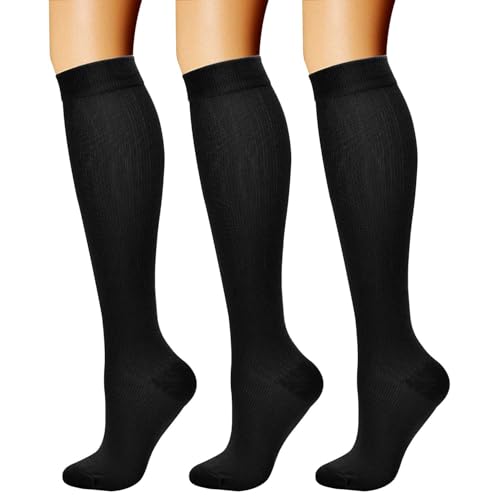
DANISH ENDURANCE Compression Socks (3-Pack)
The graduated flight socks that make hour ten feel less like hour ten, from a sock company rather than a listing.
Field check: Graduated knee-high compression · 3-pack for ~$14 · the long-haul leg answer
Ten hours in a seat does something unkind to your lower legs, and everyone who has peeled off their shoes at baggage claim knows it. Gravity plus stillness pools fluid downhill, and the puffy-ankle, concrete-calf landing is the result. Compression socks are the standard countermeasure, and they are commonly recommended for long flights: graduated pressure, tightest at the ankle and easing up the calf, that supports circulation while you sit. The DANISH ENDURANCE pack delivers that graduated knee-high cut three pairs at a time for about $14, which is a rounding error on a long-haul ticket, and it comes from a Copenhagen sock brand with a catalogue and a retail life beyond one Amazon listing. Compression is sold in levels; check the mmHg printed on the pack you choose against the guidance below.
The honest hedge, stated plainly because this touches health: we are gear reviewers, not clinicians. Compression socks are commonly recommended for long flights and many travelers swear by how their legs feel on landing, but anyone with a medical condition, circulation problems, diabetes, or a history of blood clots should consult a professional about whether compression is right for them and at what level, before buying anything on this page. What we can speak to is the gear side: they go on before the flight, not after your ankles inflate; the fit chart matters, because compression sized wrong is either a tourniquet or a costume; and at three pairs a pack you can keep one pair permanently staged in the travel kit, which is the whole game.
- Compression
- Graduated, level printed on the pack
- Cut
- Knee-high
- Quantity
- 3-pack
- Approx. price
- ~$14
What we like
- Graduated knee-high cut, the standard long-flight shape
- Three pairs for about $14: stage one in every bag
- Addresses the discomfort that outlasts the flight
- The item long-haul veterans defend hardest
Worth noting
- Athletic-market, not certified medical-grade compression
- Sizing chart diligence required, or they fit wrong
- Not a substitute for medical advice where health is in play
Who should buy it: Buy these if your flights run past about four hours, if you land with heavy legs and puffy ankles, or if you are staging a permanent travel kit and want the legs covered for about $14. Travelers with any medical condition or clotting history should talk to a professional first; for everyone else this is the cheapest comfort upgrade on the page.
What we don't like: These are athletic-market compression socks, not prescription medical-grade garments, so treat the listed level as a target rather than a certified figure and buy from the size chart rather than by shoe size instinct. Knee-high compression is also a skill the first time; expect a small wrestling match and a learning curve on sizing. None of that changes the value math at about $14 for three pairs.
Bottom line: Compression socks are the least glamorous item in the kit and the one long-haul veterans defend hardest. The DANISH ENDURANCE 3-pack runs about $14 for three pairs of graduated knee-high socks from a company that actually makes socks for a living rather than a nameplate on a generic listing, and the job is simple: graduated squeeze that helps your lower legs feel less swollen and heavy after hours of sitting. Check the compression level listed on the pack you order, and read the honest caveat below before you buy anything here.
08 · The Fee Insurance
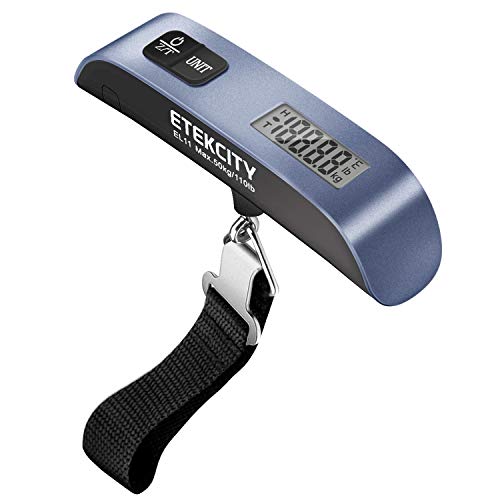
Etekcity Luggage Scale
About $10 of insurance against the overweight-bag fee: hook, lift, read, repack at home.
Field check: Handheld hook scale · ~$10 · pays for itself the first fee it dodges
Every traveler has watched the bag-drop scale drama: the unzipped suitcase, the sweater triage, the fee paid in quiet defeat. The entire genre exists because the passenger weighed nothing and the airline weighed everything. The Etekcity scale deletes the suspense for about $9.88: loop the strap through the handle, lift the bag off the floor, and a digital readout tells you exactly what the check-in desk will discover, except now you are at home, where fixing it is free.
The use case that actually pays is the return leg. Outbound bags are packed calmly at home; it is the flight back, padded with gifts, gear, and optimistic souvenirs, that ambushes people at foreign check-in desks where the fee is higher and the repacking floor is more public. A scale that weighs a few ounces itself rides in the bag both directions and turns the hotel-room night-before weigh-in into a thirty-second chore. It also settles the carry-on question for budget carriers that weigh hand luggage, which is an ambush with its own fee schedule. This is the cheapest item in the kit and the only one with a direct, countable payback in dollars.
- Format
- Handheld digital hook scale
- Own weight
- A few ounces: rides in the bag
- Job
- Pre-empt overweight and carry-on fees
- Approx. price
- ~$9.88
What we like
- About $9.88 against fees priced in whole dinners
- Ends the bathroom-scale balancing ritual
- Earns hardest on the souvenir-laden return leg
- Small and light enough to live in the bag permanently
Worth noting
- Single-purpose, so easy to leave behind once
- Technique-sensitive: lift smoothly or re-weigh
- Near the limit, trust the airline's scale over this one
Who should buy it: Buy the Etekcity if you ever check a bag, fly budget carriers that weigh carry-ons, or return from trips heavier than you left, which is everyone. It is also the standard gift-add for the traveler who has everything else in this guide, because nobody buys themselves a luggage scale until the fee that would have paid for ten of them.
What we don't like: It is a single-purpose gadget with a battery, and single-purpose gadgets are easy to leave home exactly once, which is the trip that bites. Handheld weighing rewards steady hands; jerk the lift and you re-weigh. Precision at this price is honest but not laboratory-grade, so if the readout says you are within a pound of the limit, treat that as over and shift something anyway.
Bottom line: The Etekcity is a palm-sized digital hook scale: strap it to the bag handle, lift, and read the number before the airline reads it for you. Overweight-bag fees are priced in whole dinners, this costs about $9.88, and the math therefore ends after one saved fee. It is the purest insurance purchase in the kit, and the one that also ends the bathroom-scale balancing act forever.
09 · The Post-Security Hydration

HydraPak Stow 1L
The soft-flask specialist's collapsible liter: folds flat through security, fills free at the gate, ends the $6 airport water era.
Field check: Collapses flat for the security tray (listed) · fills at the gate fountain · from HydraPak, the brand behind half the hydration industry's reservoirs
The rules of the game are rigged and everyone knows it: no liquids through security, and water priced like wine at every kiosk beyond it. The HydraPak Stow 1L plays the only winning move. Empty, it rolls and collapses flat, so the security tray sees a small soft disc rather than a rigid liter of dead space in your bag. Past the checkpoint, refill stations and fountains, which most airports now provide precisely because of this play, fill it free. The rigid-bottle traveler pays with pack volume both ways; the no-bottle traveler pays the kiosk; this bottle dodges both tolls. And the maker matters here: HydraPak builds soft flasks and reservoirs for much of the hydration industry, so the film, welds, and leak-proof cap (listed) are the company's whole trade, not a side hustle.
The reason hydration makes the kit at all is that it is secretly a sleep-and-arrival item. Cabin air is drier than most deserts, and quiet dehydration is a lead ingredient in the classic long-haul landing state: the headache, the grit-eyed fog, the jet lag that hits harder than the time zones alone explain. A bottle at your seat means you drink on your schedule instead of the beverage cart's two visits, which compounds with everything the triad is doing. On arrival it keeps working, day bag, hotel nightstand, trailhead, which for our readers is the point: this is the item in the airport kit most likely to end up on an actual hike.
- Format
- Collapsible 1L soft bottle, leak-proof cap (listed)
- Security play
- Carried through empty and rolled flat
- After the trip
- Doubles as the day-bag and trail bottle; filter-compatible (listed)
- Approx. price
- ~$18
What we like
- Folds flat: zero meaningful pack volume when empty
- Free refills beat kiosk water forever
- Hydration quietly improves how landing feels
- The kit item most likely to reach an actual trailhead
Worth noting
- Floppy in the hand next to a rigid bottle
- Silicone remembers flavors; wash thoroughly
- No insulation: room temperature is the menu
Who should buy it: Buy the Stow if you fly at all, and especially if you land somewhere the trip actually starts: it is the airport item that transitions to trail, beach, and city days without a wardrobe change, and it is filter-compatible (listed) for readers who own a squeeze filter. It is also the right answer for carry-on-only packers for whom a rigid bottle's empty volume was always the deal-breaker.
What we don't like: A collapsible bottle is a trade: it will never feel as solid as a rigid bottle, drinking from a soft body is a small learned skill, and the fold-flat party trick requires actually burping the air out. Soft plastics also hold flavors longer than steel, so wash it like you mean it. And it insulates nothing; lukewarm is the house temperature.
Bottom line: The Stow is the workaround to the oldest racket in air travel: you cannot bring water through security, and the far side knows it. A collapsible one-liter bottle from HydraPak, the soft-flask specialist whose reservoirs and flasks run through half the outdoor industry, goes through the checkpoint empty and rolled flat, then fills free at the first fountain past the scanners. Cabin air is desert-dry, hydration is half of how a long-haul actually feels, and about $18 ends the $6-water era permanently.
More gear worth comparing
Beyond this guide: the highest-rated gear across every category and budget, with a live price check on each.




As an Amazon Associate we may earn from qualifying purchases, at no cost to you.
Quick shop: every pick
Skip the scroll — the whole lineup, with a live price check on each.
- Trtl Travel PillowThe Neck: Our PickTrtl · ~$65Check price →
- Cabeau Evolution S3The Neck: Best Memory FoamCabeau · ~$40Check price →
- Manta Original Sleep MaskThe EyesManta Sleep · ~$39Check price →
- Loop Quiet 2 EarplugsThe EarsLoop · ~$25Check price →
- Twelve South AirFly ProThe Cult ItemTwelve South · ~$55Check price →
- Anker Nano II 65WThe PowerAnker · ~$30Check price →
- DANISH ENDURANCE Compression Socks (3-Pack)The Long-Haul LegsDANISH ENDURANCE · ~$14Check price →
- Etekcity Luggage ScaleThe Fee InsuranceEtekcity · ~$9.88Check price →
- HydraPak Stow 1LThe Post-Security HydrationHydraPak · ~$18Check price →
How we chose
We built this kit the way we build a pack list: start from the failure modes and fund them in order. Flight misery has four: you cannot sleep (neck, eyes, or ears failed), you land dead (power failed), your body punishes the hours (circulation and hydration failed), or the trip starts with a $75 fee at the bag drop (planning failed). The sleep triad gets the most budget because sleep is the highest-value thing an economy seat can produce, and because it fails at whichever of the three joints you left unfixed. Power gets the next call because a dead laptop cancels the workday that justified the ticket. The rest of the kit is cheap insurance against the remaining failure modes, and cheap insurance on a repeating event is the best kind there is.
Every spec in this guide is the manufacturer's listed figure, checked against our PA-API-verified dataset, and hedged as 'listed' because we did not lab-test attenuation or weigh foam. Prices are approximate street prices at publication. One category here touches health, so we say this plainly and repeat it at the pick: compression socks are commonly recommended for long flights, but we are gear reviewers, not clinicians; anyone with a medical condition, circulation issues, or a history of clotting should consult a professional about what compression level, if any, is right for them. No brand has bought a placement, and the affiliate disclosure in the intro covers every link below.
Key terms
- The sleep triad
- Our name for the three-front problem of sleeping upright in public: neck (your head needs somewhere to fall), eyes (cabin light must die), ears (the drone must die). Airplane sleep fails at whichever front you left unfunded, which is why a great pillow alone keeps disappointing people. Fix all three or the surviving leak wins.
- SNR (Single Number Rating)
- The standard single-figure attenuation rating printed on earplugs: roughly, how many decibels the plug removes with a proper seal. The Loop Quiet 2 lists a 24 dB SNR. Treat any rating as a best-case listed figure; a bad seal quietly refunds most of it, which is why tip sizing matters more than the number.
- GaN (gallium nitride) charger
- Charger electronics built on gallium nitride instead of silicon, which run cooler and denser: the reason a plug the size of your thumb can push a listed 65 watts. GaN is why the modern travel kit carries one small charger instead of a pouch of bricks, and why your laptop's OEM brick can stay home.
- Graduated compression (mmHg)
- Compression socks rated by pressure in millimeters of mercury, tightest at the ankle and easing upward; 15-20 mmHg listed is the moderate tier most long-flight advice centers on. Commonly recommended for long flights, but anyone with a medical condition or clotting history should consult a professional before choosing a level.
- The insurance tier
- The under-$20 floor of a travel kit: items whose whole job is preventing a specific, more expensive bad outcome. A ~$10 scale versus a $75 overweight fee, ~$12 socks versus two days of concrete calves, an ~$18 bottle versus a decade of $6 airport water. Boring, cheap, and the best ROI in the bag.
Questions, answered
Are travel neck pillows actually worth it?
The good ones are; the airport-kiosk horseshoe that taught you to doubt the category is not. The failure of cheap pillows is mechanical: squishy fill with no anchor cannot hold a sleeping head, so it slides and your neck snaps you awake. The Trtl (about $65) fixes it with an internal brace that carries a sideways-tipping head; the Cabeau Evolution S3 (about $40) fixes it with dense memory foam strapped to the seat's headrest wings. Match the pillow to how your head falls and the category suddenly works.
Trtl vs Cabeau: which travel pillow should I buy?
Buy for your failure direction. Head tips sideways: the Trtl, whose jaw-supporting brace is built for exactly that, and which packs flat as a bonus. Head flops forward: the Cabeau, because its seat-anchoring straps are the only mechanism in the category that fights the forward collapse. Not sure which sleeper you are: start with the Cabeau at about $40, since it covers more directions and costs $25 less; upgrade to the Trtl later if you learn you are a committed side-tipper.
How do you actually sleep on a plane in economy?
Treat it as a three-front problem, the sleep triad: neck, eyes, ears, and fund all three, because sleep fails at whichever front you skip. A real neck answer (Trtl or Cabeau) gives your head somewhere to fall, a true blackout mask (Manta, about $39) takes the cabin lights out of your night, and earplugs with a listed 24 dB SNR (Loop Quiet 2, about $25) turn the engine drone into a hum. Add the boring multipliers: window seat if you can, socks on, hydrated, and no screen for the last stretch before you try.
Do compression socks really help on long flights?
They are commonly recommended for long flights, and long-haul veterans defend them harder than any gadget: graduated compression, tightest at the ankle, supports circulation while you sit, and the practical payoff most flyers report is legs that feel lighter and less swollen on landing. The honest caveat: we are gear reviewers, not clinicians, and anyone with a medical condition, diabetes, circulation problems, or a history of blood clots should consult a professional about whether compression is right for them and at what level. Gear-wise: put them on before the flight, and follow the size chart exactly.
What is the AirFly Pro and do I actually need one?
It is a thumb-sized Bluetooth transmitter (about $55) that plugs into the seatback screen's headphone jack and streams the audio to your own AirPods or any wireless headphones, retiring the airline's pouch earbuds forever. Need is the wrong frame; it is the kit's quality-of-life cult item. If you fly airlines with seatback entertainment and own wireless earbuds, it earns devotion within two trips, and its dual-headphone pairing is quietly essential for couples and parents. On screenless budget carriers, skip it.
Is a 65W charger enough for a laptop?
For nearly every non-gaming laptop, yes: a listed 65 watts covers the full charge rate of most modern ultrabooks and work machines, which is why the Anker Nano II 65W (about $30) can replace the OEM brick outright. The GaN design is what makes it pocket-size at that output, and everything smaller, phone, earbuds, tablet, charges from the same USB-C port. The one caveat is simultaneity: it is a single port, so devices take turns unless you carry a second plug or a multi-port GaN charger.
Can you bring an empty water bottle through airport security?
Yes. The liquids rule bans the water, not the bottle: an empty bottle passes security everywhere, and you refill it free at fountains and refill stations past the checkpoint, which most airports now provide. A collapsible bottle like the HydraPak Stow 1L (about $18) makes the play cost nothing in pack space, folding flat through the scanner and inflating to full size at the gate. Given that cabin air is desert-dry and dehydration is half of how bad landings feel, this is the cheapest upgrade to long-haul comfort there is.
What should I pack in a carry-on for a long flight?
Build it as a kit with jobs, not a pile of maybes. The sleep triad: neck pillow (Trtl or Cabeau), blackout mask (Manta), earplugs (Loop Quiet 2, 24 dB SNR listed). Power: one GaN charger (Anker 65W) plus a cable, and the AirFly Pro if your airline has seatback screens. The body: compression socks on (with the medical caveat in this guide), an empty collapsible bottle filled past security. The insurance: a luggage scale for the return leg. All of it together is about $150 to $190, rides in a pouch, and works on every flight you take for the next decade.
Keep reading
The Best Packing Cubes (2026)
The other half of the carry-on system: compression cubes that make the bag close on the return leg.
The Best Travel Tech (2026)
The full electronics kit this guide's charger anchors: adapters, trackers, and the cable pouch.
The Best Multitools (2026)
The pocket fixer for the destination, and the one item in your kit that must never enter a carry-on.
The Best EDC Gear (2026)
The everyday-carry philosophy behind this kit: small objects, chosen once, carried forever.
The Best Hikes in the World
The reason the kit exists: the trails on the other side of all those long-haul flights.