Our Pick: Peak Design
Check price →The Best Backpack Phone Holders & Add-On Pockets (2026)
Your phone is your camera, your map, and your emergency line, and on most packs it lives in the worst pocket you own. We ranked the fixes: the Peak Design clip that owns the category, a phone-carry sling from the same house, an Osprey add-on pocket for bare hipbelts, and Osprey's waist pack for the days you carry no pack at all, sorted by the only metric that matters, whether you can reach it without stopping.
By The WorldHike Gear Desk · ~13 min read · Updated 2026-07-28

Peak Design Capture Clip V3
Peak Design
The machined-aluminum strap clip that owns the carry standard, and carries a phone with the right case.
Check price★ Our Top Pick
Best Overall
Peak Design Capture Clip V3
The machined-aluminum strap clip that owns the carry standard, and carries a phone with the right case.
Not sure yet? Compare all 4 picks below ↓
Here is the most universal gear problem in hiking, and almost nobody budgets a dollar for it: your phone is simultaneously your camera, your map, and your emergency line, the single most important object you carry, and it spends the day buried in a hip pocket under a hipbelt, or zipped into a pack lid behind your head. Every retrieval is a production. So you skip it. The light on the ridge goes unphotographed, the junction goes unchecked, and three miles later you are consulting the map you should have consulted at the junction. The problem is not your phone or your pack; it is the ten seconds of friction between them.
This guide has one teaching spine and we will hit it from every angle: reachable-without-stopping. On-strap or on-belt beats in-lid, every time, because carry position determines usage, and usage is the whole point. A phone you can reach mid-stride gets used dozens of times a day, for photos, for the navigation glance that catches the wrong turn while it is still a ten-step mistake, for the weather check before the pass. A phone that requires stopping, slinging off a shoulder strap, and unzipping gets used at breaks, which is to say, after the photo is gone and after the turn was missed. Every stop to dig for a phone is a photo not taken and a navigation check skipped; the fix is moving the phone to where your hand already is.
The price ladder runs from about $25 to about $80, and every pick on it comes from a brand with a real track record, because a carrier that fails is a phone on the rocks. One disclosure, up front: no brand paid for a spot in this guide, nobody placed a product, and no manufacturer saw it before publication. Some links go to Amazon; if you buy through one we may earn a small commission at no extra cost to you, and that never moves a pick up or down. Specs below are the manufacturers' listed figures, hedged as such, and prices are approximate street prices at publication, so check the live listing.
The short version
- Our pick is the Peak Design Capture V3 (about $80): a machined aluminum strap clamp with a mechanical quick release, the category's hardware standard, and it carries a phone through a plate-compatible case or adapter.
- The Peak Design Mobile Crossbody Multi-Strap (about $60) is the phone-only answer from the same house: the phone rides at chest height on a locking carabiner, reachable mid-stride, no pack required.
- The Osprey Zippered Pack Pocket (about $25) is the add-on for packs whose hipbelts and harnesses shipped bare: a real pack-brand pocket for phone, snacks, and small items on webbing you already own.
- The Osprey Daylite Waist Pack (about $35) covers the no-pack days: worn at the waist or crossbody, it walks straight off the trail into travel with your phone one zip from your hand.
- The spine of the decision: on-strap or on-belt beats in-lid. Carry position determines usage, and a phone you can reach without stopping is the difference between navigation checks made and skipped.
| Carrier | Best for | Where the phone rides | Reach test | Approx. price |
|---|---|---|---|---|
| Peak Design Capture V3 | Our Pick | Clipped to the strap, chest height | One hand, one motion | ~$80 |
| Peak Design Mobile Crossbody | Best Phone-Only Carry | Sling strap, chest height | Either hand, mid-stride | ~$60 |
| Osprey Zippered Pack Pocket | Best Add-On Pocket | Harness or hipbelt webbing | One hand, mid-stride | ~$25 |
| Osprey Daylite Waist Pack | Best No-Pack Carry | Waist or crossbody, no pack needed | One hand, mid-stride | ~$35 |
The 2026 phone-carry shortlist at a glance, ranked by the reachable-without-stopping test. Prices are approximate street prices at publication, verified against our dataset in July 2026.
01 · Best Overall
Our PickPeak Design Capture Clip V3
The machined-aluminum strap clip that owns the carry standard, and carries a phone with the right case.
Field check: Machined aluminum clamp · quick-release plate system · the strap-carry hardware standard at ~$80
Somebody in this category had to build the hardware properly, and Peak Design is who did it. The Capture V3 is a two-piece aluminum clamp that bolts around your shoulder strap and accepts a quick-release plate: press the device in until it clicks, carry it locked at chest height through scrambles and bushwhacks, and release it with one button press when the shot appears. The system was designed for cameras, a liter of glass bouncing on a strap is a real engineering problem, and that camera-grade DNA is why it feels like a different species from every fabric pouch on Amazon. Nothing sags, nothing swings, and the retention is mechanical, not elastic and hope.
For phone carry, be clear about how it works: the Capture holds whatever wears its plate, so a phone joins the system via a plate-compatible case or adapter rather than sliding into a sleeve. Hikers who shoot with both a camera and a phone love this, one mount, both devices, and photographers already inside Peak Design's ecosystem should not even hesitate. Phone-only hikers who do not want the case commitment should look one card down at the Mobile Crossbody, or at the Osprey pocket if a zipped, weather-shrugging home matters more than a one-motion draw. The Capture also asks for a reasonably burly strap to clamp to, and the clip becomes a permanent resident of that strap in a way fabric never does.
- Build
- Machined aluminum clamp, quick-release plate
- Mount
- Bolts to shoulder strap or belt webbing
- Phone carry
- Via plate-compatible case or adapter
- Approx. price
- ~$80
What we like
- Camera-grade machined hardware; nothing else here compares
- One-button quick release, locked solid on scrambles
- One mount standard for camera and phone both
- Buy-once durability the fabric tier cannot offer
Worth noting
- About $80, plus a plate case or adapter for phones
- Overkill for phone-only, check-the-map-sometimes hikers
- No weather or scratch protection for the mounted device
Who should buy it: Buy the Capture V3 if you hike with a real camera, or with a camera and a phone, and want both on one mount standard: it is the category's answer, full stop. It is also the right call for phone-only hikers who shoot constantly, want mechanical retention on scrambles, and would rather buy one metal thing once than replace fabric pouches every few seasons.
What we don't like: About $80 is the top of this page, and casual check-the-map-sometimes hikers genuinely do not need it. Phones require a plate-compatible case or adapter to join the system, an extra purchase and a commitment to that case. The clamp wants a substantial shoulder strap and effectively moves in permanently, and a bare device riding at chest height enjoys none of the weather and scratch protection a zipped pocket gives.
Bottom line: The Capture V3 is the reference answer to this whole category: a machined aluminum clamp that bolts to your shoulder strap and holds a quick-release plate, click in, one-button release, locked solid over scrambles. It was built to carry real cameras, which is exactly why it is the standard, and phones join the system through a plate-compatible case or adapter. It is the most expensive pick here at about $80, and it is our pick anyway, because a device mount is the one accessory where mechanical retention from a company with a decade of refinement behind it is worth paying for.
02 · Best Phone-Only Carry
Best Phone-Only Carry
Peak Design Mobile Crossbody Multi-Strap
The phone itself becomes the carried object: a locking carabiner sling that keeps it at chest height with no pack involved.
Field check: Adjustable quick-connect sling · locking carabiner · listed to carry phone, keys, and a small camera
Watch how people actually use a phone on trail and the sling makes immediate sense. The phone is not stowed and retrieved; it is carried, the way a camera is carried, hanging where your hand already swings. The Mobile Crossbody Multi-Strap is an adjustable quick-connect strap with a secure locking carabiner and a listed twist-free design, worn bandolier style across the chest. Draw is not a zip and a fish, it is a lift: the phone is already in the open air, screen down and protected against your body, and it comes up into a two-handed grip in under a second. For app navigation, that is as fast as this category gets.
The honest limits are the ecosystem and the exposure. The strap connects through Peak Design's Mobile system, so a compatible case or a SlimLink adapter stuck to your existing case is part of the purchase, and once you are in, you are in. And a phone hanging in open air gets weather and gets bumped: in real rain it goes into a bag or a pocket, and scramblers should think about a phone swinging on a strap near rock. What you get for those trades is the fastest, least fussy phone access on this page, and a carrier that works identically on a day hike, a travel day, and a dog walk, because it never needed the backpack in the first place.
- Mount
- Adjustable quick-connect sling, locking carabiner
- Position
- Chest height, either-hand reach
- Also carries
- Keys and a small camera (listed)
- Approx. price
- ~$60
What we like
- Fastest draw here: the phone is carried, not stowed
- Works with any pack, or none at all
- Locking carabiner and listed twist-free design
- Peak Design hardware and support behind it
Worth noting
- Needs a compatible case or SlimLink adapter
- Phone rides exposed to weather and knocks
- About $60 for a strap is a real commitment
Who should buy it: Buy the Mobile Crossbody if your phone is your only camera and you want it carried rather than stowed: app navigators, photo-every-mile hikers, and anyone whose days mix trail, travel, and town without a consistent pack. It is also the cleanest answer for hikers who dislike anything bolted to a shoulder strap.
What we don't like: It requires a Peak Design compatible case or a SlimLink adapter, which is both an extra cost and a commitment to that ecosystem. The phone rides exposed, so it takes weather and knocks that a zipped pocket would absorb, and a device swinging on a sling is something to be conscious of on scrambles. At about $60 it is a real spend for a strap.
Bottom line: The Mobile Crossbody is Peak Design's answer for people whose only device is a phone. Instead of a pouch the phone hangs from an adjustable sling on a locking carabiner, listed as a twist-free design that also takes keys or a small camera, so it rides at chest height, visible and reachable with either hand, and it works whether you are wearing a 60-liter pack or nothing at all. It is the most elegant solution here for the phone-first hiker, with one honest string attached: it lives inside Peak Design's Mobile ecosystem, so you need a compatible case or SlimLink adapter to connect.
03 · Best Add-On Pocket
Best Add-On Pocket
Osprey Zippered Pack Pocket
A real pack-brand zippered pocket for the harness and hipbelt webbing your pack left bare.
Field check: Zippered add-on pocket from Osprey · attaches to pack webbing and attachment points · ~$25
The hipbelt pocket is the most beloved feature in pack design, and the packs that lack one create this product. The Osprey Zippered Pack Pocket attaches to the webbing and attachment points your pack already has and rides where a built-in pocket should: unzip, phone out, glance, phone in, one-handed and mid-stride. Hip carry has a different personality than chest carry. It is one beat slower on the draw, but it keeps the shoulder strap clean, it does not sit in your peripheral vision all day, and it holds more than any phone-shaped sleeve: a phone in a case plus real snacks.
What separates this from the wall of interchangeable Amazon pouches is not the pattern, which is broadly similar, but the company standing behind it. Osprey has been building packs since 1974, its attachment hardware is designed around its own harness and hipbelt geometry, and its All Mighty Guarantee is a real thing you can invoke rather than a review-page promise. That is the whole argument for spending about $25 instead of about $12 on a pocket: the cheap one is fine until the day it is not, and the day it is not is the day your phone is in it. Check your pack's webbing and attachment loops before ordering, because fit is the one variable an add-on pocket cannot solve for every pack ever made.
- Mount
- Attaches to pack webbing and attachment points
- Position
- Harness or hipbelt level, one-hand reach
- Capacity
- Phone in case plus snacks and small items
- Approx. price
- ~$25
What we like
- A real pack-brand accessory, with Osprey's warranty behind it
- Phone plus genuine snack capacity, under a zipper
- Keeps the shoulder strap clean for minimalists
- Moves between packs in seconds
Worth noting
- Slowest draw on the page, a beat behind chest carry
- Attachment fit varies by pack; check your webbing first
- Costs about double the no-name pouch aisle
Who should buy it: Buy the Osprey pocket if your pack's hipbelt shipped without pockets, or with pockets too small for a modern phone in a case, which describes a shocking number of otherwise great packs. It is the pick for hikers who want on-body access with a zipper over it, and for anyone who would rather add capacity than add hardware.
What we don't like: It is the slowest draw of the four, a beat behind anything at chest height, which matters to the photo-every-mile crowd. Attachment is webbing-and-loop dependent, so fit varies pack to pack and is worth checking against your own harness before you order. And at about $25 it costs roughly twice what the no-name pouches do, which is the price of the warranty and the company behind it.
Bottom line: Half the packs on the trail shipped with a hipbelt and no pockets on it, which is prime real estate lying fallow. Osprey's Zippered Pack Pocket is the credible fix: a zippered accessory pocket from the pack company itself, attaching to harness or hipbelt webbing and sized for a phone plus the snack-and-lip-balm layer. It is the least glamorous pick on this page and the one most people should probably start with, because it costs about $25, adds a proper zipped and weather-shrugging home, and comes with Osprey's warranty rather than a listing that may not exist next season.
04 · Best No-Pack Carry
Best No-Pack Carry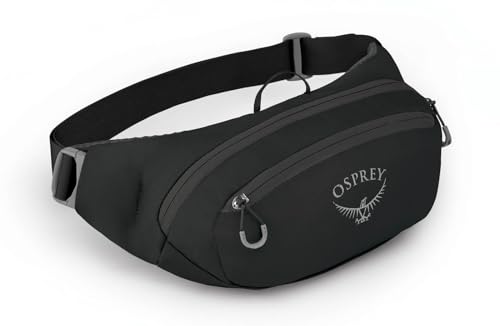
Osprey Daylite Waist Pack
Osprey's hip bag with a crossbody option: phone access on the days there is no backpack to bolt anything to.
Field check: Waist or crossbody carry · Daylite-series build and warranty · ~$35, works with or without a pack
A large share of the hiking a normal person does happens without a backpack at all. Evening trails, town greenbelts, travel days, the dog loop: no pack means no shoulder strap and no hipbelt, which quietly disqualifies every mount on this page except this one. The Daylite Waist Pack is Osprey's answer, a compact hip bag from the same Daylite family as the brand's small daypacks, and the version we point to adds a crossbody shoulder carry option, which is the detail that makes it work alongside a real backpacking rig instead of fighting it.
Worn crossbody it puts the phone at chest height, one zip from your hand, which passes the reachable-without-stopping test cleanly on day hikes and travel days. Worn at the waist it is hip carry, same geometry as the Zippered Pack Pocket but self-contained. The honest limits: with a loaded backpacking hipbelt you are wearing it above the belt, crossbody, which works and is what plenty of hikers do, but a dedicated add-on pocket integrates more cleanly on big-pack days. And it is a small bag, deliberately, so it is a phone-wallet-keys-snack carrier rather than a layer hauler. At about $35 with Osprey's build and warranty behind it, that is a fair trade for the one carrier here that never asks what pack you own.
- Wear
- Waist or crossbody shoulder carry (listed)
- Best role
- Day hikes, travel, town: the everywhere carrier
- Capacity
- Phone, wallet, keys, snacks
- Approx. price
- ~$35
What we like
- Works with no backpack at all: dayhikes, travel, town
- Crossbody carry passes the no-stopping reach test
- Osprey build and warranty on an everyday-life bag
- Sorted pockets keep phone, wallet, keys, snacks apart
Worth noting
- Goes crossbody rather than waist under a loaded hipbelt
- Small on purpose; not a layer hauler
- Priciest route to hip carry on this page
Who should buy it: Buy the Daylite Waist Pack if most of your miles are day hikes, travel, and around-town, and you want one object that keeps the phone reachable across all of it. It is also the right pick for hikers who refuse strap-mounted anything, and for anyone who wants trail-grade construction on a bag that will mostly live in ordinary life.
What we don't like: With a loaded backpacking hipbelt it goes crossbody rather than at the waist, which works but is a negotiation rather than an integration. It is a small bag on purpose, so treat published capacity as phone-wallet-keys-snacks, not layers. And at about $35 it is the priciest way to solve hip carry on this page, which only makes sense if the no-pack days are genuinely most of your days.
Bottom line: Every other pick in this guide attaches to a backpack; this one replaces the need for one. The Daylite Waist Pack is Osprey's small hip bag, listed with a crossbody shoulder carry option, so it wears at the waist on a walk or bandolier style across the chest when a hipbelt already owns your waist. Phone in the main compartment, keys and cards and snacks sorted around it, and the whole thing walks straight off the trail into travel days and dog walks, which is versatility nothing strap-mounted can claim.
More gear worth comparing
Beyond this guide: the highest-rated gear across every category and budget, with a live price check on each.




As an Amazon Associate we may earn from qualifying purchases, at no cost to you.
Quick shop: every pick
Skip the scroll — the whole lineup, with a live price check on each.
- Peak Design Capture Clip V3Best OverallPeak Design · ~$80Check price →
- Peak Design Mobile Crossbody Multi-StrapBest Phone-Only CarryPeak Design · ~$60Check price →
- Osprey Zippered Pack PocketBest Add-On PocketOsprey · ~$25Check price →
- Osprey Daylite Waist PackBest No-Pack CarryOsprey · ~$35Check price →
How we chose
We judge phone carriers on one test with a stopwatch built into it: can you get the phone into your hand, and back to stowed, without breaking stride? That is the reachable-without-stopping spine, and it sorts the whole market. On-strap carry (the Peak Design Capture clip, the Mobile Crossbody sling) puts the phone at chest height where either hand already swings; on-belt carry (the Osprey Zippered Pack Pocket, the Daylite Waist Pack) puts it at hip level, one natural reach away; in-lid and in-pocket carry, the default everyone starts with, fails the test by definition, because the phone sits behind your head or under your hipbelt webbing. Within the pass group we then score security (does it hold on scrambles and when you bend over a stream), capacity (real phones in real cases, plus the snack question), weather protection, and whether the mount fights your pack's other jobs.
We also hold this page to WorldHike's brand bar, which matters more here than in almost any other category. Phone carriers are the single most counterfeited-idea aisle on Amazon: dozens of interchangeable no-name pouches, all the same factory pattern, all four-star, none of them a company you could call if the stitching let go over a talus field. A carrier's entire job is not failing while it holds the most expensive and most safety-relevant object you carry, so every pick here comes from a brand with a real track record, a warranty you can actually claim, and a reputation that outlives a listing. Specs are the manufacturers' listed figures, hedged as 'listed,' prices are approximate street prices, and no brand has bought a placement. Every ounce earns its place, and in this category the ounces are trivial; what has to earn its place is the friction each carrier removes.
Key terms
- Reachable-without-stopping
- The one test that sorts this whole category: can you get the phone into your hand and back to stowed without breaking stride? On-strap and on-belt carry pass; lid pockets and under-hipbelt pants pockets fail. Carry position determines usage, and usage, photos taken, junctions checked, is the entire point.
- On-strap carry
- Mounting the phone at chest or collarbone height, either on a hardware clamp (the Peak Design Capture) or on a sling worn across the body (the Mobile Crossbody). The fastest draw in the category and reachable with either hand, at the cost of some bulk in your peripheral vision and no zipper between the device and the weather.
- Hipbelt real estate
- The webbing on your pack's hipbelt, the most valuable and most wasted mounting surface on many packs. Add-on pockets like Osprey's Zippered Pack Pocket reclaim it for phone and snacks; if your pack shipped with good hipbelt pockets, you already own this guide's third pick.
- Quick-release plate
- The small plate at the heart of the Peak Design system: it bolts or clips to the device (camera tripod socket, or a plate-compatible phone case or adapter) and clicks into the Capture clamp, locking mechanically until a button releases it. It is what separates hardware retention from elastic and hope.
- Why brand matters on a phone mount
- A carrier's whole job is not failing while it holds the most expensive and most safety-relevant object you carry. The cheap end of this aisle is dozens of interchangeable no-name pouches from sellers you cannot contact after the sale. We only rank carriers from companies with a track record and a warranty you can actually claim, which is why nothing on this page costs $12.
Questions, answered
How do you carry a phone while hiking with a backpack?
The rule: on-strap or on-belt beats in-lid, because a phone you can reach without stopping actually gets used. The main options are a hardware strap clip (our pick, the Peak Design Capture V3, about $80) for camera-grade retention at chest height; a crossbody sling (the Peak Design Mobile Crossbody, about $60) that carries the phone itself; an add-on pocket for bare webbing (the Osprey Zippered Pack Pocket, about $25); or a waist pack (the Osprey Daylite, about $35) that needs no backpack at all. The one place not to carry it is the pack lid, where your map rides behind your head.
Are shoulder strap phone pouches worth it?
Moving the phone to your strap or chest is absolutely worth it, and the payoff is behavioral rather than material: navigation checks happen at every junction because they cost one second, and photos get taken because the camera is already in reach. What we no longer recommend is the cheap end of the pouch aisle, which is dozens of interchangeable no-name listings whose stitching, elastic, and hook-and-loop are the only thing between your phone and the rocks. Spend the money on hardware from a company with a warranty: the Capture clip or the Mobile Crossbody at chest height, or Osprey's zippered pocket if you want a zipper over it.
What if my backpack's hipbelt has no pockets?
Add one; it is an accessory problem, not a new-pack problem. Osprey's Zippered Pack Pocket (about $25) attaches to pack webbing and attachment points and gives you a zippered pocket sized for a phone in a case plus snacks, and it moves between packs in seconds. Check your own harness and hipbelt webbing before ordering, because attachment fit is the one variable an add-on cannot solve for every pack ever built. If you are buying a new pack anyway, sewn-in hipbelt pockets big enough for a modern phone are worth shortlisting for.
Is the Peak Design Capture clip worth it for hiking?
If a real camera rides your strap, yes without hesitation: it is the category standard, machined aluminum with a mechanical quick-release that holds through scrambles, at about $80. If you carry only a phone, it works, via a plate-compatible case or adapter, but the Mobile Crossbody from the same brand does phone-only carry for about $60 with a faster draw and no clamp on your strap. The strongest phone-only case for the Capture: you shoot constantly, you scramble, and you want to buy one metal thing once.
Can you wear a waist pack with a backpack?
Yes, with one adjustment: wear it crossbody. A waist pack at the hip and a loaded hipbelt want the same territory, so hikers pair them by rotating the pack up across the chest, bandolier style, which keeps the phone one zip from your hand and out of the hipbelt's way. The Osprey Daylite Waist Pack we point to is listed with a crossbody shoulder carry option for exactly this. It is still a workaround rather than an elegant integration; a dedicated add-on pocket integrates better on big-pack days. The waist pack's real superpower is everywhere the big pack is not: day hikes, travel, and town.
Where should your phone go when hiking in the rain?
Deeper than most picks in this guide, if the rain is real. A clipped or slung phone has no weather protection at all, and even a zippered add-on pocket is water-resistant at best, fine for drizzle, not for hours of weather. In sustained rain, the phone goes into a zip bag or dry bag inside the pack, and navigation shifts to checking at sheltered pauses. A cheap belt-and-suspenders move: keep a sandwich bag in your hipbelt pocket permanently; phone touchscreens work through it in a pinch.
Why not just keep your phone in your pants pocket while hiking?
Because a hipbelt sits directly over it. On day hikes with no pack, a zippered pants pocket is honestly fine. Under a loaded backpack, the hipbelt pins the pocket shut, the phone grinds against your hip crease with every stride, and retrieval means loosening the belt, which is stopping. Pants pockets also feed phones to creeks at every squat and scramble. Moving the phone to a strap, a sling, or a belt pocket ends all of it, starting around $25.
Filed under Buyer's Guide
Keep reading
The Best Daypacks (2026)
The packs these carriers bolt onto, and the ones with strap and belt pockets already built in.
The Best Backpacking Packs (2026)
Full-size haulers ranked honestly, including which hipbelts ship with pockets worth having.
Ultralight Backpacking 101
The discipline behind every add-on decision: no item banned, every item made to testify.
The Best Hiking Gear Under $25
The small-buy shelf: more cheap objects that punch far above their price.
The Best Gifts for Hikers (2026)
Phone carriers are the rare gift every hiker uses; here is the rest of the always-lands list.