Our Pick: Darn Tough
Check price →The Best Hiking Gear Under $25 (2026)
Here is the best-kept secret in outdoor retail: the gear that improves every single mile costs less than lunch. Not the pack, not the boots, the small stuff, the socks and tape and tabs that live at the exact points where hiking actually hurts. Eleven picks from about $10 to about $25 (two drift a few dollars over, and we say so), every one verified, every one pack-proven.
By The WorldHike Gear Desk · ~14 min read · Updated 2026-07-02

Darn Tough Hiker Micro Crew Midweight
Darn Tough
Lifetime-guaranteed merino and the highest-value $25 in hiking: the sock every other sock is measured against.
Check price★ Our Top Pick
Our Pick
Darn Tough Hiker Micro Crew Midweight
Lifetime-guaranteed merino and the highest-value $25 in hiking: the sock every other sock is measured against.
Not sure yet? Compare all 11 picks below ↓
Outdoor retail wants your attention on the four-hundred-dollar wall: the packs, the shells, the boots. But ask any hiker what ended their worst day and the answer is never the pack. It is a blister at mile four, chafe on a humid climb, a bonk from sweating out more salt than they drank, a soaked shirt in a surprise squall, a wet bag of everything at the bottom of the pack. Every one of those disasters is prevented by something that costs less than lunch, and that is the entire thesis of this guide: the gear that improves every single mile is the cheap gear, because the cheap gear is what touches you.
We call it the contact-point rule, and it is the one idea to take from this page: comfort per dollar concentrates where gear meets body, at the feet, the skin, and the water you drink, so a $25 sock does more for your day than a $100 pack upgrade, and a $14 roll of tape can save a trip a $300 boot could not. The ladder here runs from about $10 (a foam sit pad, a titanium spork) to about $25 (the sock to beat, the famous emergency rain suit), with two honest over-liners flagged in their cards: the electrolyte tabs that hover just over the line some days, and one $30 dry bag we kept anyway because the insurance math is too good.
One disclosure, up front and plainly: no brand paid for a spot in this guide, nobody placed a product, and no manufacturer saw it before publication. Some links go to Amazon; if you buy through one we may earn a small commission at no extra cost to you, and that never moves a pick up or down. Prices shown are approximate street prices at publication; on items this cheap they wobble by a dollar or two constantly, so always check the live listing.
The short version
- Our pick is the Darn Tough Hiker Micro Crew (about $25): lifetime-guaranteed merino, and the single highest-value $25 in all of hiking. It sits right at the line, and some days the listing drifts a couple dollars over; it is worth it anyway.
- Blister insurance comes in two forms: Injinji toe socks (about $18) prevent toe-on-toe rubbing, and Leukotape P (about $14) stops a forming hot spot dead. Carrying both costs about $32 and ends the blister conversation.
- The Frogg Toggs Ultra-Lite2 (about $25) is the famous jacket-and-pants rain suit for the price of a sandwich run: fragile, ultralight, and the best emergency rain value ever made.
- The contact-point rule: comfort per dollar concentrates where gear touches your body (feet, skin, water). Upgrade those points first; the expensive gear can wait.
- Two picks are honestly over the line: Nuun tablets hover around $26, and the Sea to Summit dry bag runs about $30. We flagged both in their cards and kept them because nothing under $25 replaces them.
| Gear | Best for | Contact point | Why it earns the money | Approx. price |
|---|---|---|---|---|
| Darn Tough Hiker Micro Crew | Our Pick | Feet | Lifetime-guaranteed merino, the sock to beat | ~$25 |
| Injinji Trail Midweight | Best Blister Insurance | Feet (toes) | Toe socks end toe-on-toe rubbing | ~$18 |
| Nalgene 32oz Wide Mouth | The Indestructible | Water | The default bottle, effectively immortal | ~$17 |
| Frogg Toggs Ultra-Lite2 | Best Emergency Rain | Skin (weather) | Jacket AND pants for pocket change | ~$25 |
| Deuce of Spades Trowel | The LNT Essential | Conscience | 0.6 oz listed; dig-in Leave No Trace | ~$16 |
| Nuun Sport Tablets | Best Electrolytes | Water | The trail electrolyte standard | ~$26 (over the line, flagged) |
| Body Glide Original | Best Anti-Chafe | Skin | Ends chafe before it starts | ~$11 |
| Leukotape P | The Thru-Hiker Tape | Feet (hot spots) | Sticks for days; stops blisters forming | ~$14 |
| AceCamp Foam Sit Pad | Best Luxury-Per-Dollar | Everything you sit on | A warm dry seat anywhere, ~$10 | ~$10 |
| Sea to Summit Ultra-Sil Dry Bag | Best Dry Insurance | Your spare layers | Featherweight dry storage | ~$30 (over the line, flagged) |
| TOAKS Titanium Long Spork | Best Utensil | Dinner | Titanium; reaches the meal-bag bottom | ~$10 |
The 2026 under-$25 shelf at a glance. Prices are approximate street prices at publication, verified against our dataset in July 2026; two picks drift over the line and are flagged honestly. Specs are the manufacturers' listed figures.
01 · Our Pick
Our PickDarn Tough Hiker Micro Crew Midweight
Lifetime-guaranteed merino and the highest-value $25 in hiking: the sock every other sock is measured against.
Field check: Merino hiking sock · unconditional lifetime guarantee (listed) · men's and women's versions
If the contact-point rule had a mascot, it would be this sock. Your feet take every step of every mile, and the Darn Tough Hiker Micro Crew is the best thing $25 can do for them: merino wool that regulates temperature and shrugs off odor, midweight cushion exactly where boots press, and a knit dense enough that the sock still feels like itself hundreds of miles in. Hikers who try them tend to quietly replace their whole sock drawer over the following year. We did.
The guarantee is the part that turns a good sock into a legend. Darn Tough's guarantee is unconditional and lifetime, as listed: no receipt gymnastics, no fine print about normal wear. Hole them, send them back, get new socks. That warranty changes the math of the price: a $25 sock you buy once competes very differently against $10 socks you re-buy forever. It is the rare piece of budget gear that is also endgame gear.
- Material
- Merino wool blend (listed)
- Cut
- Micro crew, midweight cushion (listed)
- Guarantee
- Unconditional lifetime (listed)
- Versions
- Men's and women's specific listings
- Approx. price
- ~$25 (hovers a couple dollars over some days)
What we like
- Unconditional lifetime guarantee, as listed
- Merino comfort and odor control every mile
- Cushion survives seasons, not weeks
- Men's and women's versions, both verified
Worth noting
- Right at the $25 line, sometimes just over it
- Midweight runs warm in desert summer
- The guarantee only pays if you mail the socks
Who should buy it: Buy Darn Toughs if you hike in socks, which is to say: buy Darn Toughs. They are the single best first upgrade for a new hiker (feet before gear, always) and the standing re-stock for veterans. Runners, ruckers, and people with cold offices have all been assimilated too; the sock does not care what you call the miles.
What we don't like: It is a $25 sock, and no argument fully disarms that sentence until the first long day in them. The midweight cushion runs warm for desert summer hikers, who may prefer a lighter weight in the same family. And the guarantee requires mailing socks to Vermont, which everyone praises and few perform.
Bottom line: The Darn Tough Hiker Micro Crew is the sock to beat, and after years of trying, nothing has. Merino comfort, a dense knit that holds cushion season after season, and the famous unconditional lifetime guarantee, as listed: wear a hole in them ever and they get replaced. It sits right at this guide's $25 line, drifting a couple dollars over some days, and it is worth it at either number.
02 · Best Blister Insurance
Best Blister Insurance
Injinji Trail Midweight Mini-Crew
Toe socks that end toe-on-toe rubbing: eighteen dollars against the most common blister in hiking.
Field check: Toe-sock design · the blister-prevention play · men's and women's versions
Some blisters are a gear problem; between-the-toes blisters are an anatomy problem. No boot, insole, or lacing trick stops your fourth and fifth toes from rubbing each other on a long descent, because the rubbing happens inside the sock. The Injinji Trail Midweight fixes it structurally: each toe gets its own fabric sleeve, so skin never touches skin, and the moisture that macerates toes on humid days gets wicked from between them instead of pooling there. It is a five-toed answer to a five-toed problem.
This is the pick in the guide most likely to convert a skeptic, because the people who need it know exactly who they are: if your blisters bloom between toes or under the toe pads, ordinary sock upgrades keep failing you, and this is why. Trail runners and thru-hikers adopted toe socks years ago for precisely that reason. They also pair beautifully with the tape three cards down: Injinjis prevent the anatomical blisters, Leukotape handles the friction ones, and the combined ~$32 spend ends most hikers' blister careers.
Fit note: toe socks want a minute of patience the first time (each toe finds its home), and sizing matters more than with normal socks. The women's version is its own verified listing, here.
- Design
- Individual toe sleeves (listed)
- Weight
- Trail midweight, mini-crew cut (listed)
- Job
- Eliminates toe-on-toe friction and moisture
- Versions
- Men's and women's specific listings
- Approx. price
- ~$18
What we like
- Structurally prevents between-toe blisters
- Wicks moisture from between toes, not just around them
- The proven trail-runner and thru-hiker play
- Cheaper than the blister care it replaces
Worth noting
- Toe-sock feel is love-or-leave
- Takes longer to put on, especially cold
- Less cushion-plush than the Darn Toughs
Who should buy it: Buy Injinjis if your blisters happen between or under the toes, if long descents wreck your forefeet, or if humid-climate hiking leaves your toes macerated and tender. They are also the default sock of many trail runners and a smart liner under a cushioned sock on multi-day trips.
What we don't like: The look is polarizing and the first fitting takes patience; hikers who cannot stand fabric between their toes will know within a minute. They are less plush than the Darn Toughs at similar weights. And getting them on with cold hands at a 6 a.m. trailhead is a small comedy every owner learns.
Bottom line: Injinjis look ridiculous and work brilliantly. By wrapping each toe individually, they eliminate the skin-on-skin rubbing between toes that causes some of hiking's most stubborn blisters, the ones no boot change ever fixes. At about $18 they are the cheapest structural solution to a problem hikers usually treat with an endless supply of bandages.
03 · The Indestructible
The Indestructible
Nalgene 32oz Wide Mouth
The default bottle of hiking: seventeen dollars, effectively immortal, and secretly a camp heater.
Field check: 32 oz wide mouth · the indestructible default trail bottle · ~$17
Nobody has ever worn out a Nalgene; they have only lost one. The 32oz Wide Mouth earns its spot on this list the old-fashioned way: total absence of failure. Drop it on rock, freeze it solid, fill it steaming, lash it to the outside of a pack for a decade, and it remains a bottle. The 32-ounce size is the unit hikers plan water in, and the wide mouth is the practical magic: it takes ice cubes, dissolves the Nuun tabs below without surgery, and threads with popular filters, which quietly makes it part of your water treatment system, not just storage.
It also owns one of the best cheap-gear tricks in the sport: on a cold night, fill it with hot water, seal it, and drop it in the footbox of your sleeping bag. A $17 bottle becomes camp heating, which is the contact-point rule working overtime. If this guide had a lifetime-value award, the Nalgene would fight the Darn Toughs for it, and the Darn Toughs only win because of the warranty paperwork.
- Capacity
- 32 oz, wide mouth (listed)
- Durability
- The indestructible trail default
- Compatibility
- Ice, drink tabs, common filter threads
- Bonus use
- Hot-water bottle in a sleeping bag footbox
- Approx. price
- ~$17
What we like
- Effectively immortal: buy once, lose eventually
- Wide mouth takes ice, tabs, and filter threads
- The hot-water footbox trick: camp heating for $17
- The planning unit of trail hydration
Worth noting
- Heavier than ultralight soft bottles
- Zero insulation
- Hard-sided pound of water wants smart packing
Who should buy it: Buy a Nalgene if you are new (it is the correct first bottle), if your current bottle walked off at a trailhead (it happens to everyone), or if you have been babying a fancy insulated bottle up trails it was never meant for. Also correct as the dedicated tab-mixing and hot-water-trick bottle alongside a reservoir.
What we don't like: It is heavier than the soft flasks the ultralight crowd carries, a trade its durability has always justified but a trade nonetheless. It does not insulate; summer water goes warm and winter threads can bite. And full, it is a solid pound-plus of water in a hard cylinder, so pack placement matters.
Bottom line: The Nalgene 32oz Wide Mouth is the most boring pick in this guide and one of the most defensible: it is the default bottle of the entire trail world because it survives everything, fits everything (ice, drink tabs, filter threads), and costs about $17 once, roughly ever. Budget gear is usually a compromise; this is just the answer.
04 · Best Emergency Rain
Best Emergency Rain
Frogg Toggs Ultra-Lite2 Rain Suit
The famous $25 jacket-and-pants rain suit: fragile, ultralight, and unbeatable insurance per dollar.
Field check: Jacket + pants rain suit at ~$25 · famously ultralight · famously fragile
Rain gear has a dirty secret: most of it rides in the pack unworn, which means you are mostly paying for insurance. The Ultra-Lite2 is the suit that took that logic to its conclusion. It is genuinely waterproof, genuinely ultralight, and genuinely a full suit, jacket AND pants, at a price where premium brands sell you a stuff sack. Thru-hikers made it a legend by carrying it thousands of miles as their entire rain strategy; day hikers should read it as the perfect emergency layer: the answer to the forecast that lied.
Now the honesty the price demands: the fabric is a soft nonwoven that tears on branches, granite, and careless pack straps. This is not a bushwhacking shell and never claimed to be; owners treat it gently and carry repair tape. But reframe the category and the math flips. As insurance, the suit's job is to exist in your pack for months and then save one afternoon, and at that job nothing at five times the price does it better. Pair it with a real shell only when your hiking actually demands one; our ultralight guide covers when cheap-and-light beats tough-and-heavy.
- Contents
- Rain jacket and pants, full suit (listed)
- Weight
- Famously ultralight for a full suit
- Durability
- Fragile fabric; not for bushwhacking
- Approx. price
- ~$25
What we like
- A complete waterproof suit for about $25
- Light enough that thru-hikers carry it by choice
- Perfect insurance layer: costs little, weighs little, saves days
- Jacket AND pants: your legs get rain gear too
Worth noting
- Fragile fabric tears on brush and rock
- Modest breathability on hard climbs
- Boxy fit; this is function, not fashion
Who should buy it: Buy the Ultra-Lite2 as the permanent emergency-rain resident of your daypack, as a first rain layer while you learn what you actually need, or as the ultralight play on trails where brush is not the enemy. It is also the correct loaner suit to keep in the car for the friend who 'didn't think it would rain.'
What we don't like: Fragility, full stop: brush, rock, and rough handling will tear it, and everyone who owns one eventually patches one. Breathability is modest, so working hard uphill in it gets swampy. And the fit is boxy rain-suit fit, not alpine tailoring. All three flaws are priced in at $25; know them going in.
Bottom line: The Frogg Toggs Ultra-Lite2 is the most famous piece of budget gear in hiking: a full rain suit, jacket and pants, for about $25, light enough that thru-hikers have carried it for entire trails. The catch is real and we will not soften it: the fabric is fragile and tears on brush and rock. As dedicated rain gear for bushwhackers, no. As the emergency layer that lives in your pack, it is unbeatable per dollar.
05 · The LNT Essential
The LNT Essential
TheTentLab Deuce of Spades Trowel
A 0.6-ounce (listed) trowel that makes Leave No Trace effortless: the most adult $16 in your pack.
Field check: 0.6 oz listed · ultralight backcountry trowel · the Leave No Trace essential
Every hiker poops; the trails only survive the ones who do it right. Leave No Trace asks for a cathole dug well away from water and camp, and the difference between doing that properly and doing it badly is almost entirely tooling. The Deuce of Spades is the tool: an aluminum trowel sculpted to dig hard, rooty, real-world soil, with edges that actually cut, at a weight so low it deletes the classic excuse for leaving the trowel home.
The design intelligence is real: flip it and the handle becomes a second, scoop-shaped digging end for loose soil, and the whole shape stiffens under load in a way flat-stamped trowels do not. It has become the default answer in ultralight circles for years running, the rare category where one product simply won. It is also, quietly, the most grown-up purchase in this guide: sixteen dollars that says you take the backcountry's future personally. Sticks, boot heels, and tent stakes dig lousy catholes; everyone who has tried knows.
- Weight
- 0.6 oz (listed)
- Material
- Aluminum, dual-end dig design (listed)
- Job
- Proper Leave No Trace catholes
- Approx. price
- ~$16
What we like
- 0.6 oz listed: the no-excuses weight
- Actually digs rooty, real soil, unlike improvised tools
- Two working ends: cutting edge and scoop
- Protects the trails all the other gear enjoys
Worth noting
- Frozen or cemented ground defeats any UL trowel
- Thin edges want careful hands in hard digging
- Only ever missed at the worst moment: buy it early
Who should buy it: Buy the Deuce if you backpack, camp, or take long day hikes anywhere without plumbing, which is to say: if you hike, buy the trowel. It belongs in the same permanent pack pocket as the first-aid kit. It is also the correct slightly-cheeky, entirely-sincere gift for the friend who just started backpacking.
What we don't like: In truly cemented or frozen ground, every ultralight trowel struggles and this one is no exception; leverage has physics. The thin edges that dig so well ask for a little care with bare hands in hard soil. And it is a product whose absence is only noticed at the worst possible moment, so buy it before the trip, not after.
Bottom line: The Deuce of Spades is the ultralight trowel that made carrying one non-negotiable: at a listed 0.6 ounces there is no weight excuse left, and at about $16 no budget excuse either. It digs proper catholes in real dirt, roots and all, and it is the piece of gear that most directly protects the trails everyone else in this guide helps you enjoy.
06 · Best Electrolytes
Best Electrolytes
Nuun Sport Electrolyte Tablets
The trail electrolyte standard, dropped in a bottle: the cheapest fix for the invisible bonk.
Field check: The trail electrolyte tab standard · drops into any bottle · honest flag: hovers just over $25
The mid-afternoon crash that water will not fix is usually a salt problem. Sweat is not just water; it carries sodium and friends out with it, and on hot climbs a hiker drinking plain water all day can end up depleted, cramping, and inexplicably miserable while doing everything apparently right. The Nuun Sport tab is the standard trail fix: drop one in a bottle, wait for the fizz, and drink your minerals back. It is light enough to be invisible in the pack and simple enough to actually get used, which is the entire battle with hydration strategy.
Why Nuun over the crowded field? Standardization has value: the tube format survives pack abuse, the tabs dissolve reliably in a wide-mouth Nalgene without stirring theatrics, and the flavor intensity is calibrated for drink-all-day rather than sports-drink-sweet, which matters around liter three. It is the electrolyte equivalent of the Nalgene itself: not the flashiest option, just the one everybody's system already works with.
- Format
- Effervescent tablets, tube-packaged (listed)
- Use
- One tab per bottle of water
- Job
- Replaces electrolytes lost to sweat
- Approx. price
- ~$26 (just over the line; flagged honestly)
What we like
- The trail-standard electrolyte answer
- Tube format survives real pack abuse
- Drink-all-day flavor calibration, not candy-sweet
- Featherweight insurance against the invisible bonk
Worth noting
- Hovers just over this guide's $25 line
- Flavor preference is a lottery: sample before bulk-buying
- A supplement to good hydration, not a replacement
Who should buy it: Buy Nuun if you hike in heat, sweat heavily, cramp on long days, or have ever finished a hot hike with a headache despite drinking constantly: that is the profile of an electrolyte gap. Also correct for anyone whose all-day hydration strategy is currently 'plain water and hope.'
What we don't like: It technically breaks our own $25 ceiling, hovering around $26 for the multi-tube listing, and we flagged it accordingly. Flavors are genuinely subjective, so first-timers should not bulk-buy one flavor untasted. And tabs are a supplement to drinking and eating well on trail, not a substitute for either.
Bottom line: Nuun Sport is the electrolyte tab the trail world standardized on: drop one in a bottle, get salts back into the water you are sweating out, and dodge the headachy, cramping, weirdly-grumpy bonk that plain water cannot fix. Honesty first: the multi-tube listing hovers around $26, just over this guide's line some days. It stays because nothing under the line replaces it.
07 · Best Anti-Chafe
Best Anti-Chafe
Body Glide Original
The anti-chafe stick: eleven dollars against the misery nobody mentions in trip reports.
Field check: The anti-chafe balm standard · deodorant-stick application · ~$11
Chafe is the injury with no photo: nobody posts it, everybody has had it. Thighs on a humid day, a pack strap's seam on a collarbone, sock cuffs on ankles, and by mile eight a hike has become a negotiation with your own skin. Body Glide is the pre-emptive answer: a dry, non-greasy balm applied like deodorant to any friction zone before you start. It does not feel like anything once it is on, which is precisely the point; the entire product experience is the absence of a problem.
It is the purest expression of this guide's contact-point rule: eleven dollars applied directly at the exact site of failure, outperforming any amount of money spent adjacent to it. Runners, ruckers, and thru-hikers treat it as non-negotiable kit, and the stick format is why it actually gets used: no greasy fingers, survives heat in a pack pocket, applies in two seconds at the trailhead. Buy it once and it quietly joins sunscreen in the permanent kit; a stick lasts most hikers a very long season.
- Format
- Dry balm, deodorant-stick applicator (listed)
- Use
- Pre-hike on any friction zone
- Feel
- Dry, non-greasy, invisible in use
- Approx. price
- ~$11
What we like
- Solves chafe for about $11, before it starts
- Stick format: fast, clean, pack-stable
- One stick lasts a long season
- The standard runners and thru-hikers already trust
Worth noting
- Preventive: it must be applied before the problem
- Long soaked days may need a re-apply
- Easy to confuse with lesser imitator sticks
Who should buy it: Buy Body Glide if humidity, big miles, or summer shorts have ever turned your skin against you, or if you are training for anything long. It is also the classic pre-emptive buy before a beach-adjacent or desert trip, the environments where chafe finds people who have never chafed in their lives.
What we don't like: Application is preventive, so it only works if you remember it before the misery starts; mid-hike application on already-raw skin is a lesser rescue. Extremely long, wet days can ask for a re-apply. And it shares a shelf with a dozen imitators, so buy the actual standard rather than the mystery balm.
Bottom line: Body Glide is the anti-chafe standard: a dry balm in a deodorant-stick format that you swipe on before the hike, wherever skin rubs skin or seams rub skin, and then simply do not think about chafe for the rest of the day. At about $11 it is the cheapest fix in this guide for one of hiking's most quietly trip-ruining problems.
08 · The Thru-Hiker Tape
The Thru-Hiker Tape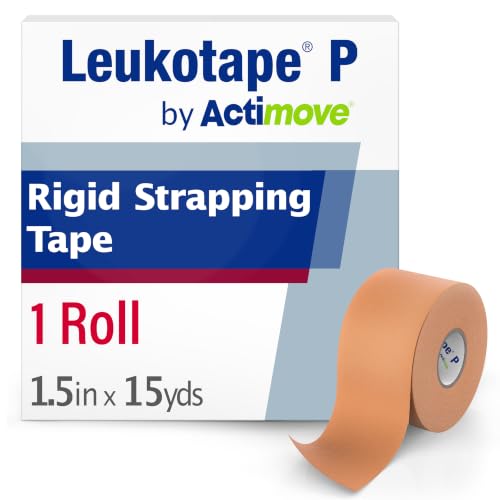
Leukotape P
The tape that sticks for days: the thru-hiker blister fix that makes drugstore bandages look silly.
Field check: The thru-hiker blister tape · stays stuck for days · ~$14 a roll
The entire science of blister prevention fits in one sentence: stop the rubbing before the skin separates. A blister announces itself early as a hot spot, a warm, tender warning that friction is winning, and the window between hot spot and blister is where the whole battle happens. Leukotape P owns that window. Stop, tape the hot spot flat, and the friction now happens on the tape's surface instead of your skin. Done early, the blister never arrives; the difference between hikers who 'get blisters' and hikers who do not is mostly this habit.
What makes Leukotape the specific answer, out of every tape ever tried on feet, is adhesion: drugstore bandages and athletic tapes surrender to sweat within an hour, while Leukotape's grip on skin is famous, holding for days on feet that are sweating, flexing, and getting dunked. Thru-hikers, the world's most demanding blister test lab, converged on it years ago and have not moved. The pro move: do not carry the bulky roll; wind a few feet around a straw or stick lengths on wax paper in the first-aid kit. Paired with Injinjis for between-toe blisters, it closes out the category.
- Type
- Rigid sports tape (listed)
- Adhesion
- Famously stays on skin for days
- Job
- Hot-spot taping before blisters form
- Approx. price
- ~$14 a roll
What we like
- Stays stuck through sweat, miles, and water
- Stops hot spots from ever becoming blisters
- One roll lasts entire seasons
- The tested consensus of the thru-hiking world
Worth noting
- Removal is not gentle; plan accordingly
- Full roll is bulky: re-spool a trail supply
- Works best early: tape the warning, not the wound
Who should buy it: Buy Leukotape if you have ever finished a hike limping, are breaking in new boots, or are training toward long days: it belongs in every first-aid kit that expects real mileage. Buy it also if you supervise other people's misery, scout leaders and trip organizers, because it makes you the most popular person at mile nine.
What we don't like: The adhesion cuts both ways: removal is emphatic, and taping over an already-open blister means dressing the wound first, then taping. It carries as a bulky roll unless you re-spool a trail length. And it is prevention-plus-early-response, not magic: tape at the hot spot, not at the crime scene.
Bottom line: Leukotape P is the blister answer the thru-hiking community settled on after trying everything else: a rigid sports tape with adhesion so tenacious it stays on a sweaty foot for days, through miles, socks, and stream crossings. Slap it on a hot spot the moment you feel one and the blister simply never forms. One ~$14 roll outlasts seasons.
09 · Best Luxury-Per-Dollar
Best Luxury-Per-Dollar
AceCamp Foam Sit Pad
A warm, dry seat anywhere on earth for ten dollars: the highest luxury-per-dollar object in hiking.
Field check: Closed-cell foam sit pad · warm dry seat on rock, snow, or mud · ~$10
Count your sits. A day hike has three or four; a backpacking trip has dozens, snack breaks, boot changes, camp dinners, summit lunches, and nearly every one happens on something cold, wet, sharp, or all three. The AceCamp sit pad fixes all of them at once. Closed-cell foam does not absorb water, so wet logs and dewy grass stop mattering; it insulates, so cold rock in the shoulder season stops leaching heat out of you; and it weighs so little that it clips or slides onto any pack without negotiation.
This is the pick that teaches the luxury-per-dollar lesson best. Nobody needs a sit pad, which is exactly why almost nobody buys one, and then everyone who receives or borrows one becomes evangelical, because it upgrades a moment that happens constantly. It also moonlights: kneeling pad for tent stakes and stream-side water filtering, extra insulation under a sleeping pad's hip zone, fan seat at a kid's soccer game. Ten dollars. The comfort math is not close.
- Material
- Closed-cell foam (listed)
- Job
- Warm, dry seat on any surface
- Carry
- Straps or slides outside any pack
- Approx. price
- ~$10
What we like
- Upgrades every single break, forever, for ~$10
- Wet, cold, and sharp surfaces all neutralized
- Doubles as kneeling pad and pad-insulation booster
- Weighs next to nothing
Worth noting
- Foam bulk rides outside the pack
- No back support: it is a seat, not a chair
- Chronically borrowed, rarely returned
Who should buy it: Buy the sit pad if you take breaks, which is everyone, but especially shoulder-season and winter hikers (cold rock is a heat thief), backpackers (camp seating, solved), and anyone whose knees have opinions about kneeling on gravel to filter water. Also the correct cheap add-on to any gear order to make shipping feel earned.
What we don't like: Closed-cell foam is bulky relative to its weight, so it rides outside the pack, where it will eventually acquire trail scars; that is its life. It is a sit pad, not a chair: your back still finds its own support. And its only real flaw is social: you will lend it and not get it back.
Bottom line: The AceCamp sit pad is a small slab of closed-cell foam that upgrades every break you take for the rest of your hiking life: a warm, dry, soft seat on wet logs, cold granite, snowbanks, and muddy trailheads, for about ten dollars. Per dollar, no object in this guide, and possibly in the sport, delivers more pure comfort.
10 · Best Dry Insurance
Best Dry Insurance
Sea to Summit Ultra-Sil Dry Bag
Featherweight dry storage for the layers that must not fail: our honest over-the-line exception at ~$30.
Field check: Featherweight roll-top dry storage · honest flag: ~$30, over this guide's line
Rain does its real damage inside the pack. A wet shirt on your back is unpleasant; a soaked insulating layer at the bottom of your pack is a safety problem, because the warm thing you were saving for the summit, the emergency, or the night is now a cold sponge. Pack covers leak at the back panel and gape in wind; the fix the backcountry actually trusts is waterproofing from the inside, and the Ultra-Sil is the classic tool: a roll-top dry bag in fabric so light it disappears from the weight budget, wrapped around your puffy, your spare socks, and anything else that must stay dry to matter.
Sea to Summit's Ultra-Sil line is the long-running standard here for a simple reason: it holds the featherweight-versus-trustworthy line better than the bargain bin does. A dry bag is pure insurance, and insurance you doubt is worthless. Roll the top three folds, clip it, and stop thinking about the sky. Pair it with the Frogg Toggs above and a $55 combined spend has your body and your backup warmth both covered, which is most of a storm strategy.
- Type
- Roll-top dry bag (listed)
- Fabric
- Featherweight Ultra-Sil (listed)
- Job
- Keeps insulation and spares dry inside the pack
- Approx. price
- ~$30 (over the line; flagged honestly)
What we like
- Protects the gear whose dryness is safety, not comfort
- Featherweight: insurance with no weight penalty
- The trusted standard, not a bargain-bin gamble
- Beats pack covers where they actually fail
Worth noting
- About $30: over this guide's line, honestly flagged
- Light fabric wants to live inside the pack
- Only as waterproof as your roll-top habit
Who should buy it: Buy the Ultra-Sil if you hike in real weather with insulation in your pack, which should be every shoulder-season and mountain hiker: it is the difference between rain being a mood and rain being a problem. Also correct for paddlers, bike commuters, and anyone whose pack shares space with a water reservoir that might someday betray them.
What we don't like: It breaks the guide's $25 rule at about $30, which is why the flag is on the card. Featherweight fabric asks for reasonable care: it is dry storage, not an abrasion-proof duffel, so keep it inside the pack. And roll-tops only seal as well as the roller: three folds minimum, every time.
Bottom line: The Ultra-Sil is the featherweight roll-top dry bag that guards the one rule of wet-weather hiking: your insulation must never get wet. It is also this guide's honest exception, at about $30 it sits clearly over our $25 line, and we kept it anyway, flagged, because no under-$25 dry storage we trust does the same job at this weight.
11 · Best Utensil
Best Utensil
TOAKS Titanium Long Handle Spork
Titanium, ten dollars, and long enough to reach the bottom of the meal bag with clean knuckles.
Field check: Titanium build · long handle sized for freeze-dried meal bags · ~$10
Buy-it-for-life gear usually costs three figures; this one costs ten dollars. The TOAKS Titanium Long Handle Spork is titanium the way expedition gear is titanium: it will not rust, will not snap in a pack pocket, will not care about decades. And the long handle is the entire design thesis: freeze-dried meal pouches are deeper than every normal utensil is long, and this spork is sized to the bag, so the last bites at the bottom come up without a knuckle-first excavation. Anyone who has eaten trail dinners knows exactly which annoyance just died.
Its place in a budget guide is almost philosophical: it is the smallest possible demonstration that cheap and permanent are not opposites. Ten dollars, once, and the utensil question is answered for the rest of your hiking career; the spork will outlast the stove, the pot, and quite possibly the hiker's knees. It also rounds out this guide's camp-kitchen corner alongside the Nalgene: hydration and dinner, both solved, both under $30 combined.
- Material
- Titanium (listed)
- Design
- Long handle for meal-bag depth (listed)
- Longevity
- Effectively permanent
- Approx. price
- ~$10
What we like
- Genuine titanium at about ten dollars
- Reaches the meal-bag bottom, knuckles dry
- Will outlast every other item in your kit
- Near-zero weight and bulk
Worth noting
- Long handle is awkward in small cups
- Spork geometry: adequate at soup, great at everything else
- Titanium conducts heat: respect the first bite
Who should buy it: Buy the TOAKS spork if you eat on trail, full stop, but especially if bagged backpacking meals are part of your rotation: the long handle is designed for exactly that. It is also the correct ten-dollar add-on to any gear order and the reigning champion of hiking gift exchanges.
What we don't like: The long handle that owns dinner is slightly gawky in a small mug or cook cup; a minor comedy, not a flaw. Spork geometry means it soups adequately rather than perfectly, as all sporks do. And titanium transmits heat, so the first bite of something boiling deserves a beat of respect.
Bottom line: The TOAKS long-handle spork is the cheapest piece of endgame gear in existence: about ten dollars buys genuine titanium, a functional near-zero weight, and the one feature that matters at dinner, a handle long enough to reach the bottom of a freeze-dried meal bag without your hand following it in. You will never need another utensil, and it will never wear out.
More gear worth comparing
Beyond this guide: the highest-rated gear across every category and budget, with a live price check on each.




As an Amazon Associate we may earn from qualifying purchases, at no cost to you.
Quick shop: every pick
Skip the scroll — the whole lineup, with a live price check on each.
- Darn Tough Hiker Micro Crew MidweightOur PickDarn Tough · ~$25Check price →
- Injinji Trail Midweight Mini-CrewBest Blister InsuranceInjinji · ~$18Check price →
- Nalgene 32oz Wide MouthThe IndestructibleNalgene · ~$17Check price →
- Frogg Toggs Ultra-Lite2 Rain SuitBest Emergency RainFrogg Toggs · ~$25Check price →
- TheTentLab Deuce of Spades TrowelThe LNT EssentialTheTentLab · ~$16Check price →
- Nuun Sport Electrolyte TabletsBest ElectrolytesNuun · ~$26Check price →
- Body Glide OriginalBest Anti-ChafeBodyGlide · ~$11Check price →
- Leukotape PThe Thru-Hiker TapeLeukotape · ~$14Check price →
- AceCamp Foam Sit PadBest Luxury-Per-DollarAceCamp · ~$10Check price →
- Sea to Summit Ultra-Sil Dry BagBest Dry InsuranceSea to Summit · ~$30Check price →
- TOAKS Titanium Long Handle SporkBest UtensilTOAKS · ~$10Check price →
How we chose
We built this list with one filter and one rule. The filter: everything had to come from our PA-API-verified dataset at an approximate street price of $25 or less, and where a pick drifts over (prices on cheap gear wobble constantly), we flag it in the card instead of pretending. Two picks broke the ceiling on purpose, the Nuun tablets at about $26 and the Sea to Summit dry bag at about $30, because being honest about a great $30 item beats padding the list with a worse $19 one.
The rule: contact points first. We ranked by comfort-per-dollar at the places gear touches the body, feet, skin, and water, because that is where cheap gear outperforms expensive gear, and we weighted items that prevent trip-enders (blisters, chafe, bonking, soaked insulation) over items that merely add convenience. Specs are the manufacturers' listed figures, hedged as such; no brand paid for placement, and a pick that stops earning its spot in our own packs loses its spot here. Every ounce earns its place, and at these prices, every dollar does too.
Questions, answered
What is the best hiking gear under $25?
Our pick is the Darn Tough Hiker Micro Crew sock (about $25): lifetime-guaranteed merino that improves every step of every hike, which no other $25 in the sport can claim. Behind it, the strongest picks are the Injinji toe socks (about $18) for blister-prone feet, the Nalgene 32oz (about $17), the Frogg Toggs Ultra-Lite2 rain suit (about $25), and Leukotape P (about $14). The pattern across all of them: gear that touches your body, feet, skin, and water, delivers the most comfort per dollar.
Are Darn Tough socks really worth $25?
Yes, twice over. First on performance: merino comfort, real cushion, and durability that keeps the sock feeling new deep into a season, a difference any hiker feels within a few miles. Second on math: the guarantee is unconditional and lifetime, as listed, so a worn-through pair gets replaced by Darn Tough rather than re-bought by you. A $25 sock you buy once beats $10 socks you buy annually. The honest footnote: the listing sits right at $25 and hovers a couple dollars over some days, so check the live price.
How do I prevent blisters when hiking?
Attack the two causes separately. Friction blisters (heels, sides of feet): tape hot spots with Leukotape P (about $14) the moment you feel warmth, before the blister forms; the tape stays stuck for days and moves the rubbing off your skin. Between-toe blisters: those are skin-on-skin anatomy, and Injinji toe socks (about $18) fix them structurally by sleeving each toe. Add well-fitted, broken-in footwear and dry socks, and the roughly $32 combination of tape plus toe socks ends most hikers' blister problems permanently.
Is the Frogg Toggs rain suit actually good?
For its real job, it is unbeatable: about $25 buys a genuinely waterproof, famously ultralight jacket AND pants, which is why thru-hikers have carried it across entire trails. The honest catch is fragility: the soft fabric tears on brush, rock, and rough handling, so it is the wrong choice for bushwhacking or as a hard-use primary shell. Treat it as emergency insurance that lives in your daypack, or as an ultralight rain strategy on clean trails, and it delivers more protection per dollar than anything else made.
Do electrolyte tablets actually make a difference on a hike?
On hot, sweaty, or long days, yes. Sweat carries sodium and other electrolytes out with the water, and drinking plain water all day while sweating heavily can leave you cramping, headachy, and flat while apparently doing everything right. A tab like Nuun Sport (about $26, and yes, that hovers just over our $25 line) drops into a bottle and replaces what you are losing. On a mild two-hour walk they are optional; on a July climb they are some of the cheapest performance insurance you can carry.
Why do I need a trowel for hiking?
Because Leave No Trace applies to everyone, and a proper cathole, dug well away from water, trails, and camp, is the standard for human waste in the backcountry. Improvised tools (sticks, boot heels, tent stakes) dig shallow, lousy holes, which is how popular areas end up fouled. The Deuce of Spades (about $16) removes every excuse: it weighs 0.6 ounces as listed, digs real rooty soil properly, and takes up less room than a snack bar. If you hike where there is no plumbing, it belongs in your pack permanently.
What is the best cheap hiking gear for a beginner?
Start at the contact points, in this order: Darn Tough socks (about $25) because feet decide how every hike feels, a Nalgene 32oz (about $17) because hydration is the other constant, and Leukotape P (about $14) in a tiny first-aid kit for hot spots. That is roughly $56 and addresses the three most common beginner miseries: sore feet, poor hydration habits, and blisters. Add the Frogg Toggs suit (about $25) for weather insurance and the sit pad (about $10) for morale, and the whole starter kit still costs less than one mid-tier rain jacket.
Is expensive hiking gear worth it, or is cheap gear fine?
Both, in the right order, and the order is the point. Cheap gear wins wherever it touches your body: no $200 purchase improves your day as much as $25 socks, $14 tape, and $11 anti-chafe, because those work at the exact sites where hikes go wrong. Expensive gear earns its price in structure and weather: a real pack harness for heavy loads, a durable shell for brush and storms, quality footwear. The mistake is buying the $400 item while hiking in cotton socks. Fix the contact points first, roughly $190 for every pick in this guide, then upgrade the big three as your miles demand it.
Filed under Buyer's Guide
Keep reading
The Best Backpacking Chairs & Camp Seats (2026)
The cheapest morale multiplier in backpacking: nine camp seats ranked by the ounces-versus-comfort math, from a $10 pad to the 1.1 lb Chair Zero.
The Best Gifts for Hikers (2026)
The other side of this coin: the gear hikers want and never buy themselves, from stocking stuffers to the grail-tier satellite SOS.
The Best Hiking Socks
The full sock field ranked: why Darn Tough leads it, and where Injinji and the rest fit.
The Ten Essentials
The safety framework this budget shelf plugs into: what every pack should carry, cheap or not.
Ultralight Backpacking 101
Where cheap-and-light thinking goes next: the Frogg Toggs philosophy applied to an entire pack.
The Best Water Filters
The next step up from the Nalgene: turning trail water into drinking water without carrying it all.
The Best Daypacks for Hiking (2026)
When the contact points are handled and it is finally time to spend real money: the packs worth it.