Our Pick: BearVault
Check price →The Best Bear Canisters (2026)
BearVault's three sizes (440, 565, and 700 cubic inches listed) cover every trip from an overnight to a week, and the choice is arithmetic: about 110 cubic inches of repacked food per day. Sizing table, approval map, and the bear-spray rules by park.
By The WorldHike Gear Desk · ~13 min read · Updated 2026-08-23

BearVault BV500 Journey
BearVault
The certified 7-day canister that half the John Muir Trail carries, and the safest default buy.
Check price★ Our Top Pick
Our Pick
BearVault BV500 Journey
The certified 7-day canister that half the John Muir Trail carries, and the safest default buy.
Not sure yet? Compare all 5 picks below ↓
Short answer: buy the BearVault BV500 Journey (about $100 at time of writing) if you do trips of five nights or more, the BV450 Jaunt (about $90) for weekends and overnights, and the BV475 Trek (about $95) if most of your trips are three to five nights and you want one canister that splits the difference. All three are the same transparent polycarbonate design with the same tool-free lid; they differ only in volume (700, 565, and 440 cubic inches listed), listed weight (2 lb 9 oz, 2 lb 5 oz, 2 lb 1 oz), and height. Every BearVault model is IGBC-certified and on the Sierra Interagency Black Bear Group approved list that Yosemite, Sequoia-Kings Canyon, and the Inyo trailheads enforce; the one well-known exception has historically been the Adirondack High Peaks, where New York DEC has not listed BearVault, so check the current DEC list before a High Peaks trip.
The decision is really about food volume per day. A typical backpacker packs 1.5 to 2 lb of food per day at roughly 100 to 130 cubic inches per day once it is repacked out of retail boxes. That arithmetic puts the BV450 at three to four days, the BV475 at four to five, and the BV500 at six to seven, and it explains why the BV500 is the John Muir Trail default. Bear spray is included at the end of this guide because it is the other half of bear safety in grizzly country, with the caveat that it is banned in Yosemite and several other national parks. Weights and volumes are BearVault's listed figures cross-checked against the live Amazon listings in August 2026.
Disclosure: no brand paid for a place here; links go to Amazon and we earn a commission on purchases. It does not change the order.
The short version
- Our pick: BearVault BV500 Journey, about $100. 700 cu in listed (about 11.5 L), 2 lb 9 oz listed, 8.7 in diameter x 12.7 in tall. Six to seven days of food for one person, the JMT and Sierra standard.
- Weekend size: BearVault BV450 Jaunt, about $90. 440 cu in listed (about 7.2 L), 2 lb 1 oz listed, 8.7 x 8.3 in. Three to four days for one, or a long weekend for two who pack tight. Fits horizontally in most 50 L packs.
- In-between: BearVault BV475 Trek, about $95. 565 cu in listed (about 9.3 L), about 2 lb 5 oz listed. Four to five days. The newest model; it closes the gap that sent people to the BV500 for trips that did not need it.
- Approval: all three are IGBC-certified and SIBBG-approved (Yosemite, SEKI, Inyo, Desolation). Adirondack High Peaks has historically not accepted BearVault; check NYS DEC's current list. Rocky Mountain, Olympic, North Cascades, Glacier, and Denali accept IGBC-certified canisters; confirm with the park at permit time.
- Bear spray: Counter Assault 10.2 oz with holster, about $68. Listed 44 ft range, EPA-registered. Legal and recommended in grizzly country (Glacier, Yellowstone, Grand Teton, Alaska). Illegal in Yosemite and most California parks; cannot fly in checked or carry-on bags.
- Holster: SABRE Frontiersman, about $11. Fits 7.9 and 9.2 oz cans; the Counter Assault 10.2 oz ships with its own holster, so buy the SABRE only for a second can or a chest mount.
- Sizing rule: count dinners, multiply by about 110 cu in, add 10 percent. Repack everything out of boxes and into zip bags before judging whether it fits.
| Item | Best for | Listed volume | Listed weight | Size | Days (1 person) | Price (Aug 2026) |
|---|---|---|---|---|---|---|
| BearVault BV500 Journey | Our Pick, 5+ nights | 700 cu in (11.5 L) | 2 lb 9 oz | 8.7 x 12.7 in | 6 to 7 | about $100 |
| BearVault BV475 Trek | 3 to 5 nights | 565 cu in (9.3 L) | about 2 lb 5 oz | 8.7 x 10.5 in | 4 to 5 | about $95 |
| BearVault BV450 Jaunt | Weekends, overnights | 440 cu in (7.2 L) | 2 lb 1 oz | 8.7 x 8.3 in | 3 to 4 | about $90 |
| Counter Assault Bear Spray 10.2 oz | Grizzly country (where legal) | 10.2 oz can | about 14 oz with holster | Listed 44 ft range | n/a | about $68 |
| SABRE Frontiersman Holster | Chest or belt carry | Fits 7.9 and 9.2 oz cans | about 2 oz | Nylon, belt loop | n/a | about $11 |
BearVault listed specs cross-checked against the live Amazon listings in August 2026. Days-of-food assumes about 110 cu in per person per day of repacked food. Prices are what the linked listings showed at time of writing.
01 · Our Pick
Our PickBearVault BV500 Journey
The certified 7-day canister that half the John Muir Trail carries, and the safest default buy.
Field check: ~7 days of food (listed) · certified, widely approved design · the JMT default
Regulation gear rewards the boring choice, and the BV500 is the boring choice perfected. The BV500 Journey is a transparent polycarbonate cylinder with a wide screw-on lid that opens without tools, which matters more than it sounds: cold fingers, headlamp light, and a locking mechanism that needs a coin or a knife is how dinner ends up eaten at 10 p.m. The clear walls mean you can find the coffee without unpacking breakfast, and the smooth round shape gives a bear nothing to bite or lever.
Sizing is the whole decision with canisters, and about 7 days of listed capacity, around 11.5 liters listed, is the number that fits the most itineraries: a full week for one hiker, or a long weekend for two sharing one can. That is why it became the JMT default, where resupply gaps of five to seven days are normal and rangers actually check. The tax is real and we will not dress it up: a hard canister in this size class runs in the two-and-a-half-pound range listed before you put a gram of food in it, and it packs like a small barrel, riding best centered in the pack against your back or strapped under the lid.
- Approval
- IGBC-certified, SIBBG-approved (Sierra parks)
- Dimensions
- 8.7 in diameter x 12.7 in tall
- Listed volume
- 700 cu in (about 11.5 L)
- Listed weight
- 2 lb 9 oz
- Sized for
- ~7 days of food (listed)
- Capacity
- ~11.5 L (listed)
- Design
- Transparent, tool-free screw lid, certified
- Approx. price
- about $100
What we like
- Sized for about 7 days listed, the most useful single capacity
- Tool-free lid opens with cold hands and by headlamp
- Transparent walls end the where-is-the-coffee excavation
- Widely approved certified design, the JMT standard
Worth noting
- Hard-canister weight and barrel bulk, no way around it
- Overkill capacity for weekend-only hikers
- A handful of famous problem bears have defeated screw lids, so verify local approval
Who should buy it: Buy the BV500 if you take trips of five days or longer, share food storage with a partner on shorter ones, or want a single canister that covers the most itineraries you will ever hike. It is the right first canister for JMT and High Sierra aspirants, and the right only canister for most people, because owning the big one and packing it light beats owning the small one and running out of legal storage on day four.
What we don't like: It is a barrel, and it carries like one: bulky in smaller packs, awkward outside them, and in the two-and-a-half-pound class listed while empty. Weekend hikers pay the full size-and-weight tax for capacity they use twice a year, which is what the BV450 below is for. And the screw lid that is delightfully tool-free for you has, in a few well-known problem zones, been figured out by exceptionally clever bears, which is one more reason to verify local approval rather than assuming it.
Bottom line: The BV500 is the closest thing bear-canister land has to a consensus. It is a certified, transparent, tool-free canister sized for about a week of food (listed), it is on the approved lists that matter most often, and it is the container you will see on bear boxes and JMT passes more than any other. At about $100 it solves a legal requirement, a wildlife problem, and a what-do-I-buy problem in one purchase.
02 · Best In-Between
Best In-Between
BearVault BV475 Trek
The 5-to-6-day size that fills the gap most real itineraries actually fall into.
Field check: ~5 to 6 days of food (listed) · same certified BearVault design · the gap size
Canister sizing used to be a two-door problem: too small or too big. The BV475 Trek is the third door. For years the choice was a weekend can that ran dry on day four or a week-long barrel you hauled two-thirds empty, and hikers split the difference by cramming day one's dinner and smellables outside the canister, which is exactly the habit canister rules exist to kill. A listed 5-to-6-day capacity means the five-day trip fits, actually fits, with the toothpaste and the sunscreen and the bar wrappers all inside where they belong.
Everything else is the BV500 playbook at nine-tenths scale: the same transparent polycarbonate, the same tool-free screw lid, the same smooth geometry with nothing for a bear to grip, and the same certified design family with wide approval, which you will still verify against your permit zone's current list because that is the rule of this entire guide. The carry tax drops usefully too; it is lighter and shorter than the BV500 (listed), which small-framed hikers and smaller packs will feel immediately.
- Approval
- IGBC-certified, SIBBG-approved (Sierra parks)
- Dimensions
- 8.7 in diameter x 10.5 in tall
- Listed volume
- 565 cu in (about 9.3 L)
- Listed weight
- about 2 lb 5 oz
- Sized for
- ~5 to 6 days of food (listed)
- Design
- Transparent, tool-free screw lid, certified
- Fits between
- BV450 weekend size and BV500 week size
- Approx. price
- about $95
What we like
- Sized for the 4-to-6-day trips most hikers actually take
- Same certified, transparent, tool-free design as the BV500
- Meaningfully less bulk and carry than the week-size can
- Great half of a two-canister split for couples
Worth noting
- Still hard-canister bulk, just less of it
- Wrong size for true weekenders and true week-plus trips
- Newest size in the family, so confirm it by model on your zone's approved list
Who should buy it: Buy the BV475 if your trips cluster in the four-to-six-day band: long weekends stretched with a Friday, five-day loops, section hikes between close resupplies. It is also the right compromise for a couple splitting food across two mid-size canisters instead of one giant and one tiny, which balances pack loads far better.
What we don't like: It is still a hard canister, so it still carries like furniture, just slightly smaller furniture. The in-between size means genuine weekend hikers are carrying spare volume and true week-long hikers will run out; it flatters the middle of the bell curve and only the middle. And because it is the newest size in the family, it is worth double-checking that your specific destination's approved list names it, not just the brand.
Bottom line: The BV475 exists because most trips are not a weekend and not a week. Sized for about 5 to 6 days of food listed, it splits the difference between the BV450 and BV500 in capacity, bulk, and carry, in the same certified, transparent, tool-free design. If your typical trip is the four-night loop or the five-day section hike, this is the canister actually shaped like your calendar.
03 · Best Weekend Size
Best Weekend Size
BearVault BV450 Jaunt
The certified weekend canister: about 4 days of food listed, in the smallest legal package here.
Field check: ~4 days of food (listed) · certified BearVault design · the weekend answer
The most common canister mistake is buying for the trip you dream about instead of the trips you take. The BV450 Jaunt is the correction. A listed capacity of about 4 days for one hiker covers the Friday-to-Sunday overnight with margin, fits inside smaller packs instead of riding on top of them, and costs and weighs the least of the three BearVaults here. For the hiker whose canister country is a few Yosemite or Adirondack weekends a year, this is the whole requirement, solved, for about $90.
The design story is identical up and down the family, and that is the point: the same clear polycarbonate so you can see your food, the same wide tool-free screw lid, the same smooth bite-proof geometry, the same certified design with broad approval, verified against your zone's current list before every trip like always. Nothing about the smaller size is a lesser version; it is the same fortress with fewer rooms.
- Approval
- IGBC-certified, SIBBG-approved (Sierra parks)
- Dimensions
- 8.7 in diameter x 8.3 in tall
- Listed volume
- 440 cu in (about 7.2 L)
- Listed weight
- 2 lb 1 oz
- Sized for
- ~4 days of food (listed)
- Design
- Transparent, tool-free screw lid, certified
- Role
- Weekend and solo-hiker size
- Approx. price
- about $90
What we like
- About 4 days listed covers the weekends most hikers actually take
- Smallest, lightest, cheapest of the certified family here
- Fits inside smaller packs instead of on top of them
- Perfect second canister for couples splitting loads
Worth noting
- Capacity is a hard legal ceiling, no overflow allowed
- Still rigid-barrel packing, just less of it
- Slightly worse capacity-per-dollar than the bigger sizes
Who should buy it: Buy the BV450 if your canister-country trips are one to three nights, if you hike solo with a smaller pack, or if you are adding a second, smaller canister to pair with a big one. It is also the right rental-replacement buy: if you have rented a canister twice at a trailhead kiosk, the third trip pays most of the purchase price.
What we don't like: Four listed days is a hard ceiling, and stuffing day five's food in a stuff sack next to the canister is illegal in exactly the places that made you buy a canister. It is still a rigid barrel, just a shorter one, so the packing awkwardness does not disappear, it shrinks. And the per-liter math slightly favors the bigger cans, so you are paying a small premium for the smaller commitment.
Bottom line: The BV450 is the answer for the way most people actually backpack: one to three nights, in a canister-required zone, a few times a season. Sized for about 4 days of food listed, it is the same certified, transparent, tool-free BearVault design with the least bulk and the lowest price in the family at about $90. If your trips are weekends, buying week-size storage is just carrying a bigger barrel out of superstition.
04 · The Other Bear Essential
The Other Bear Essential
Counter Assault Bear Spray + Holster
EPA-registered deterrent spray with a belt holster: the grizzly-country companion to the canister.
Field check: EPA-registered bear deterrent · belt holster included · for grizzly country, where legal
Bear safety is two different problems wearing one name. Food storage is a every-single-night problem that canisters solve. A defensive encounter is a once-if-ever problem, and the tool for it is an EPA-registered deterrent spray like Counter Assault, a high-volume capsaicin fog designed to turn a charging bear at a distance of several body lengths. EPA registration is the certification gate of the spray world: it means the product is tested and registered as a bear deterrent specifically, not a repurposed self-defense spray, and it is the first thing to look for on any can.
The holster in this package is not an accessory, it is the point. Spray works only if it is in your hand in the first seconds of an encounter, which means carrying it on a belt or chest strap, never inside the pack. Practice the draw a few times at home, know the safety clip, and understand the wind. And carry it where it is appropriate: spray is standard, often explicitly recommended, kit in grizzly country in places like the Northern Rockies. It is NOT legal everywhere.
- Range
- 44 ft listed
- Can size
- 10.2 oz
- Type
- EPA-registered bear deterrent spray
- Includes
- Belt holster
- Where it belongs
- Grizzly country, where legal; banned in some parks (e.g. Yosemite)
- Approx. price
- about $68
What we like
- EPA-registered deterrent, the certification that matters for spray
- Holster included, which is the difference between a tool and ballast
- The standard companion to a canister in grizzly country
- From one of the original names in the category
Worth noting
- Restricted or banned in some parks, Yosemite bans it, always verify
- Cannot fly in carry-on, awkward for fly-in trips
- Cans carry a listed expiration date and must be replaced
Who should buy it: Buy Counter Assault if you hike, hunt, or fish in grizzly country, where deterrent spray is standard kit and often officially recommended. It also earns a place for black-bear-country hikers in high-encounter areas where spray is legal. Buy it with the holster, carry it on your body, and treat the canister and the spray as two halves of one system where both are allowed.
What we don't like: It is banned or restricted in some of the exact parks this guide's canisters are required in, Yosemite first among them, so it is possible to buy this and be unable to legally carry it on your next trip; check first. It cannot fly in carry-on and airlines restrict it generally, so fly-in trips usually mean buying at the destination. And it expires: the can carries a listed expiration date, and an expired can is a false sense of security on a belt.
Bottom line: A canister protects your food; spray protects the encounter. Counter Assault is one of the original names in EPA-registered bear deterrents, and this package pairs the can with a belt holster, which matters because spray buried in a pack pocket is a souvenir, not a tool. Essential kit in grizzly country. But check legality first: spray is restricted or banned in some parks, and Yosemite famously bans it.
05 · Best Spray Carry
Best Spray Carry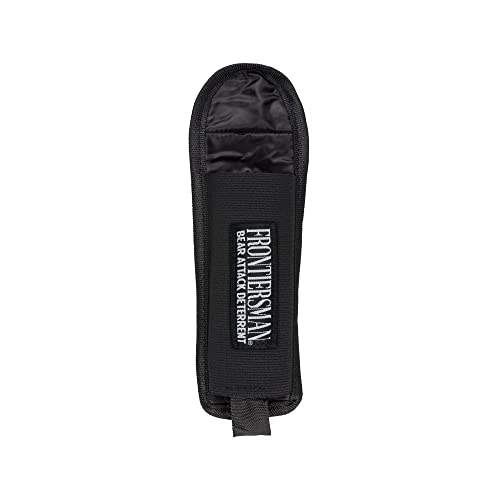
SABRE Frontiersman Bear Spray Holster
A ten-dollar chest-or-belt holster that turns bear spray from cargo into a reachable tool.
Field check: Fits 7.9 and 9.2 oz cans (listed) · chest or belt carry · the $10 readiness upgrade
Every bear-spray story that ends badly for the hiker has the same middle chapter: the can was in the pack. Encounters unfold in seconds, and a deterrent you cannot deploy in seconds is not a deterrent, it is extra weight with a safety clip. The Frontiersman holster solves that for about $10: a molded carrier, listed to fit 7.9 and 9.2 oz cans, that mounts on a hip belt or chest strap and holds the can at a grab-and-go angle.
The chest-mount option deserves the endorsement specifically. A hip-belt holster disappears under a pack's own hip belt on many setups, while a chest mount on the sternum strap keeps the can visible, reachable with either hand, and out of the way of trekking-pole swing. Wherever you mount it, do the rehearsal: unclip, draw, thumb the safety, twice, at home, so the motion exists in your hands before it ever has to exist in a meadow. Pair it with the Counter Assault can above if your spray did not come with a carry solution you trust.
- Fits
- 7.9 and 9.2 oz cans (listed)
- Carry
- Belt or chest-strap mount
- Role
- Keeps spray a one-second draw away
- Approx. price
- about $11
What we like
- About $10 to make spray actually reachable
- Chest-mount option keeps the can available to either hand
- Listed fitment covers the most common can sizes
- The cheapest meaningful safety upgrade in this guide
Worth noting
- Fit varies a bit across can brands within the listed sizes
- Strap setup takes fiddling on some pack harnesses
- Solves carry, not legality; banned-spray zones ban the whole setup
Who should buy it: Buy the Frontiersman holster if your bear spray came bare, if the included holster fights with your pack's hip belt, or if you want a chest-mounted setup that keeps the can reachable with either hand. At about $10 it is also the right spare: one on the pack you use most, so the spray never travels unreachable.
What we don't like: It is a molded sleeve with straps, so temper expectations about refinement: fit is snug for some can brands and looser for others within the listed sizes, and the mounting straps take a minute of fiddling to sit right on some harnesses. It also solves carry, not legality, and we will keep repeating that where spray is banned, no accessory changes the answer.
Bottom line: The cheapest item in this guide fixes the most common spray mistake: carrying the can where you cannot reach it. The SABRE Frontiersman holster fits 7.9 and 9.2 oz cans (listed) and rides on a belt or chest strap, which puts the spray a one-second draw away instead of a thirty-second excavation. At about $10 it is the no-debate accessory for anyone whose spray came without a carry solution, or whose stock holster does not fit their harness.
More gear worth comparing
Beyond this guide: the highest-rated gear across every category and budget, with a live price check on each.




As an Amazon Associate we may earn from qualifying purchases, at no cost to you.
Quick shop: every pick
Skip the scroll — the whole lineup, with a live price check on each.
- BearVault BV500 JourneyOur PickBearVault · about $100Check price →
- BearVault BV475 TrekBest In-BetweenBearVault · about $95Check price →
- BearVault BV450 JauntBest Weekend SizeBearVault · about $90Check price →
- Counter Assault Bear Spray + HolsterThe Other Bear EssentialCounter Assault · about $68Check price →
- SABRE Frontiersman Bear Spray HolsterBest Spray CarrySABRE · about $11Check price →
How we chose
What we did: we pulled listed volume, weight, and dimensions from BearVault, confirmed IGBC certification and SIBBG approval against the published lists, cross-checked every ASIN, image, and price against the live Amazon listing in August 2026, and read long-term owner reports for the real failure modes (lid tabs wearing, cold-weather lid stiffness, the wide-mouth-versus-pack-fit complaint). The days-of-food figures come from the standard backpacker planning number of 1.5 to 2 lb of food per day and our own repacked-volume experience, not from BearVault's marketing.
What we did not do: we did not drop-test canisters, weigh them, or have a bear try them. Park rules change; the approval statements here were true at time of writing, and the permit office is the final word.
Why only BearVault: hard-sided canister choice on Amazon is narrow. The credible alternatives are either heavier and opaque (the older 2 lb 12 oz, 614 cu in style) or carbon fiber at three to four times the price and rarely in stock. BearVault owns the weight-price-approval intersection, so this guide ranks sizes rather than pretending a wider field exists.
Key terms
- Certified / approved container
- A bear-resistant container that has passed a recognized testing program and, crucially, appears on a specific land manager's accepted list. The two are not the same thing: certification gets a canister considered, but each park or forest publishes its own approved list, and that list is the ruling for your permit zone.
- Canister-required zone
- An area where carrying an approved bear-resistant food container is a condition of your permit, not a suggestion. Yosemite's wilderness, most of the John Muir Trail corridor, and parts of the Adirondack High Peaks are the well-known examples, and the list of such areas has been expanding, so verify current rules for every trip.
- Days of food
- The only capacity unit that matters when sizing a canister. Manufacturers list capacities in liters or cubic inches, but itineraries run on days, roughly one hiker-day of food per unit of listed capacity the maker claims. We express every size in this guide as listed days for one hiker.
- EPA-registered bear spray
- A capsaicin-based deterrent tested and registered with the EPA specifically as a bear deterrent, as distinct from personal-defense sprays. Registration is the certification gate of the spray world. Note that spray is a deterrent for encounters, not a substitute for food storage, and it is banned in some parks, including Yosemite.
- Ursack
- A soft-sided bear-resistant bag made of high-strength fabric, tied to a tree rather than left on the ground. Certified versions are accepted in some areas but not others, and notably do not satisfy hard-canister requirements in zones like Yosemite. Always check whether your permit zone accepts soft-sided containers before substituting one for a canister.
Questions, answered
Do I really need a bear canister in Yosemite?
Yes. In Yosemite's wilderness, carrying an approved bear-resistant food container is required, and rangers do check. The requirement exists because Yosemite's bears learned decades ago that backpacks and hangs are vending machines, and a food-conditioned bear usually ends up destroyed. Rent one at the park if you rarely visit, or buy the BearVault size that matches your trip length if canister country is a regular habit. Either way, confirm your specific container is on Yosemite's current approved list before you go, and note that soft-sided bags like the Ursack do not satisfy Yosemite's requirement.
What size bear canister do I need for the John Muir Trail?
The default answer is the BV500, sized for about 7 days of food (listed), because JMT resupply gaps of five to seven days are normal and most of the corridor requires canisters. Cutting it closer with a smaller can works only if your resupply plan is tight and proven, and running out of legal storage mid-carry means illegal overflow in exactly the wrong place. Most JMT hikers carry the week-size can, pack the first day's food outside logic be damned, eat down into it by night one, and never think about it again.
Are BearVault canisters approved everywhere?
They are widely approved, which is different from universally approved. BearVault's certified, tool-free design is on most of the approved lists hikers encounter, but each land manager publishes its own accepted-container list, those lists change, and a handful of areas with unusually clever bears have historically excluded specific designs. The habit that keeps you legal is checking your exact model against your permit zone's current list before every trip. It takes two minutes and it is the single most repeated piece of advice in this guide because it is the one that matters.
Bear canister vs Ursack: which should I buy?
Buy for your permit zones, not for the weight chart. The Ursack, a certified soft-sided bear-resistant bag, packs smaller and weighs far less than any hard canister, and it is a legitimate option in areas whose land managers explicitly accept it. But it is not accepted everywhere hard canisters are, and the famous canister zones, Yosemite included, require hard-sided containers. If your hiking includes Yosemite, the JMT corridor, or the Adirondack High Peaks canister areas, buy the hard canister; the Ursack would be a second purchase for the specific areas that allow it, never a substitute.
Can I carry bear spray in Yosemite?
No. Yosemite bans bear spray, and this catches people every season because the same park requires bear canisters. The two rules come from different logic: canisters address food-conditioned black bears, while spray is a grizzly-country encounter tool, and Yosemite has no grizzlies and a lot of crowded trails. Spray is standard, often recommended, kit in grizzly country like the Northern Rockies where it is legal. The rule that keeps you out of trouble: check food-storage rules and spray rules separately, for every destination, before every trip.
How much food fits in a bear canister, really?
Use the listed days-of-food ratings as planning numbers for one hiker with reasonably dense food: about 4 days for the BV450, 5 to 6 for the BV475, about 7 for the BV500 (all listed). Real capacity depends on packing discipline: repackage everything out of retail boxes, flatten bags, favor calorie-dense foods, and pack the canister food-first with smellables like toothpaste and sunscreen tucked into gaps. Remember everything scented must fit, not just meals, and day one's lunch can ride outside the can because you will eat it before camp.
Where do you put a bear canister at night?
On the ground, 100 feet or more downwind and downhill from your tent, wedged where a curious bear cannot roll it far: against rocks, in a shallow depression, never near a cliff, water, or slope it could travel. Do not hang it, do not tie cord to it (a rope just gives a bear a handle to carry it off), and do not keep it in or near the tent. Some hikers add a couple of reflective tape strips to make the morning search easier after a bear or a marmot relocates breakfast a few feet.
Is bear spray worth it in black bear country?
Where it is legal, it can be reasonable insurance in high-encounter areas, but it is essential kit only in grizzly country, where it is standard practice and often officially recommended. In most black-bear country your real safety tools are the boring ones: clean camp habits, proper food storage in that certified canister, noise on blind corners, and distance. If you do carry spray, carry it reachable, a belt or chest holster like the SABRE Frontiersman, not buried in a pack, and check your destination's rules first, because some parks, Yosemite most famously, ban spray entirely.
Filed under Buyer's Guide
Keep reading
Bear Bag vs Bear Canister
Which zones require a canister, where an Ursack is accepted, and the 2-lb weight math.
Best Bear Spray (2026)
Counter Assault, SABRE, and UDAP compared on range, seconds, and ounces.
The Ten Essentials, Explained
The safety system your canister plugs into: the ten categories every pack should cover.
The Best Backpacking Packs (2026)
The pack that has to swallow the barrel: haulers with the frame and volume for canister country.
The Best Hiking Boots (2026)
What goes on your feet for the miles between bear boxes, benchmark to budget.
The Best Headlamps (2026)
The light you will open that tool-free canister lid by, ranked.
The Best Hikes in the World
Where all this preparation points: the trails worth building a gear closet around.