Our Pick: Garmin
Check price →The Best GPS Watches for Hiking (2026)
The best GPS watch for hiking is the Garmin fenix 8: the full-map, weeks-of-battery flagship the rest of the category is measured against. Around it we ranked the field by what each tier of money actually buys, from the $199 COROS Pace 3 to the $1,300 fenix 8 Pro, through the value-play epix Pro, the rugged Instinct 3 Solar, and the flagships from Suunto and COROS.
By The WorldHike Gear Desk · ~17 min read · 2026-08-07

Garmin fenix 8 (51mm AMOLED)
Garmin
The complete hiking watch: full maps, weeks-class battery per listing, and the deepest outdoor toolset on any wrist.
Check price★ Our Top Pick
Best Overall
Garmin fenix 8 (51mm AMOLED)
The complete hiking watch: full maps, weeks-class battery per listing, and the deepest outdoor toolset on any wrist.
Not sure yet? Compare all 8 picks below ↓
Answer first: the best GPS watch for hiking is the Garmin fenix 8, because it is the most complete version of the thing a hiking watch is actually for, full onboard topo maps on your wrist, multi-day battery, and an ecosystem that ties into the inReach safety devices half this audience already carries. If $830 is more watch than your hiking needs, the honest news is that the field beneath it has never been better: the prior-generation epix Pro delivers most of the flagship for about $648, the rugged Instinct 3 Solar covers real navigation at $400, and the COROS Pace 3 puts genuine GPS tracking on your wrist for $199. This guide is the map of what each of those price jumps actually buys.
First, the honest question: do you need a GPS watch at all, when your phone runs the same maps? Three practical reasons the wrist wins. Glanceability: navigation you consult forty times a day has to cost nothing to consult, and raising your wrist is free while digging out a phone is not, which is why phone-navigators check less often and miss turns more. Battery separation: your phone is your camera, your book, and your emergency line; burning it down all day for breadcrumb tracking is spending your most critical battery on your least critical need. And weatherproof permanence: a watch is on your body in the rain, above the creek you just fell in, at the moment your phone is a wet brick in a wet pocket. A GPS watch is not a phone replacement; it is the separation of navigation from communication, and that separation is a safety feature.
One disclosure, up front and plainly: no brand paid for a spot in this guide, nobody placed a product, and no manufacturer saw it before publication. Some links go to Amazon; if you buy through one we may earn a small commission at no extra cost to you, and that never moves a pick up or down. Display sizes, materials, and especially battery figures below are the manufacturers' listed claims, flagged as such every time, real-world battery life varies enormously with GPS mode and screen settings, and prices are approximate street prices verified against live listings in August 2026.
The short version
- Our pick is the Garmin fenix 8 (about $830, 51mm AMOLED per listing): full onboard mapping, multi-day battery, and the deepest hiking feature set on any wrist.
- The value play of the premium tier is the prior-gen Garmin epix Pro Sapphire 51mm (about $648): most of the flagship experience at a $180 discount, and the small-wrist 42mm version runs about $400.
- The Garmin Instinct 3 Solar (about $400) is the rugged sweet spot: solar-assisted battery and a built-in flashlight per listing, with breadcrumb navigation instead of full maps, and that trade is the whole decision.
- The COROS Apex 4 (about $479) is the battery king of the mid tier, with a listed 41 days in watch mode, and the Suunto Vertical 2 (about $699) is the strongest non-Garmin flagship.
- The budget floor is real: the COROS Pace 3 (about $199) delivers genuine GPS tracking and multi-day battery for a fifth of flagship money; the step everything above it sells is maps.
| Watch | Best for | Navigation | Signature (listed) | Approx. price |
|---|---|---|---|---|
| Garmin fenix 8 | Our Pick | Full onboard maps | 51mm AMOLED flagship | ~$830 |
| Garmin epix Pro (Gen 2) 51mm | Best Value Flagship | Full onboard maps | Prior-gen Sapphire AMOLED | ~$648 |
| Garmin Instinct 3 Solar | Best Rugged Value | Breadcrumb | Solar assist + flashlight | ~$400 |
| Suunto Vertical 2 | Best Non-Garmin Flagship | Full onboard maps | 1.5in AMOLED, titanium | ~$699 |
| COROS APEX 4 (46mm) | Best Battery | Onboard mapping | 41-day watch mode | ~$479 |
| Garmin Forerunner 965 | Best Hiker-Runner Crossover | Full onboard maps | Lightweight running flagship | ~$600 |
| COROS Pace 3 | Best Budget | Breadcrumb | Featherweight, multi-day battery | ~$199 |
| Garmin fenix 8 Pro | Money No Object | Full onboard maps | Sapphire, DLC titanium | ~$1,300 |
The 2026 GPS-watch shortlist at a glance. Displays, materials, and battery figures are the manufacturers' listed claims; prices are approximate street prices verified in August 2026.
01 · Best Overall
Our PickGarmin fenix 8 (51mm AMOLED)
The complete hiking watch: full maps, weeks-class battery per listing, and the deepest outdoor toolset on any wrist.
Field check: 51mm AMOLED per listing · full onboard topo mapping · the fenix line, the category's benchmark for a decade
Every category has a benchmark, and in outdoor watches the benchmark has worn the same name for a decade. The fenix 8 is the current edition of the line that defined the serious GPS watch, and its 51mm AMOLED display (per listing) finally makes the maps, the feature the whole watch orbits, genuinely readable at a glance. Full topo on the wrist changes trail behavior in a way breadcrumb watches cannot: you stop navigating by faith and start navigating by terrain, checking the contour ahead, the water source two drainages over, the bail-out trail you hoped existed.
The rest of the toolset reads like the packing list of this entire site: route planning and turn warnings, storm-alert barometrics, a pulse-ox and recovery suite, dive-grade build touches, and ecosystem hooks into the inReach communicators many fenix owners already carry. Battery is listed in the weeks class in watch mode, days-class with heavy GPS, and, standard hedge, real numbers depend entirely on your settings. The honest cons are the obvious pair: about $830, and a 51mm case that wears large on small wrists. For the second problem Garmin sells smaller fenix 8 sizes; for the first, the epix Pro below is the whole argument.
- Display
- 51mm AMOLED (per listing)
- Navigation
- Full onboard topo maps
- Battery
- Weeks-class in watch mode (listed; varies with GPS use)
- Approx. price
- ~$830
What we like
- Full topo mapping that changes how you navigate
- Weeks-class listed battery in watch mode
- A decade of fenix-line outdoor software maturity
- Ties into the inReach safety ecosystem
Worth noting
- About $830: flagship money
- 51mm wears large on small wrists
- More feature depth than casual hikers will use
Who should buy it: Buy the fenix 8 if the watch is your primary navigation tool and not a phone accessory: off-trail hikers, peak-baggers, multi-day backpackers, and data-driven athletes who want the deepest toolset on one wrist for the next half decade.
What we don't like: About $830 is real money, the 51mm case is genuinely large on smaller wrists, and the feature depth has a learning curve that casual users will never fully explore, which is exactly the case for buying down-ladder.
Bottom line: The fenix 8 is the watch every other pick in this guide is implicitly compared against, and the comparison keeps ending the same way. Full onboard topo maps you can actually navigate from, battery listed in weeks rather than days, a build meant for rock and weather, and a decade of the fenix line's outdoor software maturity underneath. At about $830 it is a serious purchase and a complete one: nothing in the category does more things this well.
02 · Best Value Flagship

Garmin epix Pro (Gen 2) Sapphire 51mm
Last year's AMOLED flagship at a $180 discount: the smartest money in the premium tier.
Field check: Prior-gen AMOLED flagship · Sapphire lens per listing · full onboard topo mapping
The best time to buy a flagship is the year it stops being one. The epix Pro Gen 2 was Garmin's AMOLED showpiece, the watch that proved a brilliant screen and serious battery could coexist, and succession politics have done nothing to its actual capability: the maps are as readable, the Sapphire lens (per listing) as scratch-proof, the navigation and training toolset as deep as the day it wore the crown. What changed is the price, down to about $648, a $180 head start on the fenix 8 that buys a lot of trail food.
The honest ledger of what the newer watch holds over it: the freshest hardware revision, the longest software-support runway, and the newest-generation features, real advantages that compound for a decade-long owner and evaporate for a five-year one. Small-wristed hikers get an extra bonus rung: the epix Pro 42mm Sapphire delivers the same mapping in a genuinely small case for about $400, quietly one of the best value-per-dollar watches Garmin sells and the small-wrist answer this whole premium tier otherwise lacks.
- Display
- AMOLED, Sapphire lens (per listing)
- Navigation
- Full onboard topo maps
- Sizes
- 51mm (~$648); 42mm Sapphire (~$400)
- Approx. price
- ~$648
What we like
- Flagship mapping and build at a $180 discount
- Sapphire lens per listing: scratch protection included
- 42mm version is the premium tier's small-wrist answer
Worth noting
- Superseded generation: shorter support runway
- Misses the newest-gen features by definition
- Discount inventory means colorway roulette
Who should buy it: Buy the epix Pro 51mm if you want flagship mapping and build at the best price it has ever sold for and can shrug off not owning the newest generation. Buy the 42mm version if every large watch you have tried swallowed your wrist; it is the premium tier's hidden small-wrist bargain at about $400.
What we don't like: It is the superseded generation, so its software-support runway is shorter than the fenix 8's, and the newest-gen features stop at the succession line. Availability of specific colorways comes and goes as the discount clears inventory.
Bottom line: The epix Pro is the deal that appears in every hardware category the year after a flagship succession: the previous benchmark, still brilliant, suddenly discounted. Full topo maps, a Sapphire-protected AMOLED (per listing), and the same core outdoor toolset that made it Garmin's showcase, now about $648 while the fenix 8 asks $830. Unless a specific new-generation feature is calling you by name, this is where the smart premium money goes.
03 · Best Rugged Value

Garmin Instinct 3 Solar (50mm)
The tool-watch: solar assist, a built-in flashlight per listing, and battery anxiety essentially deleted, for $400.
Field check: Solar-assisted battery per listing · built-in flashlight per listing · rugged Instinct-line build
Half this category is jewelry that hikes. The Instinct is a tool that tells time. The Instinct 3 Solar keeps the line's signature virtues: a case built to shrug off rock, a display legible in flat gray drizzle and noon glare alike, and battery numbers, solar-assisted per listing, that turn charging from a routine into an occasional errand. The flashlight (per listing) sounds like a gimmick until the first pre-dawn start or midnight tent search, at which point it becomes the thing you show other hikers at camp.
Two family notes worth the ink: smaller wrists can take the same rugged-solar formula in the Instinct 2S Solar at about $230, a legitimate budget-rugged sleeper. And Instinct owners lose none of the Garmin ecosystem: tracking, training metrics, and phone notifications all ride along, just rendered on a tool-watch screen instead of a showpiece one.
- Display
- Rugged high-legibility (50mm case)
- Navigation
- Breadcrumb tracks and routes (no full maps)
- Battery
- Solar-assisted, per listing
- Extra
- Built-in flashlight (per listing)
- Approx. price
- ~$400
What we like
- Solar-assisted battery makes charging an afterthought
- Built-in flashlight is a genuine daily-use feature
- Instinct-line toughness at a mid-tier price
- 2S Solar variant covers small wrists at about $230
Worth noting
- No onboard maps: breadcrumb only
- Utilitarian display next to the AMOLED crowd
- Solar extends battery; it does not replace the charger
Who should buy it: Buy the Instinct 3 Solar if your hiking lives on marked trails and planned routes, you value battery indifference over map glamour, and $400 feels like the right ceiling: weekend warriors, hunters, and everyone who has ever broken a nice watch on a nice rock.
What we don't like: Breadcrumb navigation is the honest ceiling: no onboard maps, which off-trail hikers will eventually resent. The monochrome-style display is a tool, not a pleasure, and solar assist extends but does not eliminate charging, whatever the marketing photography implies.
Bottom line: The Instinct 3 Solar is what happens when Garmin optimizes for toughness-per-dollar instead of screen glamour: a rugged, legible watch with solar-assisted battery (per listing) that stretches already-long runtimes toward the horizon, plus the built-in flashlight (per listing) that Instinct owners describe as the feature they did not know they were buying the watch for. The trade that funds the $400 price is navigation: breadcrumb tracks and back-to-start, not full maps. Know that trade and this is the best value in the guide.
04 · Best Non-Garmin Flagship

Suunto Vertical 2
The Finnish flagship: a 1.5-inch AMOLED in titanium per listing, with offline maps and a century of orienteering DNA.
Field check: 1.5in AMOLED, titanium build per listing · offline mapping · Suunto's adventure flagship
Suunto has been putting the outdoors on wrists since before satellites were involved, and the Vertical 2 wears that lineage well. The Vertical 2 pairs a large 1.5-inch AMOLED with a titanium build (per listing) that keeps flagship size at sane weight, loads offline maps for real navigation, and runs the long-battery, big-vertical adventure profile its name promises. The software carries Suunto's signature: fewer features than Garmin, more coherence, an aesthetic and interaction model that people who dislike Garmin's everything-drawer approach actively prefer.
The honest comparison: against the fenix 8 it saves about $130 and gives up ecosystem breadth, the training-metric sprawl, the accessory universe, and the inReach-adjacent integration that makes Garmin the default for this site's audience. Against the COROS Apex 4 below it costs $220 more and answers with the premium display and titanium. The Vertical 2 is the pick for hikers who want flagship capability wrapped in Scandinavian restraint, and for anyone who simply refuses to wear what everyone else at the trailhead is wearing. Suunto's own value rung, the Race S at about $299 with its 1.32-inch AMOLED per listing, extends the same sensibility down-market.
- Display
- 1.5in AMOLED (per listing)
- Build
- Titanium (per listing)
- Navigation
- Offline maps
- Approx. price
- ~$699
What we like
- Flagship display and titanium build per listing
- Offline mapping with Suunto's navigation heritage
- Cleaner, calmer software than the feature-sprawl norm
Worth noting
- Smaller ecosystem than Garmin's
- No inReach-family adjacency
- Near-flagship price for a smaller feature set
Who should buy it: Buy the Vertical 2 if you want a true mapping flagship outside the Garmin ecosystem: Suunto loyalists, design-minded hikers, and big-vertical trekkers who value long battery and a clean interface over the widest possible feature sprawl.
What we don't like: The ecosystem is the real cost: fewer integrations, a smaller accessory world, and none of the inReach-family adjacency that makes Garmin convenient for safety-stacked hikers. At about $699 it is also only a step below fenix money.
Bottom line: The Vertical 2 is the strongest current argument that the serious-outdoor-watch conversation is not a Garmin monologue. A 1.5-inch AMOLED in a titanium build (per listing), offline maps, and long-haul battery put it squarely in flagship territory at about $699, undercutting the fenix 8 while carrying the design restraint and mapping heritage Suunto loyalists buy the brand for. The trade is ecosystem: Suunto's app universe is cleaner and smaller than Garmin's sprawling one.
05 · Best Battery

COROS APEX 4 (46mm)
A listed 41 days of watch-mode battery: the spec that makes thru-hikers put down every other watch.
Field check: 41-day watch mode per listing · 1.3in MIP display per listing · mapping in a mid-tier package
Somewhere around day five of a long carry, every AMOLED owner becomes a battery-settings expert. APEX owners stay hikers. The APEX 4 commits to the memory-in-pixel display philosophy, always-on, sunlight-legible, and frugal, and banks the savings as endurance: a listed 41 days in watch mode, with GPS modes that stretch across trips that would leave prettier screens dark. Add onboard mapping and a titanium-touched build (per listing) and the thru-hiker spec sheet is complete at about $479.
The trades are the mirror image of the virtues. MIP displays look muted next to the AMOLED tier, an aesthetic cost that bothers some buyers daily and others never. COROS's software is athlete-lean: superb at training and tracking, thinner than Garmin at everything-else, with a smaller ecosystem and no safety-device adjacency. And the brand's decade is one, not three, a maturity gap that shows in map polish. But on the single axis that decides long-trail purchases, days between charges, the APEX 4 owns the mid tier, and its little sibling, the Pace 3 below, owns the floor.
- Display
- 1.3in MIP, always-on (per listing)
- Battery
- 41 days watch mode (per listing)
- Navigation
- Onboard mapping
- Approx. price
- ~$479
What we like
- Listed 41-day watch mode: the class battery champion
- Always-on MIP stays legible in full sun
- Mapping plus endurance at $350 under the fenix
Worth noting
- MIP looks muted beside AMOLED rivals
- Leaner ecosystem and non-training software
- Younger platform; map polish trails Garmin
Who should buy it: Buy the APEX 4 if battery is your first spec: thru-hikers, expedition trekkers, and charger-haters who want mapping and multi-week endurance at $350 under flagship money, and who prefer function-first MIP legibility to AMOLED shine.
What we don't like: The MIP display is the deliberate aesthetic compromise, COROS's non-training software and ecosystem run thinner than Garmin's, and map refinement trails the flagships even as the underlying capability is real.
Bottom line: COROS built its reputation by picking one spec and refusing to compromise it, and the APEX 4 is that strategy matured: a listed 41 days in watch mode (per listing) from a 1.3-inch MIP display that sips power precisely because it skips AMOLED glamour, plus onboard mapping, in a package $350 under the fenix 8. For long-trail hikers whose resupply towns are a week apart, this battery-first math is not a preference, it is the whole purchase.
06 · Best Hiker-Runner Crossover

Garmin Forerunner 965
The running flagship that hikes: full maps in the lightest package that carries them.
Field check: Running flagship with full onboard mapping · lightweight build · AMOLED display
The fenix assumes your life is an expedition. The Forerunner assumes it is a training plan with expeditions in it. The Forerunner 965 brings the running flagship's toolkit, the training load and recovery suite serious runners actually structure weeks around, and keeps the one hiking spec that cannot be faked: full onboard topo mapping, same navigation DNA as the watches above it. The result is the lightest full-map Garmin experience in this guide, worn as happily through a Tuesday interval session as across a Saturday ridgeline.
The trades against the fenix 8 are physical and philosophical: a lighter, less armored build that trades expedition toughness for daily comfort, battery listed shorter than the outdoor tanks, and a feature lean toward pace and recovery over dive-and-summit breadth. If your watch spends five days a week on pavement and two on dirt, that lean is exactly right, and you save $230 over the fenix while keeping the maps. If the ratio runs the other way, buy up-ladder and accept the wrist presence.
- Display
- AMOLED
- Navigation
- Full onboard topo maps
- Character
- Running-first, hiking-capable
- Approx. price
- ~$600
What we like
- Full mapping in the lightest package that carries it
- Flagship training and recovery toolset
- Comfortable enough to wear every single day
Worth noting
- Less armored than the expedition watches
- Battery trails the outdoor tanks (listed)
- Athletic lean over expedition breadth
Who should buy it: Buy the Forerunner 965 if running is your base sport and hiking is your reward: trail racers, fastpackers, and training-plan athletes who refuse to give up real maps on the weekend but will not wear an expedition watch to a track workout.
What we don't like: Lighter build means less armor than the outdoor tanks, listed battery trails the fenix and APEX class, and the feature set leans athletic rather than expeditionary, which is the entire point but still a limit.
Bottom line: The Forerunner 965 is for the athlete this site quietly serves in large numbers: the runner who hikes, or the hiker whose weekdays are tempo runs. It carries Garmin's full onboard maps, the spec that separates real navigation watches from fitness bands, in a light, lithe running-first body that disappears on a wrist the way the fenix never will. At about $600 it is the both-sports answer that does not make either sport feel like the compromise.
07 · Best Budget

COROS Pace 3
Proof that $199 buys a real GPS watch: featherweight, multi-day battery, honest tracking.
Field check: About $199 street price · featherweight build · multi-day GPS battery, breadcrumb navigation
The most subversive spec sheet in this guide belongs to its cheapest watch. The Pace 3 tracks with the accuracy the big watches advertise, runs multiple days of real GPS use on a charge, and weighs so little it disappears above a glove cuff, at a price that undercuts the field so hard it reads like a typo: about $199. COROS built its name selling this watch to serious runners, and every one of the virtues that won them, accuracy, endurance, weightlessness, transfers to the trail unchanged.
What $199 does not buy is the up-ladder story of this entire guide: no onboard maps (breadcrumb routes only), a functional rather than beautiful display, and a young ecosystem. The question, as with the Instinct, is whether your actual hiking needs maps on the wrist or a reliable track and stats, and for the marked-trail majority the honest answer is the latter. Buy the Pace 3, hike a season, and let your own trips tell you whether the map tier is a need or a want. The $630 you did not spend on a flagship is a very nice tent.
- Display
- Lightweight, function-first
- Navigation
- Breadcrumb routes (no maps)
- Battery
- Multi-day GPS use (listed)
- Approx. price
- ~$199
What we like
- Real GPS accuracy at a fifth of flagship money
- Featherweight: forgets itself on the wrist
- Multi-day battery that shames pricier screens
Worth noting
- No maps: breadcrumb navigation only
- Modest display next to everything above it
- Young ecosystem, athlete-lean software
Who should buy it: Buy the Pace 3 if you want genuine GPS tracking, training feedback, and multi-day battery at the price of a mid-tier trail shoe: new GPS-watch buyers, runner-hikers on a budget, and skeptics testing whether they are watch people before committing flagship money.
What we don't like: Breadcrumb navigation only, a modest display, and a lean ecosystem: the three things the price funds. Hikers who know they want wrist maps should start their search a tier up rather than upgrading twice.
Bottom line: The Pace 3 is the budget pick that requires no apology paragraph: accurate GPS tracking, a featherweight body you forget you are wearing, multi-day battery that embarrasses watches at triple the price, and COROS's clean training software, for about $199. Navigation is breadcrumb-class, the display is modest, and none of that changes the verdict: this is where wrist GPS starts being worth buying, and for trail-plus-training hikers it may be where the search ends.
08 · Money No Object
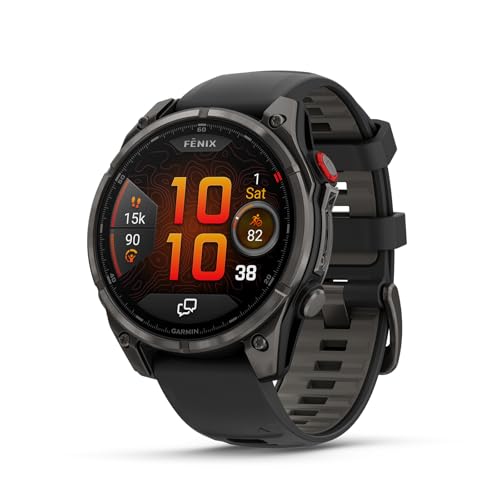
Garmin fenix 8 Pro (51mm Sapphire DLC Titanium)
The ceiling of the category: Sapphire lens, DLC titanium, and every box Garmin knows how to tick.
Field check: Sapphire lens, DLC titanium per listing · top-of-line fenix trim · the category's ceiling
Every flagship line has a trim level built past the point of reason, and reason is not why people buy it. The fenix 8 Pro takes the watch at the top of this guide and armors it in the materials the standard model economizes on: a Sapphire lens that treats scratches as a rumor and DLC-coated titanium (per listing) that keeps expedition-grade hardware at wearable weight. Everything said about the fenix 8's mapping, battery class, and toolset applies verbatim; this is that watch with the durability ceiling raised and the price roughly half again higher than the flagship's.
The honest counsel: the standard fenix 8 at about $830 is the rational buy, and nothing in the Pro changes a rescue, a navigation decision, or a training metric. What the extra money buys is materials and permanence, a watch bought once for a decade of guiding, climbing, salt water, and rock, plus the top-trim completeness that a certain buyer simply wants and can afford. We rank it honestly: last in value, first in ceiling, and the only watch in this guide we would call an heirloom purchase.
- Display
- 51mm, Sapphire lens (per listing)
- Build
- DLC titanium (per listing)
- Navigation
- Full onboard topo maps
- Approx. price
- ~$1,300
What we like
- Sapphire and DLC titanium: the durability ceiling
- Fullest fenix trim Garmin sells
- A genuine decade-scale instrument
Worth noting
- About $1,300: value loses to the standard fenix 8
- No functional gain over its cheaper sibling
- Heavy trim for wrists that do not need armor
Who should buy it: Buy the fenix 8 Pro if your watch works for a living, guides, patrollers, expedition regulars whose gear takes decade-scale abuse, or if you simply want the ceiling and the budget question is already answered. Everyone else should buy the standard fenix 8 and a very good tent with the change.
What we don't like: About $1,300 buys materials, not capability: no rescue, route, or readout improves over the standard fenix 8. It is the definition of diminishing returns, purchased knowingly.
Bottom line: The fenix 8 Pro is the answer to a question most hikers should not ask, and a few genuinely should: what does the ceiling look like? Sapphire lens and DLC-coated titanium per listing, the fullest fenix trim Garmin sells, and top-of-everything specs at about $1,300. As a value proposition it loses to the standard fenix 8 by definition; as a decade-long daily instrument for someone whose wrist earns hard use every week, the materials premium is at least an honest one.
More gear worth comparing
Beyond this guide: the highest-rated gear across every category and budget, with a live price check on each.




As an Amazon Associate we may earn from qualifying purchases, at no cost to you.
Quick shop: every pick
Skip the scroll — the whole lineup, with a live price check on each.
- Garmin fenix 8 (51mm AMOLED)Best OverallGarmin · ~$830Check price →
- Garmin epix Pro (Gen 2) Sapphire 51mmBest Value FlagshipGarmin · ~$648Check price →
- Garmin Instinct 3 Solar (50mm)Best Rugged ValueGarmin · ~$400Check price →
- Suunto Vertical 2Best Non-Garmin FlagshipSuunto · ~$699Check price →
- COROS APEX 4 (46mm)Best BatteryCOROS · ~$479Check price →
- Garmin Forerunner 965Best Hiker-Runner CrossoverGarmin · ~$600Check price →
- COROS Pace 3Best BudgetCOROS · ~$199Check price →
- Garmin fenix 8 Pro (51mm Sapphire DLC Titanium)Money No ObjectGarmin · ~$1,300Check price →
How we chose
We judge hiking watches on the axes that matter at mile nine, not at the demo counter. Navigation depth first: full onboard topo maps versus breadcrumb tracks is the single biggest capability line in the category, and we say plainly which side of it every pick sits on. Battery reality second: all figures below are manufacturers' listed claims, GPS modes drain far faster than watch modes, and the honest question is whether the watch survives your longest trip with tracking on. Then durability, glanceability in rain and glare, and ecosystem: what the watch talks to, from heart-rate straps to inReach communicators. Every listed spec is hedged as listed, and we do not invent battery measurements we did not take.
We also rank with the price ladder in plain view, because this category runs $199 to $1,300 and most buyer's guides pretend the bottom rungs do not exist. Each card names what its tier buys over the one below. No brand has bought a placement, and the watch that stops earning its price loses its slot.
Key terms
- Onboard maps vs breadcrumb
- The category's great divide. Map watches store full topographic maps and let you navigate terrain you never planned for; breadcrumb watches display your pre-loaded route as a line and guide you along it. Breadcrumbs cover marked-trail hiking; maps earn their premium off-trail and in complex country.
- AMOLED vs MIP display
- AMOLED screens (fenix 8, epix Pro, Vertical 2) are bright, rich, and power-hungry; memory-in-pixel (MIP) screens (APEX 4, Instinct line) are muted, always-on, sunlight-legible, and extremely frugal. The display choice is really a battery choice wearing a fashion question.
- Solar assist
- Photovoltaic glass that tops up the battery in sunlight, per the Instinct 3 Solar's listing. It meaningfully extends runtimes in sunny use and meaningfully disappoints anyone expecting infinite battery; treat it as margin, not magic.
- Sapphire lens
- A watch crystal of synthetic sapphire, dramatically more scratch-resistant than standard glass. Listed on the epix Pro Sapphire and fenix 8 Pro trims; the spec that decides whether a decade of rock scrambles shows on the watch face.
- Multi-band GPS
- Reception of multiple satellite frequencies simultaneously, improving accuracy in canyons, cities, and dense forest where single-band watches drift. Standard on the current flagship class; one of the quiet reasons new watches track cleaner than five-year-old ones.
Questions, answered
What is the best GPS watch for hiking?
The Garmin fenix 8 (about $830): full onboard topo maps, weeks-class listed battery, and the deepest outdoor toolset in the category, on the line that has defined serious GPS watches for a decade. The value alternative is the prior-gen epix Pro Sapphire at about $648 with most of the same capability; the budget answers are the rugged Instinct 3 Solar at $400 and the COROS Pace 3 at $199, both navigating by breadcrumb rather than full maps.
Do I really need a GPS watch for hiking if I have a phone?
Need, no; benefit, genuinely. The wrist wins on three axes: glanceability (navigation you check forty times a day should cost nothing to check), battery separation (your phone is your emergency line, and burning it on all-day tracking spends your most critical battery on your least critical job), and weather (the watch is on your body when the phone is a wet brick in a wet pocket). Casual marked-trail hikers can absolutely run on phone apps; the watch case strengthens with every mile past the trailhead sign.
Garmin fenix 8 vs epix Pro: which should I buy?
Buy the epix Pro Sapphire 51mm (about $648) if value decides it: as the superseded flagship it delivers full mapping, Sapphire glass per listing, and most of the fenix experience at a $180 discount. Buy the fenix 8 (about $830) if you want the current generation, the longest support runway, and the newest features, especially if you plan to own it past the five-year mark, where support life starts mattering more than sticker price. Small wrists get a bonus answer: the epix Pro 42mm at about $400.
Is the Garmin Instinct good enough for hiking, or do I need maps?
For most marked-trail hiking, the Instinct 3 Solar (about $400) is genuinely enough: load a route, follow the breadcrumb line, retrace if needed, with rugged build, solar-assisted battery, and a flashlight per listing. The map watches earn their premium when your hiking involves off-trail travel, complex junctions, or improvised plans, situations where seeing actual topography beats following a line. Count your last ten hikes: if all ten were marked trails with a plan, keep the $430 difference.
Which GPS watch has the best battery life?
Among our picks, the COROS APEX 4 lists 41 days in watch mode per its listing, the standout claim in the mid tier, funded by its power-sipping MIP display. The Garmin fenix line lists weeks-class watch-mode figures with flagship features attached, and the Instinct 3 Solar stretches its numbers further with solar assist per listing. The universal hedge: all figures are manufacturer claims for specific modes, and continuous GPS tracking drains any watch far faster than the headline number.
Are cheap GPS watches worth it for hiking?
At the $199 COROS Pace 3's level, yes, without an apology: accurate tracking, multi-day battery, and a featherweight build cover what most hikers actually use a watch for. What the budget tier cannot do is onboard maps, and that is the honest upgrade line: buy cheap if your navigation is marked trails and planned routes, buy the map tier if your trips make navigation decisions on the fly. The mistake is not buying cheap; it is buying a $600 watch for $199 needs, or vice versa.
Filed under Buyer's Guide
Keep reading
The Best Satellite Communicators & PLBs (2026)
The other half of the safety-electronics kit: the devices that summon help when the watch says you are far from it.
The Ten Essentials
Navigation is system number one, and the watch is only part of it: the full checklist, honestly weighted.
The Best Power Banks for Thru-Hiking
The battery math for everything on this page: keeping watch, phone, and headlamp alive between outlets.
The Best Trail Running Shoes for Hiking (2026)
For the Forerunner crowd: the shoes that match a watch built for both sports.
The Best Gifts for Hikers (2026)
Where a GPS watch sits on the gift ladder, and the safety grail that pairs with it.