Our Pick: Nitecore
Check price →The Best Power Banks for Thru-Hiking & Backpacking (2026)
Your phone is your map, your camera, your library, and your rescue line, and between resupplies the power bank in your hip belt pocket IS the power grid. We ranked the three 10,000 mAh banks worth carrying, from the $22 Anker workhorse to the 5.3-ounce listed Nitecore NB10000 that became the thru-hiker consensus, and we judged them on the only spec that matters on trail: mAh per ounce.
By The WorldHike Gear Desk · ~12 min read · Updated 2026-07-26
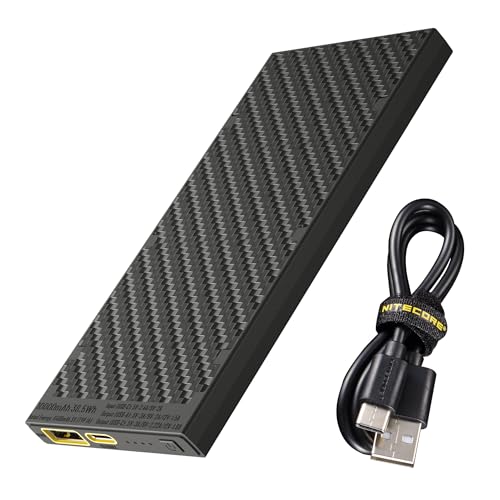
Nitecore NB10000 Gen II
Nitecore
10,000 mAh at about 5.3 oz listed: the mAh-per-ounce benchmark and the thru-hiker consensus.
Check price★ Our Top Pick
Best Overall
Nitecore NB10000 Gen II
10,000 mAh at about 5.3 oz listed: the mAh-per-ounce benchmark and the thru-hiker consensus.
Not sure yet? Compare all 3 picks below ↓
The best power bank for thru-hiking is the Nitecore NB10000 (about $60): 10,000 mAh in a carbon-fiber shell at about 5.3 ounces listed, roughly 1,900 mAh per listed ounce, the figure that made it the ultralight consensus pick and kept it there for years. The budget rungs below it are the Anker PowerCore 10K at about $22 and the fast-charging INIU 45W at about $24. Updated July 2026.
Why one spec decides the whole category: on trail the phone is the map, the camera, and on a bad day the rescue line, so between resupplies the bank in your hip belt pocket is the power grid. That makes mAh per ounce the only spec that matters. Capacity you do not carry cannot charge anything, and weight that does not store electrons is just weight. The price ladder is short and honest: the Anker is the mainstream reliability play, the INIU adds 45W fast charging for a dollar more, and the Nitecore charges real money to delete real ounces. Plan on roughly two full phone charges from any 10K bank once conversion losses take their cut. This guide is the math for choosing your rung, plus the town-stop charging strategy that matters as much as the bank itself.
One disclosure, up front and plainly: no brand paid for a spot in this guide, nobody placed a product, and no manufacturer saw it before publication. Some links go to Amazon; if you buy through one we may earn a small commission at no extra cost to you, and that never moves a pick up or down. Capacities and weights below are the manufacturers' listed figures, hedged as such every time, and prices are approximate street prices at publication, so always check the live listing.
The short version
- Our pick is the Nitecore NB10000 (about $60): 10,000 mAh at about 5.3 oz listed, the mAh-per-ounce figure that made it the thru-hiker consensus and still defines the category ceiling.
- The Anker PowerCore 10K (about $22) is the mainstream reliability pick: the same capacity class from the most trusted name in charging, at a price that makes the decision easy.
- The INIU 45W 10,000 mAh (about $24) is the value fast-charge play: high-wattage charging in a budget bank, the pick when your town stops are short and your outlet time is precious.
- The only spec that matters on trail is mAh per ounce. The Nitecore's roughly 1,900 mAh per listed ounce is the benchmark everything else gets measured against.
- Label math lies: conversion losses mean a 10,000 mAh bank delivers meaningfully less than 10,000 mAh into your phone. Most hikers plan on roughly two full phone charges from a 10K bank, and that assumption keeps you honest.
| Power bank | Best for | Listed capacity | What you get | Approx. price |
|---|---|---|---|---|
| Nitecore NB10000 Gen II | Our Pick | 10,000 mAh | About 5.3 oz listed: the UL consensus | ~$60 |
| Anker PowerCore 10K | Best Mainstream Reliability | 10,000 mAh | The trusted default at a friendly price | ~$22 |
| INIU 45W 10,000 mAh | Best Value Fast-Charge | 10,000 mAh | High-wattage charging for short town stops | ~$24 |
The 2026 trail power-bank shortlist at a glance, cheapest to lightest. Capacities and weights are the manufacturers' listed figures; prices are approximate street prices at publication, verified against our dataset in July 2026.
01 · Best Overall
Our PickNitecore NB10000 Gen II
10,000 mAh at about 5.3 oz listed: the mAh-per-ounce benchmark and the thru-hiker consensus.
Field check: 10,000 mAh · about 5.3 oz listed · carbon-fiber shell · the UL standard
Every gear category has one number that reorganized it. For trail power banks, it is this one. The NB10000 packs 10,000 mAh into a carbon-fiber shell at about 5.3 ounces listed, at a time when mainstream banks of the same capacity commonly weighed half again as much or more. Thru-hikers, who audit every gram against every alternative, did the division and converged on it almost immediately. Years later the spreadsheets still do, and the NB10000 remains the default answer in ultralight gear lists the way the Sawyer Squeeze is the default answer for water.
The engineering choice doing the work is the shell. Most banks wrap their cells in metal or thick plastic; Nitecore used a carbon-fiber composite that trims the structure without going flimsy, and the brand's flashlight pedigree shows in details hikers actually use: a low-current mode for topping up small devices like headlamps and earbuds, dual outputs, and a body that shrugs off pack life. Ten thousand milliamp-hours is the thru-hiker sweet spot for a reason: hedged for conversion losses, it is roughly two full phone charges for a typical modern phone, which maps neatly onto a 3-to-5-day carry with disciplined airplane-mode use.
- Listed capacity
- 10,000 mAh
- Listed weight
- About 5.3 oz
- Shell
- Carbon-fiber composite
- Approx. price
- ~$60
What we like
- About 5.3 oz listed for 10,000 mAh: the category's mAh-per-ounce benchmark
- Carbon-fiber shell holds up to pack life without slab weight
- Low-current mode tops up headlamps and earbuds properly
- The consensus pick across years of ultralight gear lists
Worth noting
- About $60 is real money for a power bank
- Light shell rewards care, not abuse
- Charging pace is adequate, not exceptional
Who should buy it: Buy the NB10000 if the bank will live in your pack for real miles: thru-hikers and section hikers first, then anyone building a genuinely ultralight kit where every item has to survive the spreadsheet. It is also the right pick for bikepackers and fastpackers who feel weight the same way. If you audit base weight in a gear app, this is your power bank, and you probably already knew that.
What we don't like: About $60 is nearly triple the price of the Anker below for the same listed capacity, and that gap is the whole argument against it. The lightweight shell rewards reasonable care rather than abuse. And Nitecore's charging pace is adequate rather than headline-grabbing, so hikers whose town stops are measured in minutes should read the INIU review below before deciding.
Bottom line: The NB10000 is what happens when a company designs a power bank for people who weigh their toothbrushes. A carbon-fiber shell instead of the usual aluminum slab brings 10,000 mAh in at about 5.3 ounces listed, a mAh-per-ounce figure that ended the category debate among thru-hikers the year it appeared. It costs real money for a power bank, and on a long trail it is worth every dollar, because you carry it every single mile and it earns its place on all of them.
02 · Best Mainstream Reliability
Best Mainstream Reliability
Anker PowerCore 10K
The dependable 10,000 mAh default from the most trusted name in charging, at about $22.
Field check: 10,000 mAh listed · ~$22 street price · the mainstream reliability standard
Some picks win on a spec sheet. This one wins on a decade of not failing people. The PowerCore 10K is the default answer to 'just tell me which power bank to buy' far beyond the hiking world, and the reasons transfer to trail life directly: it charges what you plug into it, every time, for years, and it costs about $22. In a category where no-name banks routinely deliver less capacity than their label and die young, the boring brand with the enormous track record is a feature, not a compromise.
The honest accounting is about weight. Anker builds this bank for everyone, not for gram counters, so it carries the standard-issue heft of a mainstream 10K brick rather than the Nitecore's exotic-shell figure, and on a weekend schedule that difference is close to meaningless. Where the ounces matter is exactly where the Nitecore's price makes sense, and that symmetry is the whole category in one sentence. For everyone else, the Anker's virtues are the ones you feel at the outlet, not on the scale: it takes a charge dependably in town, holds it on trail, and its capacity rating survives contact with reality as well as any bank we know.
- Listed capacity
- 10,000 mAh
- Brand
- Anker, the mainstream charging standard
- Role
- Reliability-first trail and travel bank
- Approx. price
- ~$22
What we like
- About $22 for a trustworthy 10,000 mAh
- Anker's reliability track record is the real spec
- Disappears into a hip belt pocket or travel bag
- The easy default for new and weekend hikers
Worth noting
- Mainstream weight: the ounces the Nitecore exists to delete
- Steady rather than fast charging in town
- No hiker-specific features like a low-current mode
Who should buy it: Buy the PowerCore 10K if you want maximum charging reliability per dollar and your mileage does not justify paying for exotic materials: weekend backpackers, new hikers building a first kit, and anyone who wants one bank for trail, travel, and daily life. It is the pick when 'it just works' matters more than 'it barely weighs anything.'
What we don't like: It is built for the mainstream, so it carries mainstream weight, and thru-hikers doing honest mAh-per-ounce math will land on the Nitecore instead. Charging pace is steady rather than fast, which makes short town stops less productive than they are with the INIU. And the styling is pure commodity, though at $22 it has earned the right to look like an appliance.
Bottom line: The PowerCore 10K is the power bank most of the world actually owns, and there is wisdom in the crowd. Anker built its name on charging gear that simply works, and this bank is that reputation in its purest form: 10,000 mAh, a shape that disappears into a hip belt pocket, and a price that makes the buying decision take about four seconds. It is heavier than the Nitecore and prouder of its price than its weight, which is exactly the right trade for most hikers.
03 · Best Value Fast-Charge

INIU 45W 10,000 mAh
High-wattage 45W charging in a $24 bank: the pick when your outlet time is measured in minutes.
Field check: 10,000 mAh listed · 45W fast charging · ~$24 street price
Thru-hikers do not measure town stops in hours. They measure them in outlet-minutes. The resupply rhythm of a long trail means your charging windows are often brutally short: a lunch counter, a gas-station bench, the one working plug at a hostel with six phones ahead of yours. The INIU 45W is built for exactly that life. Its high-wattage charging refills the bank and feeds your devices at a pace the steady-but-slow mainstream bricks cannot match, and every watt of pace converts directly into either a shorter town stop or a fuller bank when you walk out.
The value math is what makes it interesting rather than merely fast. Fast-charging capability usually lives in premium banks; INIU sells it at about $24, one dollar over the Anker, which turns the mid-rung of this guide's price ladder into a genuine decision instead of a formality. What you are trading is pedigree: INIU is a well-reviewed budget electronics brand rather than a decade-long institution like Anker, so the track record is shorter even if the spec sheet is stronger. For a device your navigation depends on, that is worth weighing honestly rather than waving away.
- Listed capacity
- 10,000 mAh
- Fast charging
- 45W listed
- Role
- Short-town-stop specialist
- Approx. price
- ~$24
What we like
- 45W listed charging pace at a $24 price
- Refills fast during short town stops with the right wall brick
- Turns the budget tier into a real choice, not a fallback
- Strong value answer for fast resuppliers
Worth noting
- Shorter brand track record than Anker
- Mainstream weight, not an ultralight build
- Needs a high-wattage wall charger to earn its headline
Who should buy it: Buy the INIU if your charging windows are short and your budget is real: thru-hikers who resupply fast and sleep in town rarely, weekenders who top everything up at a trailhead diner, and anyone who wants modern fast-charge speeds without paying flagship prices. It is the best answer at the price to the question the other two picks do not ask.
What we don't like: INIU's track record is shorter than Anker's, and for survival-adjacent electronics, pedigree is a legitimate spec. Like the Anker it is built to a mainstream weight rather than an ultralight one, so the Nitecore keeps the gram-counter crown. And its fast-charging headline only pays off if the rest of your kit, wall charger and cable included, can keep up.
Bottom line: The INIU attacks the part of the problem the other two ignore: time at the outlet. Its headline 45-watt charging moves electrons fast in both directions, which matters enormously when your relationship with wall power is a diner booth or a trail-angel garage rather than a motel night. At about $24 it costs Anker money while solving a problem the Anker does not, and that combination is why it earns the third slot here.
More gear worth comparing
Beyond this guide: the highest-rated gear across every category and budget, with a live price check on each.




As an Amazon Associate we may earn from qualifying purchases, at no cost to you.
Quick shop: every pick
Skip the scroll — the whole lineup, with a live price check on each.
- Nitecore NB10000 Gen IIBest OverallNitecore · ~$60Check price →
- Anker PowerCore 10KBest Mainstream ReliabilityAnker · ~$22Check price →
- INIU 45W 10,000 mAhBest Value Fast-ChargeINIU · ~$24Check price →
How we chose
We judge trail power banks on one spec with two halves: how many electrons the bank stores, and what carrying them costs you in ounces and dollars. That is mAh per ounce, the teaching spine of this guide. The Nitecore NB10000's roughly 1,900 mAh per listed ounce (10,000 mAh at about 5.3 oz listed) is the number the whole category gets measured against; heavier banks at the same capacity have to answer for every extra ounce, and they usually answer with dollars saved. We hold the field to 10,000 mAh because that is the thru-hiker sweet spot: enough for a typical 3-to-5-day carry, small enough to recharge fully during a real town stop, and legal in any airplane cabin. Every capacity and weight below is the manufacturer's listed figure, checked against our PA-API-verified dataset, and we say 'listed' every time because we mean it.
We also weight honest capacity accounting, because this category's marketing runs on a friendly lie. A bank's mAh rating describes its internal cells, not what reaches your phone: stepping the voltage up for USB and pushing it through a cable loses a real fraction of the stored energy, which is widely understood and why the hiker rule of thumb is roughly two full phone charges from a 10K bank rather than the three the label division promises. Picks that charge reliably, hold their rating over hundreds of cycles, and come from companies with a track record beat spec-sheet heroes. No brand has bought a placement. Every ounce earns its place, and in this category the ounces are literally the product.
Key terms
- mAh (milliamp-hour)
- The capacity unit power banks are rated in, describing how much charge the internal cells store. A 10,000 mAh rating describes the cells themselves, not what reaches your phone, which is why real-world charging math always comes in under the label.
- mAh per ounce
- The only spec that matters for a trail power bank: stored capacity divided by carried weight. The Nitecore NB10000's roughly 1,900 mAh per listed ounce (10,000 mAh at about 5.3 oz listed) is the benchmark the category is measured against.
- Conversion loss
- The energy lost stepping a bank's cell voltage up to USB voltage and pushing it through a cable. It is why a 10,000 mAh bank charges a phone fewer times than simple division suggests, and why hikers plan on roughly two full charges from a 10K bank rather than three.
- Listed capacity
- The manufacturer's published rating, which is what every figure in this guide is unless stated otherwise. Reputable brands' listings hold up well; no-name banks are notorious for delivering less than the label, which is a real reason to buy from names with track records.
- Fast charging (wattage)
- How quickly a bank can accept or deliver power, set by the weakest link among bank, wall charger, and cable. A 45W-listed bank like the INIU only charges at that pace from a wall brick that can supply it, which is why the wall charger is part of the buying decision.
Questions, answered
What size power bank do I need for thru-hiking?
For most thru-hikers and backpackers, 10,000 mAh is the sweet spot, and it is why all three picks in this guide are that size. Hedged for conversion losses, a 10K bank delivers roughly two full charges for a typical modern phone, which maps onto a 3-to-5-day carry with disciplined airplane-mode use. Bigger 20,000 mAh banks make sense for very long carries, camera-heavy kits, or two people sharing one bank, but they roughly double the weight, and on most resupply schedules the extra capacity rides as dead ounces.
How many times will a 10,000 mAh power bank charge my phone?
Less than the label math suggests, and knowing why keeps you out of trouble. The mAh rating describes the bank's internal cells; converting that stored energy to USB voltage and pushing it through a cable loses a real fraction along the way, which is widely understood and not a defect of any particular bank. The practical planning number most hikers use is roughly two full charges for a typical modern phone from a 10K bank. Plan on that, ration with airplane mode, and the label's optimism never becomes your problem.
Is the Nitecore NB10000 worth the extra money?
If the bank rides real miles, yes. At about 5.3 oz listed for 10,000 mAh, the NB10000 deletes ounces from a category where mainstream banks of the same capacity weigh meaningfully more, and it costs about $38 over the Anker for the privilege. Across a thru-hike that is among the cheapest weight savings in your whole kit. Across a few weekends a year it buys you very little you will feel, which is why our honest advice is Nitecore for the long trail, Anker for everyone else.
Can I bring a power bank on a plane?
Yes, in your carry-on, and that detail matters: airlines require spare lithium batteries, power banks included, in cabin baggage rather than checked bags. Capacity rules are commonly expressed in watt-hours, and a 10,000 mAh bank sits comfortably under the 100 watt-hour threshold most airlines use, so all three picks in this guide fly without paperwork. Rules vary by airline and country, so check your carrier before you fly to a trailhead, but a 10K bank is about as travel-friendly as lithium gets.
How do I make my phone battery last longer on trail?
Airplane mode is the whole game, and everything else is a rounding error. A phone searching for signal in remote terrain burns battery relentlessly doing nothing useful; the same phone in airplane mode with maps downloaded offline navigates fine all day. Beyond that: keep screen brightness modest, listen to audio with the screen off, close the camera app when you are not shooting, and keep the phone warm in cold weather, because lithium batteries fade in the cold. Hikers who ration this way routinely stretch a 10K bank across a five-day carry.
Should I carry a solar panel instead of a power bank?
For most hikers on most trails, no. A panel only earns its weight when it reliably sees strong sun, and real trails are a parade of tree cover, canyon walls, cloudy stretches, and panels bouncing uselessly on a pack while you walk. Meanwhile town stops arrive every few days on most routes, and a 10K bank refilled at an outlet is lighter, cheaper, and vastly more dependable. Solar starts making sense on long expedition legs with rare resupply and abundant sun, which is a genuinely different trip than a standard thru-hike.
What wall charger should I carry for town stops?
A compact modern high-wattage brick, and treat it as part of the power system rather than an afterthought. The wall charger is the bottleneck of every town stop: a tired 5-watt cube needs most of a day to refill a 10K bank, while a current-generation compact brick does serious work during a long lunch. This matters double if you buy the fast-charging INIU, whose 45W listed pace only shows up when the wall side can supply it. Add one short, quality cable, and your whole charging kit stays light while your outlet-minutes count.
Are cheap no-name power banks safe for hiking?
The risk is less about safety and more about honesty: the budget-bank market is notorious for capacity ratings that do not survive testing and cells that fade fast, and on trail an overrated bank fails you at the worst possible moment, three days from an outlet with a phone your navigation depends on. That is the argument for the reputable-budget tier this guide occupies: the roughly $22 Anker and $24 INIU are barely more expensive than the no-name bin and come from brands with reputations to protect. For gear this survival-adjacent, buy the track record.
Filed under Buyer's Guide
Keep reading
The Best Satellite Communicators & PLBs (2026)
The full rescue-electronics shelf ranked: the price-dropped inReach Mini 2, the budget two-ways, and the no-subscription PLBs.
The Best GPS Watches for Hiking (2026)
From the $199 COROS to the fenix 8: what each price tier of wrist navigation actually buys.
The Best Headlamps (2026)
The other device your power bank keeps alive: our rechargeable picks, ranked honestly.
The Ten Essentials, Explained
Where the charged phone and backup power fit in the classic safety system.
Ultralight Backpacking 101
The weight discipline behind our mAh-per-ounce math: no item banned, every item made to testify.
The Best Backpacking Packs (2026)
The hip belt pocket your power bank lives in: our full-size haulers, flagship to budget.
The Best Hikes in the World
The long trails where the power bank becomes the power grid: the routes worth planning around.