Our Pick: Garmin
Check price →The Best Satellite Communicators & PLBs (2026)
The best satellite communicator for most hikers is the Garmin inReach Mini 2, especially now that its street price has fallen to about $250. Around it we ranked the whole rescue-electronics shelf honestly: the current-gen Mini 3, the budget Messengers, the $149 ZOLEO, the $50 Motorola Defy, and the two no-subscription PLBs that answer a different question entirely.
By The WorldHike Gear Desk · ~16 min read · 2026-08-07

Garmin inReach Mini 2
Garmin
The default backcountry lifeline, now at the best price it has ever sold for.
Check price★ Our Top Pick
Best Overall
Garmin inReach Mini 2
The default backcountry lifeline, now at the best price it has ever sold for.
Not sure yet? Compare all 8 picks below ↓
Answer first: if you hike beyond cell coverage and want the one device most likely to matter on the worst day of your outdoor life, buy the Garmin inReach Mini 2. It sends two-way messages and a monitored SOS from anywhere with a view of the sky, it weighs about 3.5 ounces listed, and its street price has dropped to about $250, cheaper than most of the boots that will carry you out there. If you want zero subscriptions and only care about the absolute emergency, buy a true PLB like the ACR ResQLink 400 instead. That is the whole decision, and the rest of this guide is the honest map of everything in between.
This category deserves plain speech, because it is the one purchase in hiking where marketing confusion has real consequences. There are two different kinds of device on this shelf, and they are not interchangeable. Satellite messengers (the inReach family, ZOLEO, Motorola Defy) are subscription devices that do two-way communication: SOS with a staffed response center, but also 'running late, all fine' to your family, which is the message you will actually send a hundred times for every SOS you never send. Personal locator beacons (PLBs) like the ACR ResQLink 400 and Ocean Signal PLB1 are one-button, one-way distress radios on the government-run 406 MHz Cospas-Sarsat system: no subscription, no messaging, no check-ins, just the strongest possible distress signal when everything has gone wrong. Messengers are safety plus communication; PLBs are pure flare gun. Most hikers, and every hiker with a family that worries, should buy the messenger.
One disclosure, up front and plainly: no brand paid for a spot in this guide, nobody placed a product, and no manufacturer saw it before publication. Some links go to Amazon; if you buy through one we may earn a small commission at no extra cost to you, and that never moves a pick up or down. Weights and features below are the manufacturers' listed figures, satellite messengers require an active service plan before messaging and SOS work at all (plan prices change, so check the provider), and prices are approximate street prices verified against live listings in August 2026.
The short version
- Our pick is the Garmin inReach Mini 2 (about $250 after a steep 2026 price drop): two-way messaging, monitored SOS, and about 3.5 oz listed, on the network with the deepest backcountry track record. A subscription is required.
- The Garmin inReach Mini 3 (about $400) is the current generation of the same idea; buy it for the newest hardware, or bank the $150 and take the Mini 2, which does the job that matters identically.
- The budget two-way tier is real: the Garmin inReach Messenger (about $200), the ZOLEO (about $149), and the Motorola Defy Satellite Link (about $50) all deliver genuine two-way satellite messaging with SOS, mostly through your phone.
- PLBs are the no-subscription answer: the ACR ResQLink 400 (about $410) and Ocean Signal PLB1 (about $400) send a one-way 406 MHz distress signal to government search-and-rescue with no plan, no fees, and no messaging, ever.
- The honest sort: buy a messenger if anyone at home worries about you; buy a PLB if you want fit-and-forget emergency-only coverage; carry either one if you ever hike alone beyond cell service.
| Device | Best for | Type | Subscription | Approx. price |
|---|---|---|---|---|
| Garmin inReach Mini 2 | Our Pick | Two-way messenger | Required | ~$250 |
| Garmin inReach Mini 3 | Best Current-Gen | Two-way messenger | Required | ~$400 |
| Garmin inReach Messenger | Best Budget Garmin | Two-way messenger | Required | ~$200 |
| Garmin inReach Messenger Plus | Best for Photos & Voice | Two-way messenger | Required | ~$300 |
| ZOLEO Satellite Communicator | Best Value Two-Way | Two-way messenger | Required | ~$149 |
| Motorola Defy Satellite Link | Cheapest Real Entry | Two-way messenger | Required | ~$50 |
| ACR ResQLink 400 | Best PLB (No Subscription) | 406 MHz PLB | None, ever | ~$410 |
| Ocean Signal rescueME PLB1 | Smallest PLB | 406 MHz PLB | None, ever | ~$400 |
The 2026 rescue-electronics shelf at a glance. Weights and features are the manufacturers' listed figures; messengers additionally require a service plan; prices are approximate street prices verified in August 2026.
01 · Best Overall
Our PickGarmin inReach Mini 2
The default backcountry lifeline, now at the best price it has ever sold for.
Field check: About 3.5 oz listed · two-way messaging + monitored SOS · subscription required
Every gear closet has one item whose job is to never be used. This is the best version of that item. The inReach Mini 2 hangs off a shoulder strap and does three things from anywhere with a view of the sky: sends and receives text messages, shares your track with people who worry, and, on the worst day, opens a two-way SOS conversation with a staffed emergency response center that coordinates with local search and rescue. The two-way part is the entire argument. A rescuer who can ask 'are you mobile, are you bleeding, exact location?' mounts a different, faster, better-aimed response than one reacting to a silent distress ping.
The daily reality is quieter and better than the emergency pitch: 'running late, all good' from a ridgeline to a spouse, a shared map link a parent refreshes on Sunday afternoons, a weather check before committing to a pass. It pairs with a phone for comfortable typing but works standalone when the phone dies, which is exactly the failure mode a safety device must survive. The honest costs: messaging and SOS do nothing until a Garmin plan is active (plans change, check current terms), satellite messaging is slower than cell texting and wants sky view, and about $250 plus a plan is real money. It is also the best few hundred dollars of actual safety the sport sells.
- Listed weight
- About 3.5 oz
- Type
- Two-way satellite messenger
- SOS
- Monitored response center, two-way
- Subscription
- Required for messaging and SOS
- Approx. price
- ~$250
What we like
- Two-way SOS: rescuers can ask questions, and answers change rescues
- About 3.5 oz listed: carried without debate
- Works standalone if your phone dies
- The 2026 price drop makes it the category's value verdict
Worth noting
- Subscription required before anything works
- Standalone typing on the tiny screen is tedious
- Superseded generation, if that matters to you
Who should buy it: Buy the Mini 2 if you ever hike alone, hike beyond cell coverage, or love someone who does. Solo hikers, hunters, ski tourers, overlanders, and the families of all of the above: this is the default answer, and at its current price the excuses are gone.
What we don't like: Nothing works until a subscription is active, which makes the sticker price only half the cost of ownership. The tiny screen makes standalone typing a chore (fine for presets, tedious for prose), and like all satellite devices it wants open sky and patience in deep canyons and dense timber.
Bottom line: The Mini 2 is the device this entire category is measured against: palm-sized, about 3.5 ounces listed, with two-way messaging, location sharing, and a monitored SOS that works anywhere with sky. It has years of real rescues behind it, and its 2026 price drop to about $250 makes it the easiest recommendation we have ever written in this category. A newer Mini exists; the reasons to pay $150 more for it are thinner than Garmin would like.
02 · Best Current-Gen

Garmin inReach Mini 3
The newest Mini: same rescue-critical core, current hardware, full price.
Field check: Current-generation inReach Mini · two-way messaging + monitored SOS · subscription required
When the device you copy is your own, the upgrades get subtle. The inReach Mini 3 carries forward the formula that made the Mini line the default: palm-sized housing, clip-anywhere weight, two-way messaging and location sharing, and the monitored SOS that has anchored years of real-world rescues. As the current generation it is the version Garmin will support longest, the one new accessories target, and the one that ships with the freshest internals, which matters for a device you may own for a decade.
The buying logic is a clean fork. If you are price-sensitive, the Mini 2 at about $250 is the same promise for less, and our overall pick. If you are buying your forever unit at full budget, or you simply refuse to buy a superseded generation of a safety device, the Mini 3 is the right call and you will never think about the decision again. Either way, budget for the subscription, without which both are paperweights with good intentions.
- Type
- Two-way satellite messenger (current gen)
- SOS
- Monitored response center, two-way
- Subscription
- Required for messaging and SOS
- Approx. price
- ~$400
What we like
- The current generation of the category benchmark
- Longest future-support runway in the family
- Same two-way SOS core that anchors the Mini's reputation
Worth noting
- About $150 over the Mini 2 for the same core promise
- Subscription still required
- Small screen, same as every Mini
Who should buy it: Buy the Mini 3 if you are starting fresh with full budget and want the current generation of the category benchmark: new-gear buyers, gift givers who want no asterisks, and hikers planning to carry one device for the next decade.
What we don't like: At about $400 it costs $150 more than the Mini 2 while sharing the same rescue-critical core, and the same subscription requirement applies. The Mini-class screen remains small for standalone composing.
Bottom line: The Mini 3 is the current edition of the most trusted device in the category, and everything that makes the Mini 2 our pick is here in its newest form. What the extra $150 buys is hardware currency: the latest revision, the longest runway of future support, and the small refinements a new generation brings. What it does not buy is a different outcome on your worst day, which is why the price-dropped Mini 2 outranks it on value while the Mini 3 remains the cleaner buy for anyone starting fresh at full budget.
03 · Best Budget Garmin

Garmin inReach Messenger
The inReach network at its lowest price: phone-first messaging with the same monitored SOS.
Field check: Two-way messaging + monitored SOS on the inReach network · phone-first design · subscription required
Strip the inReach idea to its essentials and ask what must live in the rugged box: the radio, the battery, the SOS button. Everything else can be your phone. That is the inReach Messenger. Pair it and your phone becomes the keyboard and screen for full two-way satellite conversations; the unit itself stays simple, tough, and long-running, with basic standalone messaging and the dedicated SOS retained for the day the phone is dead, wet, or shattered. It can even lend charge to a dying phone in a pinch, per Garmin's listing, which inverts the usual electronics hierarchy in a genuinely clever way.
Against the Mini 2, fifty dollars separates them, and the fork is habits: the Mini is the more capable standalone tool, the Messenger the more honest phone-era design. Against the ZOLEO below, the Messenger's case is the Garmin network and ecosystem; ZOLEO's case is another $50 saved. All three deliver the thing that matters, a monitored two-way SOS, so none of these choices is a safety mistake, only a workflow one.
- Type
- Two-way satellite messenger, phone-first
- SOS
- Monitored response center, two-way
- Subscription
- Required for messaging and SOS
- Approx. price
- ~$200
What we like
- Cheapest entry to the inReach network
- Phone pairing gives full-keyboard satellite texting
- Dedicated SOS survives a dead phone
- Can top up a dying phone per Garmin's listing
Worth noting
- Best experience leans on your phone's battery
- Basic standalone messaging by design
- Only $50 below the more capable Mini 2
Who should buy it: Buy the Messenger if you want inReach-network safety at the lowest price and you know yourself: your phone is where you type, the dedicated device just needs to hold the link and the SOS button. Family check-in users and budget-conscious solo hikers land here happily.
What we don't like: Phone-first means the best experience depends on a second device staying alive, and the standalone fallback is deliberately basic. The subscription requirement is unchanged, and the sticker savings versus the Mini 2 are modest for hikers who would use the Mini's standalone depth.
Bottom line: The Messenger is Garmin's admission that most people type on their phones anyway: a simpler, screen-light unit designed to pair with the phone in your pocket while keeping the parts that cannot be delegated, the satellite link, the battery, and the monitored SOS button. At about $200 it is the cheapest door into the inReach network, and for hikers who would never compose on a Mini's tiny screen anyway, it gives up less than the price gap suggests.
04 · Best for Photos & Voice

Garmin inReach Messenger Plus
The first inReach that sends photos and voice notes over satellite, per Garmin's listing.
Field check: Photo and voice messaging over satellite (per listing) · monitored SOS · subscription required
A picture from a backcountry emergency is worth considerably more than a thousand texted words. The Messenger Plus is Garmin's first inReach that moves photos and voice notes over satellite (per the listing), and the use cases write themselves: showing a response coordinator the actual injury, the actual river level, the actual broken binding; or, far more often, sending the summit photo that makes a spouse's whole afternoon. Underneath the new trick it remains a Messenger: phone-first pairing, rugged simple hardware, and the monitored two-way SOS that anchors the whole family.
The honest framing is that media is a luxury tier on top of a solved problem. Text-based two-way SOS, which every Garmin above and below this card has, already delivers the life-saving core, so the Plus's premium is buying richness, not safety. That makes the buying logic clean: trip leaders, expedition members, and chronic photo-sharers will use the capability weekly and should pay for it; hikers who send 'all good, on schedule' twice a day should keep $100 and take the standard Messenger.
- Type
- Two-way satellite messenger, phone-first
- Media
- Photo and voice messages (per listing)
- SOS
- Monitored response center, two-way
- Subscription
- Required
- Approx. price
- ~$300
What we like
- Photos and voice notes over satellite, per listing
- Same monitored two-way SOS core as the whole family
- Meaningfully richer check-ins and condition reports
Worth noting
- $100 premium buys richness, not additional safety
- Phone-first: media features lean on your phone
- Subscription still required
Who should buy it: Buy the Messenger Plus if richer communication is the point: trip leaders reporting conditions, expedition teams coordinating with home, families who live on shared photos, and anyone who has ever tried to describe terrain in a 160-character satellite text.
What we don't like: Media over satellite is a premium on top of an already-solved safety problem, and the subscription requirement stands. Like all phone-first designs, its best features assume your phone survives the trip.
Bottom line: The Messenger Plus takes the phone-first Messenger formula and adds the feature satellite texting always lacked: media. Per Garmin's listing it sends photos and voice messages over the satellite link, which changes both the family check-in ('here is the summit') and, potentially, the emergency ('here is the injury, here is the terrain'). At about $300 it sits between the Messenger and the Mini 3, and for expedition communicators and serious trip leaders the media capability is worth the step.
05 · Best Value Two-Way
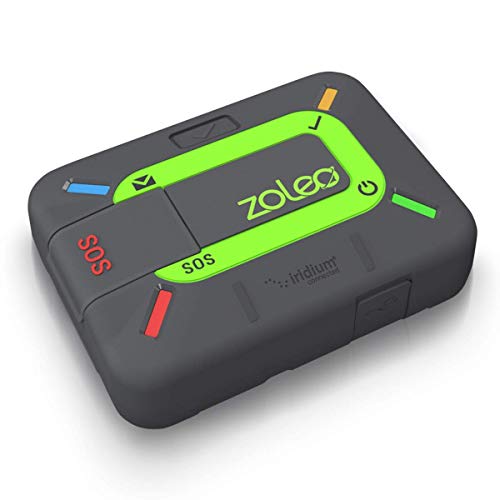
ZOLEO Satellite Communicator
Real two-way satellite messaging and monitored SOS for about $149: the value case, made honestly.
Field check: Two-way SMS/email + monitored SOS (per listing) · seamless cell/wifi/satellite handoff · subscription required
The cleverest thing about ZOLEO is what it refuses to make you think about. Message someone from town and it rides the cell network; walk past the trailhead and the same conversation continues over satellite, per the listing's seamless-handoff design. For the actual humans on the other end, your spouse, your kids, your climbing partner running late, it is just one thread that always works, which is precisely what non-technical family members want from this category and rarely get. Under the convenience sits the serious hardware: a rugged, weather-sealed unit with a dedicated, monitored SOS.
The trades against the Garmin family are structural. ZOLEO is phone-first with modest standalone ability, its network story is its own (satellite via a commercial constellation, per listing) rather than the inReach ecosystem, and Garmin's brand carries the deeper backcountry rescue lore. But at about $149, a full $100 under the cheapest Garmin, the value argument is not subtle, and the SOS is monitored either way. For couples buying two units, the math gets genuinely persuasive.
- Type
- Two-way satellite messenger, phone-first
- Handoff
- Cell / wifi / satellite, seamless (per listing)
- SOS
- Monitored, dedicated button
- Subscription
- Required
- Approx. price
- ~$149
What we like
- Cheapest full two-way messenger from an established brand
- Seamless network handoff keeps one thread for family
- Rugged, weather-sealed, dedicated SOS
Worth noting
- Limited standalone use without your phone
- Outside the Garmin ecosystem, for those invested in it
- Subscription required, same as every messenger
Who should buy it: Buy the ZOLEO if family communication is the daily job and SOS is the insurance: hikers whose loved ones want one seamless thread, budget-first solo travelers, and couples or groups outfitting multiple people without spending Garmin money per head.
What we don't like: Phone-first with limited standalone messaging, and the subscription requirement is unchanged. Buyers deep in the Garmin ecosystem (watches, maps, tracking pages) will find the inReach family integrates more richly.
Bottom line: ZOLEO's pitch is pragmatic to its bones: a rugged, phone-paired puck that hands messages seamlessly between cell, wifi, and satellite (per its listing), so your conversation thread does not care which network carried it, plus a monitored SOS. At about $149 it is the cheapest full-featured two-way messenger from an established safety brand, and for family-communication-first buyers it is the smartest dollar in the guide.
06 · Cheapest Real Entry

Motorola Defy Satellite Link
Two-way satellite messaging for the price of a tank of gas: the entry the category needed.
Field check: Two-way satellite SMS + SOS assist (per listing) · pairs with any recent phone · about $50 hardware
The most dangerous satellite communicator is the one still sitting in a shopping cart. The Defy Satellite Link attacks the real obstacle in this category, the up-front price, by moving nearly everything to your phone and selling just the satellite radio: a small rugged puck (per listing, built to survive outdoor abuse) that Bluetooth-pairs and gives your existing messaging a satellite fallback plus SOS assistance. At about $50 of hardware, it is an impulse-purchase path into a category whose entry fee has historically been a car payment.
Respect the fine print, because we do. It is entirely phone-dependent, so a dead phone means a dead capability, exactly the failure mode the standalone Garmins exist to survive. Its service and response layer is the youngest in this guide, without the decade of rescue history the inReach network carries. And a subscription is still required for service, so the $50 is a door fee, not the whole cost. For deep-wilderness solo hikers we still say buy the Mini 2. For the day hiker who was never going to spend $250, this is enormously better than the nothing it replaces.
- Type
- Satellite link for your phone
- SOS
- SOS assistance (per listing)
- Dependency
- Requires paired smartphone
- Subscription
- Required
- Approx. price
- ~$50
What we like
- About $50: removes the category's price excuse entirely
- Tiny, rugged, clips anywhere
- Genuine two-way messaging via your phone
Worth noting
- Dead phone means dead capability
- Youngest rescue track record here
- Subscription still required
Who should buy it: Buy the Defy if price was the reason you did not own a satellite link: occasional day hikers, road-trippers through dead zones, new hikers building a kit on a budget, and anyone gifting basic satellite safety at stocking-stuffer money.
What we don't like: Wholly phone-dependent, which is the exact weak point serious devices engineer around; the youngest service track record in the guide; and the subscription is still required, so the famous $50 price is the beginning of the cost, not the end.
Bottom line: The Defy Satellite Link is the price disruptor: a keychain-sized puck that gives any recent phone two-way satellite messaging and SOS assistance (per its listing) for hardware money that rounds to a nice dinner. The honest caveats are real, it is wholly phone-dependent and its service layer is younger than Garmin's or ZOLEO's, but at about $50 it converts the 'someday' buyers, and a someday buyer with a satellite link beats a careful shopper without one.
07 · Best PLB (No Subscription)

ACR ResQLink 400
The pure flare gun: government-system 406 MHz distress, no subscription, no fees, ever.
Field check: 406 MHz Cospas-Sarsat PLB · no subscription ever · multi-year battery per listing
A PLB is not a gadget. It is a distress radio with a legal pedigree. Activate the ResQLink 400 and it transmits on 406 MHz to the international Cospas-Sarsat satellite system, the same government-operated infrastructure that handles maritime and aviation distress, which relays to national rescue coordination centers and out to local search and rescue. There is no company in the middle, no plan to lapse, no renewal you forgot: you register the beacon (free, with your national authority), toss it in the lid pocket, and it waits, per ACR's listing, years on one battery, for the day you need everything to work.
The math over time favors it more than the sticker suggests: about $410 once, versus a cheaper messenger plus years of plan fees. Serious solo hikers in grizzly-remote country often carry both philosophies at once, a messenger for communication and a PLB as the deep-backup, which sounds paranoid until the day it does not.
- Type
- Personal locator beacon (PLB)
- System
- 406 MHz Cospas-Sarsat (government)
- Subscription
- None, ever; free registration required
- Battery
- Multi-year standby per listing
- Approx. price
- ~$410
What we like
- Government distress system, maximum-authority signal
- No subscription, no fees, no plan to lapse
- Years of standby on one battery per listing
- ACR: the marquee name in rescue beacons
Worth noting
- One-way: cannot communicate anything but distress
- Highest sticker price in the guide
- No daily utility; it only ever does the one thing
Who should buy it: Buy the ResQLink 400 if you want maximum-authority SOS with zero ongoing cost: subscription-averse hikers, hunters and paddlers who go remote a few weeks a year, and belt-and-suspenders types adding a no-fail backup to an existing messenger.
What we don't like: One-way only: no messaging, no confirmation, no family check-ins, ever. The up-front price is the highest in the guide, batteries are replaced on a multi-year service schedule rather than recharged, and testing options are deliberately limited compared with messengers you use daily.
Bottom line: The ResQLink 400 answers a different question than everything above it: not 'how do I communicate from the backcountry' but 'how do I summon rescue with maximum authority and zero ongoing cost.' It is a personal locator beacon on the government-run 406 MHz Cospas-Sarsat system, from ACR, the marquee name in that world. One button, one job, no subscription, no monthly anything, a battery that stands ready for years per the listing. For emergency-only buyers, this is the honest end of the search.
08 · Smallest PLB

Ocean Signal rescueME PLB1
The same government-system promise in the smallest package the category sells.
Field check: 406 MHz Cospas-Sarsat PLB · listed as among the smallest PLBs made · no subscription ever
The best emergency beacon is the one that is always, always there. The rescueME PLB1 wins by disappearing: a 406 MHz Cospas-Sarsat beacon compressed, per its listing, into one of the smallest housings the category has ever produced, with a multi-year standby battery and the same free-registration, no-subscription model as every true PLB. Devices this small stop being packing decisions and become permanent residents, which is precisely the property you want in equipment whose entire value is being present on the unplanned worst day.
Ocean Signal's pedigree is marine, where the rescueME line is standard kit, and the beacon translates to the mountains without modification: the satellite system overhead does not care whether the emergency is wet or dry. Choosing between this and the ResQLink 400 is choosing between two correct answers: ACR's longer land-rescue brand history versus the PLB1's smaller pocket footprint, at prices that trade places with the retail winds. Register whichever you buy, note the battery service date, and then enjoy years of not thinking about it.
- Type
- Personal locator beacon (PLB)
- System
- 406 MHz Cospas-Sarsat (government)
- Size
- Among the smallest PLBs made, per listing
- Subscription
- None, ever; free registration required
- Approx. price
- ~$400
What we like
- Smallest true PLB footprint, per listing
- Government distress system, no subscription ever
- Marine-proven build from a rescue-equipment specialist
Worth noting
- One-way distress only, like every PLB
- Battery is serviced, not recharged
- Less land-market brand recognition than ACR
Who should buy it: Buy the PLB1 if minimum size decides it: runners and fastpackers with vest pockets, paddlers and packrafters splitting time between water and trail, and anyone whose beacon must be small enough to never be left behind.
What we don't like: All PLB limits apply: one-way distress only, no messaging or check-ins, replace-not-recharge battery service on a multi-year schedule. And its land-rescue brand recognition trails ACR's, for buyers who weigh such things.
Bottom line: The rescueME PLB1 is the ResQLink's only real rival, and its argument is a single word: size. Ocean Signal builds it to be, per its listing, among the smallest 406 MHz beacons in the world, small enough to live permanently in a PFD pocket, a running vest, or the corner of any lid pocket. Same government system, same no-subscription promise, same multi-year standby battery per listing. Between the two PLBs, pick by hand feel and price on the day; both are the real thing.
More gear worth comparing
Beyond this guide: the highest-rated gear across every category and budget, with a live price check on each.




As an Amazon Associate we may earn from qualifying purchases, at no cost to you.
Quick shop: every pick
Skip the scroll — the whole lineup, with a live price check on each.
- Garmin inReach Mini 2Best OverallGarmin · ~$250Check price →
- Garmin inReach Mini 3Best Current-GenGarmin · ~$400Check price →
- Garmin inReach MessengerBest Budget GarminGarmin · ~$200Check price →
- Garmin inReach Messenger PlusBest for Photos & VoiceGarmin · ~$300Check price →
- ZOLEO Satellite CommunicatorBest Value Two-WayZOLEO · ~$149Check price →
- Motorola Defy Satellite LinkCheapest Real EntryMotorola · ~$50Check price →
- ACR ResQLink 400Best PLB (No Subscription)ACR · ~$410Check price →
- Ocean Signal rescueME PLB1Smallest PLBOcean Signal · ~$400Check price →
How we chose
We judge rescue electronics on the axes that decide outcomes, not spec-sheet trivia. Network and track record first: an SOS device is a promise, and the length and depth of a system's real-rescue history is the closest thing to evidence the category offers. Then communication ability, because the two-way conversation ('injured, ankle, ambulatory, will camp at the lake') changes what rescuers bring and when; a one-way beacon cannot answer questions. Then the honest ergonomics: weight, battery behavior, whether the device works alone or needs your phone alive, and what happens when a screenless gadget meets cold fingers and panic. Every listed spec is the manufacturer's figure, hedged as such, and subscription terms are described structurally (required or not) rather than priced, because plan pricing changes and quoted numbers rot.
We also draw the category line sharply, because blurring it sells devices and costs rescues: messengers require active subscriptions and deliver communication plus SOS; PLBs require nothing and deliver SOS only, on the government 406 MHz system. Neither is 'better'; they are different insurance products. No brand has bought a placement, and the ranking would survive any vendor's displeasure.
Key terms
- Satellite messenger
- A subscription device (inReach, ZOLEO, Defy) that provides two-way text communication and a monitored SOS over commercial satellite networks. The category's defining virtue is conversation: rescuers can ask questions, and family gets check-ins.
- PLB (personal locator beacon)
- A one-way distress radio transmitting on 406 MHz to the government-run Cospas-Sarsat satellite system. No subscription, no messaging, free registration, multi-year standby battery. Pure emergency signaling with maximum authority and zero ongoing cost.
- Cospas-Sarsat
- The international, government-operated satellite search-and-rescue system that has underpinned maritime, aviation, and land distress beacons for decades. PLBs transmit into it directly; no company sits between your beacon and the rescue coordination center.
- Monitored SOS
- An SOS routed to a commercial staffed response center that coordinates with local search and rescue, and, on two-way devices, converses with you. The staffing and the two-way link are what your messenger subscription actually pays for.
- Phone-first design
- Devices (Messenger, ZOLEO, Defy) that use your paired smartphone as the keyboard and screen while the dedicated unit carries the satellite link and SOS button. Cheaper and easier to type on; the trade is dependence on the phone staying alive for the full experience.
Questions, answered
What is the best satellite communicator for hiking?
The Garmin inReach Mini 2, and the 2026 price drop to about $250 settled the debate. It is palm-sized at about 3.5 ounces listed, sends and receives real messages, shares your track, and carries a monitored two-way SOS with years of documented rescues behind it. The current-gen Mini 3 (about $400) is the pick if you insist on the newest hardware; the ZOLEO (about $149) is the value alternative for phone-first family messaging.
Satellite messenger vs PLB: which should I buy?
Buy a messenger (inReach, ZOLEO, Defy) if you want communication: check-ins, weather, and a two-way SOS conversation, at the cost of a required subscription. Buy a PLB (ACR ResQLink 400, Ocean Signal PLB1) if you want emergency-only coverage with no fees ever: one button, one government-system distress signal, nothing else. The tiebreaker is honest: if anyone at home worries about you, the messenger's daily check-ins are worth more than the subscription costs.
Do satellite communicators require a subscription?
Every two-way messenger in this guide does: inReach, ZOLEO, and Motorola Defy hardware is inert for messaging and SOS until a service plan is active, and plan pricing changes often enough that quoting it here would be misinformation, so check the provider. True PLBs are the exception: the ACR ResQLink 400 and Ocean Signal PLB1 require only free government registration and never charge a fee, which is precisely their appeal.
Is the Garmin inReach Mini 2 still worth buying, or should I get the Mini 3?
The Mini 2 is our overall pick precisely because of this question. At about $250 after its price drop, it delivers the identical rescue-critical core, two-way messaging and monitored SOS on the same network, for about $150 less than the Mini 3. Buy the Mini 3 if you want the current generation and the longest future-support runway; buy the Mini 2 if you want the category's best value and put the savings toward the subscription both require.
My phone has satellite SOS. Do I still need a dedicated device?
For casual frontcountry hiking, phone SOS is a genuine safety improvement and may be enough. For remote, solo, or multi-day trips, a dedicated device still earns its place: it does not share a battery with your camera and map, it is weather-sealed and rugged to a different standard, its two-way messaging works as a daily tool rather than an emergency-only feature, and its coverage does not depend on phone model or carrier. The honest framing: phone SOS is the spare tire, the dedicated communicator is the real one.
How much does a satellite communicator weigh?
Less than the anxiety it replaces. The inReach Mini 2 lists at about 3.5 ounces, the phone-first pucks (Messenger, ZOLEO, Defy) live in the same few-ounce class, and the Ocean Signal PLB1 is among the smallest beacons made per its listing. Every device in this guide weighs less than a liter of water is heavy, which under our every-ounce-earns-its-place rule makes this the easiest earn in the entire pack: no other ounces you carry can summon a helicopter.
Do satellite messengers work everywhere?
Practically speaking, anywhere with a view of the sky: the commercial constellations behind the inReach family and its rivals provide global or near-global coverage, and the government Cospas-Sarsat system behind PLBs is engineered precisely for worldwide distress alerting. The honest limits are local, not global: deep slot canyons, dense old-growth canopy, and cliff-hugging routes can delay a fix or a message until the sky opens up, which is why every manufacturer, and every rescue professional, says send the SOS and then stay put with the device given the clearest sky view you can manage.
Filed under Buyer's Guide
Keep reading
The Ten Essentials
Where the satellite communicator fits in the full safety system, and the nine other systems that back it up.
The Best GPS Watches for Hiking (2026)
The other wrist of the safety-electronics kit: navigation, tracking, and the watches that do it best.
The Best Headlamps for Hiking (2026)
The cheaper half of the emergency-electronics drawer: the lamps that keep a late exit from becoming an incident.
The Best Power Banks for Thru-Hiking
The battery math that keeps your phone, your headlamp, and your communicator alive between towns.
The Best Gifts for Hikers (2026)
Why the inReach is the grail gift of hiking: the safety purchase everyone postpones for themselves.