Our Pick: Streamlight
Check price →The Best EDC Flashlights (2026)
Flashlight marketing sells you the burst number; flashlight ownership happens in the modes below it. We ranked the five pocket lights worth carrying, from the $12 OLIGHT i3T to the 500-lumen listed Streamlight MacroStream, and judged every one the honest way: by the runtimes and the batteries, not the headline lumens.
By The WorldHike Gear Desk · ~12 min read · Updated 2026-07-02
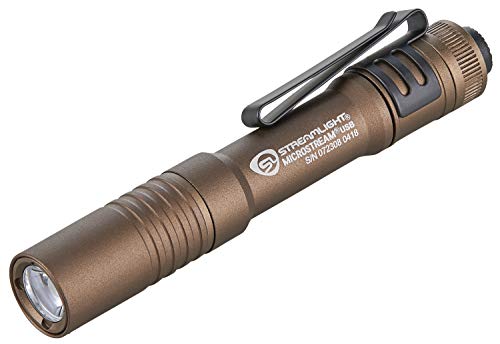
Streamlight MicroStream USB
Streamlight
250 lumens listed, USB topped-up, pen-sized: the light that wins by always being there.
Check price★ Our Top Pick
Best Overall
Streamlight MicroStream USB
250 lumens listed, USB topped-up, pen-sized: the light that wins by always being there.
Not sure yet? Compare all 5 picks below ↓
Here is the trick the flashlight aisle plays on everyone once: the giant lumen number on the box is a burst figure. Nearly every modern pocket light fires its headline output for a short window, then steps down, by design, to protect the battery and the emitter from heat, and the light you actually live with is the one making the sustained modes underneath. A light that bursts bright and settles dim is not lying exactly, but it is answering a question nobody asked. The question that matters is what the light does at minute twenty of a power outage, hour two of a car breakdown, or night three of a camping trip. That is the runtime trap, and it is the teaching spine of this whole guide: judge a light by its listed sustained and low-mode runtimes and by its battery format, and let the burst number be the tiebreaker it deserves to be.
Battery format is the half of the decision most reviews skip. AAA and AA lights run on cells you can buy at any gas station on earth, which makes them immortal in the field and perfect as spares and gifts; built-in USB rechargeable lights are cheaper to feed and always topped up, but a dead one is dead until it finds a cable. The price ladder here is friendly: the OLIGHT i3T EOS is about $12 of AAA slimness, the ThruNite Archer 2A V3 is about $23 of double-AA value, the Fenix E12 V3.0 is about $30 of single-AA workhorse, our overall pick the Streamlight MicroStream USB is about $43 with 250 lumens listed, and the bright-upgrade MacroStream USB tops the ladder at about $59 with 500 lumens listed. Every light on this list clears the only bar that matters, being small enough to actually carry, because the pocket light you have beats the thrower you left at home.
One disclosure, up front and plainly: no brand paid for a spot in this guide, nobody placed a product, and no manufacturer saw it before publication. Some links go to Amazon; if you buy through one we may earn a small commission at no extra cost to you, and that never moves a pick up or down. Outputs and runtimes below are the manufacturers' listed figures, hedged as such every time, and prices are approximate street prices at publication, so always check the live listing.
The short version
- Our pick is the Streamlight MicroStream USB (about $43): 250 lumens listed, USB recharging that keeps it alive in the daily rotation, and a body small enough that carrying it is automatic.
- The runtime trap is the whole category: headline lumens are burst figures that step down by design. Compare the listed sustained and low-mode runtimes, not the box number.
- Battery format is half the decision: AAA/AA lights (i3T, E12, Archer) get rescued at any gas station; USB lights (MicroStream, MacroStream) are always topped up but dead-is-dead without a cable.
- The OLIGHT i3T EOS (about $12) is the best cheap answer in the category: 180 lumens listed from one AAA in a body that vanishes into a coin pocket.
- Buy the MacroStream (about $59, 500 lumens listed) only if your nights are outdoor-sized; in hallways and under sinks, the extra output is mostly heat and step-downs.
| Light | Best for | Listed output | Battery format | Approx. price |
|---|---|---|---|---|
| Streamlight MicroStream USB | Our Pick | 250 lumens | Built-in, USB rechargeable | ~$43 |
| OLIGHT i3T EOS | Best AAA Slim | 180 lumens | 1x AAA | ~$12 |
| Fenix E12 V3.0 | Best AA Workhorse | 200 lumens | 1x AA | ~$30 |
| Streamlight MacroStream USB | Best Bright Upgrade | 500 lumens | Built-in, USB rechargeable | ~$59 |
| ThruNite Archer 2A V3 | Best Value 2xAA | Multi-mode | 2x AA | ~$23 |
The 2026 pocket-light shortlist at a glance. Outputs are the manufacturers' listed figures, burst numbers by nature, so weigh the battery format and the modes underneath. Prices are approximate street prices at publication, verified against our dataset in July 2026.
01 · Best Overall
Our PickStreamlight MicroStream USB
250 lumens listed, USB topped-up, pen-sized: the light that wins by always being there.
Field check: 250 lumens listed · USB rechargeable · duty-brand build at pocket scale
The best EDC light is the one that survives your own laziness, and that is the MicroStream's real spec. The MicroStream USB is small enough to clip on with your wallet and keys without a thought, and the USB charging closes the loop that kills most pocket lights: instead of dying quietly and waiting months for a battery run, it gets topped up on the desk cable and never leaves the rotation. Streamlight built its name on duty lights for cops and firefighters, and this is that build culture shrunk to pen scale.
Apply the runtime-trap lens and the MicroStream holds up honestly: 250 lumens listed is the burst headline, and like every modern light it steps down as heat builds, but its lower setting is where the light actually lives, and it is genuinely useful there, keyholes, breaker boxes, under-desk cable runs, dog walks. The two-hundred-lumen class is the sweet spot of pocket lighting: bright enough that you never feel underlit indoors, small enough that the light gets carried, which no 2,000-lumen pocket rocket that lives in a drawer can say.
- Listed output
- 250 lumens (burst; steps down by design)
- Power
- Built-in battery, USB rechargeable
- Carry
- Pocket clip, pen-sized body
- Approx. price
- ~$43
What we like
- 250 lumens listed from a body that disappears in a pocket
- USB top-ups keep it alive in the rotation
- Streamlight duty-light build heritage
- The best carry-rate-to-output balance in the category
Worth noting
- No gas-station rescue when the built-in battery dies
- Premium price over the AAA budget tier
- Headline output is a burst figure like every compact light
Who should buy it: Buy the MicroStream if you want one pocket light that actually gets carried daily: commuters, homeowners, hikers who want a hipbelt backup to the headlamp, anyone who has held a phone in their teeth over a fuse box. It is the default answer to the category, and the right first light in any kit.
What we don't like: About $43 is premium money in a category with $12 entries, and the built-in battery cannot be rescued at a gas station the way AA and AAA lights can. The clip and body are excellent but small, easy to misplace without a habit, and like every compact light, the headline 250 lumens listed is a burst figure, not a cruising output.
Bottom line: The MicroStream USB is the best answer to the question the category actually asks, which is not 'how bright' but 'which light is on you at 9 p.m.' It is pen-sized, clips flat, throws a genuinely useful 250 lumens listed, and recharges over the same cable as everything else you own, which is the quiet feature that keeps it alive in a daily rotation where battery-swap lights slowly die.
02 · Best AAA Slim

OLIGHT i3T EOS
180 lumens listed from one AAA, in a slim tube that costs about $12 and vanishes into any pocket.
Field check: 180 lumens listed · 1x AAA · the budget benchmark of pocket lights
Every category has a price where the argument gets hard, and in pocket lights it is twelve dollars. The i3T EOS delivers a listed 180 lumens, real, useful, indoor-and-most-outdoor brightness, from a single AAA battery in a tube slim enough to share a coin pocket with actual coins. The tail switch is simple and gloved-hand friendly, the two-way clip lets it ride a pocket edge or a hat brim, and the machining is far above what the price implies.
Run it through the teaching spine and the i3T tells the truth twice. First, its 180-lumen listed headline is a burst figure like everyone else's, and a single AAA is a small gas tank, so its high mode is a sprint by design; the low mode is the everyday setting, and it is the one that makes the listed runtime respectable. Second, the AAA format is the feature the spec sheet undersells: this light cannot be permanently dead anywhere batteries are sold, which is everywhere, and that makes it the perfect glovebox, junk-drawer, and loaner light, jobs a USB light does badly.
- Listed output
- 180 lumens (burst; steps down by design)
- Power
- 1x AAA, replaceable anywhere
- Carry
- Slim tube, two-way pocket clip, tail switch
- Approx. price
- ~$12
What we like
- Listed 180 lumens for about $12
- AAA format: revivable at any gas station on earth
- Slim enough to forget until you need it
- The perfect backup, glovebox, and gift light
Worth noting
- Small AAA tank makes high mode a sprint
- Daily carry becomes a battery habit without rechargeables
- Outgunned by everything above it on output
Who should buy it: Buy the i3T if you want a real light for the price of lunch: first-time carriers testing whether they will actually use a pocket light, anyone stocking gloveboxes and packs with backups, and gift-givers who want the most impressive $12 in gear. AAA rescue-ability makes it the right light to scatter through your life.
What we don't like: Single-AAA physics are real: the high mode is a short sprint, the runtime tank is small, and daily use turns into a battery habit unless you feed it rechargeable AAAs. It gives up output to everything above it on this list, and the slim tube, the whole point, is also easy to lose track of without the clip doing its job.
Bottom line: The i3T EOS is the strongest twelve dollars in this guide. One AAA cell drives a listed 180 lumens through a slim knurled tube with a simple tail switch and a two-way clip, and the AAA format means it can be revived at any checkout counter on the planet. It is the light you buy three of, pocket, glovebox, gift, and the honest first question it raises is whether you need to spend more at all.
03 · Best AA Workhorse

Fenix E12 V3.0
200 lumens listed from one AA: the bigger gas tank that turns a pocket light into a workhorse.
Field check: 200 lumens listed · 1x AA · enthusiast build on the world's most common battery
If the runtime trap has one antidote, it is a bigger gas tank on a boring battery. The E12 V3.0 runs on a single AA, the cell that lives in every remote, smoke detector, and junk drawer in the world, and that choice shapes everything good about it. More stored energy than any AAA light means the listed 200 lumens does not have to be quite such a sprint, the lower modes stretch into genuinely long listed runtimes, and an emergency resupply is any store with a checkout counter.
Fenix is one of the enthusiast brands that flashlight people graduate to, and the E12 carries that DNA at a friendly price: clean machining, a positive switch, and sensible mode spacing where the medium and low settings, the ones you actually live in, feel chosen by someone who uses flashlights rather than someone who sells them. At about $30 it splits the ladder neatly: twice the entry-level i3T for a meaningfully bigger tank and nicer build, well under the MicroStream while keeping the anywhere-battery superpower the Streamlight gave up.
- Listed output
- 200 lumens (burst; steps down by design)
- Power
- 1x AA, the world's most common cell
- Carry
- Compact tube, pocket clip
- Approx. price
- ~$30
What we like
- AA tank: roughly double a AAA's energy for real runtimes
- Enthusiast-brand machining and mode spacing
- Resupply is any store with a checkout counter
- The best outage and standardization pick in the guide
Worth noting
- Chunkier in a pocket than the AAA slims
- Modest headline output for the price
- Battery habit without rechargeable AAs
Who should buy it: Buy the E12 if you actually run your light, long dog walks, camp chores, outage duty, and want runtime and rescue-ability over peak sparkle: it is the best pure workhorse here. It is also the right pick for anyone standardizing their kit on AA batteries, which is the smartest boring decision in preparedness.
What we don't like: A AA body is necessarily chunkier than a AAA slim, so it prints more in dress pockets and loses the vanishing act the i3T does. About $30 buys build and tank rather than headline output, the 200 lumens listed will not impress anyone at the bar, and like all cell-fed lights it quietly costs batteries unless you feed it rechargeables.
Bottom line: The E12 V3.0 is what happens when a serious flashlight maker builds around the most common battery on earth. One AA cell, with roughly double a AAA's energy on board, drives a listed 200 lumens through a compact tube with Fenix's enthusiast-grade machining and mode spacing. It is the runtime-trap graduate's pick: chosen for the tank and the sustained modes, not the box number.
04 · Best Bright Upgrade

Streamlight MacroStream USB
The MicroStream's big brother: 500 lumens listed and a bigger battery, still honestly pocketable.
Field check: 500 lumens listed · USB rechargeable · the outdoor-sized step up
There is a size of darkness the 200-lumen class cannot push back, and it starts at the edge of your yard. Indoors, output past two hundred lumens is mostly bragging; outdoors, the inverse-square law eats light fast, and reaching across a campsite, a dark trailhead lot, or a field takes real output. The MacroStream USB is Streamlight's answer at that scale: 500 lumens listed, a noticeably bigger reflector and battery than the MicroStream, and the same clip-and-charge living pattern that makes its little brother our overall pick.
The runtime trap applies double at this tier, so read it honestly: 500 lumens listed is a burst figure, heat and battery protection step every compact light down from its headline, and the bigger body exists precisely to buy a longer sprint and stronger sustained modes than any micro light can hold. That bigger battery is also what makes the USB format work at this output; a AA-fed light at this brightness would eat cells for breakfast. The cost is carry: the MacroStream rides a pocket like a small flashlight rather than a pen, which is still absolutely carryable, just no longer invisible.
- Listed output
- 500 lumens (burst; steps down by design)
- Power
- Built-in battery, USB rechargeable
- Carry
- Compact flashlight size, pocket clip
- Approx. price
- ~$59
What we like
- 500 lumens listed: real outdoor-scale output
- Bigger battery holds stronger sustained modes
- Same USB top-up habit as the MicroStream
- Duty-brand build in a still-pocketable body
Worth noting
- Noticeably bigger carry than the pen-sized tier
- Priciest light in the guide at about $59
- No battery-aisle rescue when the cell runs down
Who should buy it: Buy the MacroStream if your regular dark is bigger than a room: campers and hikers at trailheads after sunset, rural and suburban homeowners with real yards, roadside-kit builders, dog walkers beyond the streetlights. It is the most light this list offers per unit of honest pocketability.
What we don't like: It is the biggest light here and the priciest at about $59, and both facts matter daily: it prints in slacks, and it competes with the MicroStream in a way that makes many buyers realize the smaller light fits their actual life better. The built-in battery has no gas-station rescue, and the 500-lumen listed headline steps down like every compact light, buy it for the stronger modes underneath, not the box number.
Bottom line: The MacroStream USB is the MicroStream formula scaled up one honest notch: double the listed output at 500 lumens, a bigger body with a bigger battery behind it, and the same USB top-up habit and duty-brand build. It is the right light for people whose dark is outdoor-sized, yards, trailheads, campsites, roadside breakdowns, and the wrong one for people who mostly light hallways.
05 · Best Value 2xAA
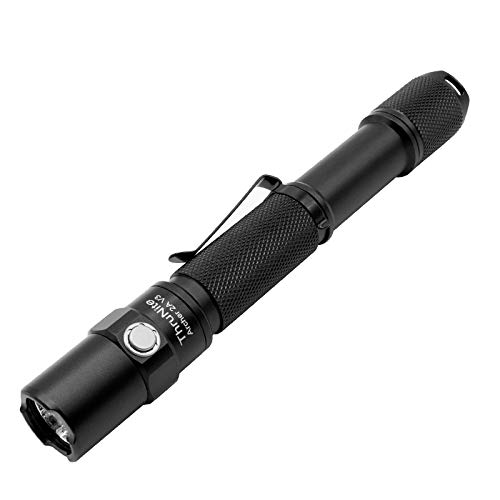
ThruNite Archer 2A V3
Two AA cells, a full spread of modes, about $23: the runtime pick for people who run lights hard.
Field check: 2x AA format · multi-mode with firefly low · the value runtime champion
Somebody in every household should own the light that simply refuses to die, and it costs about $23. The Archer 2A V3 runs on two AA cells, double the stored energy of the single-AA Fenix and several times the little AAA slim, and that tank is the entire argument. Long listed runtimes in the middle modes, a high mode that does not have to be quite such a sprint, and the anywhere-resupply superpower of the AA format, multiplied by two.
ThruNite is one of the value-enthusiast brands flashlight forums adopted years ago, and the Archer shows why: a real spread of listed modes from a firefly low, dim enough to check on a sleeping kid or read a map without wrecking your night vision, up through a working high, with a tail switch and a mode memory that behave sensibly. The firefly low deserves special mention under this guide's lens, because the runtime trap cuts both ways: the same marketing that oversells burst lumens undersells low modes, and a good firefly setting is what turns a flashlight from a torch into a tool you can run all night.
- Listed modes
- Multi-mode spread including firefly low
- Power
- 2x AA: the biggest replaceable tank here
- Carry
- Long body: jacket, pack, and nightstand light
- Approx. price
- ~$23
What we like
- Biggest replaceable-battery tank on the list
- Firefly low mode: the all-night, night-vision-safe setting
- AA resupply available literally everywhere
- About $23 for enthusiast-grade mode spacing
Worth noting
- Long two-AA body is the least pocketable here
- Modest peak output next to the bright tier
- Wants rechargeable AAs under heavy use
Who should buy it: Buy the Archer 2A if runtime is your whole question: campers on multi-night trips, emergency-kit and nightstand duty, power-outage insurance, and anyone who standardized the house on AA cells. It is the most light-hours per dollar on this page, and the firefly low makes it the best overnight and tent light here.
What we don't like: Two AAs make a long light, and it carries like one: this is the least pocketable pick in the guide and the wrong choice for slacks. The headline output will not chase the MacroStream, the styling is function-first, and as with every cell-fed light, hard daily use wants rechargeable AAs unless you enjoy buying batteries.
Bottom line: The Archer 2A V3 is the value answer to the runtime trap: two AA cells give it the biggest replaceable-battery tank on this list, and ThruNite spends that tank on a proper spread of listed modes, including the firefly low that enthusiasts refuse to live without. At about $23 it is the least pocketable light here and the last one to die, which is exactly the trade its buyers want.
More gear worth comparing
Beyond this guide: the highest-rated gear across every category and budget, with a live price check on each.




As an Amazon Associate we may earn from qualifying purchases, at no cost to you.
Quick shop: every pick
Skip the scroll — the whole lineup, with a live price check on each.
- Streamlight MicroStream USBBest OverallStreamlight · ~$43Check price →
- OLIGHT i3T EOSBest AAA SlimOLIGHT · ~$12Check price →
- Fenix E12 V3.0Best AA WorkhorseFenix · ~$30Check price →
- Streamlight MacroStream USBBest Bright UpgradeStreamlight · ~$59Check price →
- ThruNite Archer 2A V3Best Value 2xAAThruNite · ~$23Check price →
How we chose
We judge pocket lights the way owners live with them, which means the burst number goes last. First, carry: a light that is not on you is a zero-lumen light, so size, clip, and pocket manners outrank output. Second, the modes underneath: manufacturers publish listed runtimes per mode, and the honest read of any light is its sustained output and its low mode, the settings that do ninety percent of real work, finding keyholes, reading tent labels, walking a dog. Headline lumens are burst figures that step down by design as heat builds, so we treat them as a sprint stat, not a cruising speed.
Third, the battery question, because it decides how the light fails. AAA and AA lights fail gracefully: any gas station, junk drawer, or hiking partner can revive them. Built-in USB lights fail conveniently: they rarely die because topping up is effortless, but when they do die, no store sells the fix. Neither format wins outright; we match format to owner. Every output and runtime figure in this guide is the manufacturer's listed spec, checked against our PA-API-verified dataset and hedged as 'listed' every time, prices are approximate street prices at publication, and no brand has bought a placement.
Key terms
- Burst output
- The headline lumen figure on the box, which nearly every compact light sustains only briefly before stepping down to manage heat and battery. It is a real number and an honest sprint stat, but the sustained modes underneath are what you own. This guide's core rule: never buy on the burst figure alone.
- Step-down
- The programmed drop from a light's maximum output to a lower sustained level as heat builds, standard behavior in every modern compact light, not a defect. The listed runtime table shows the pattern; a light with a strong sustained level after step-down beats one with a flashier burst.
- Sustained runtime
- The listed time a light holds a given mode, the spec that describes real ownership: outage nights, camp evenings, long dog walks. Manufacturers publish it per mode, and comparing lights on mid-mode and low-mode runtimes is the fastest way to escape the lumen arms race.
- Firefly (moonlight) mode
- An ultra-dim lowest setting, bright enough to read a map or check a tent without wrecking dark-adapted eyes, and frugal enough to run for very long listed stretches. The mode marketing undersells and owners end up using most; the Archer 2A carries the best one on this list.
- Battery format
- The other half of every flashlight decision: AAA/AA lights can be revived at any store on earth but cost batteries over time, while built-in USB lights are always topped up but unrescuable when dead away from a cable. Match the format to how the light will fail: USB for daily carriers, cells for backups and kits.
Questions, answered
What is the best EDC flashlight?
Our pick is the Streamlight MicroStream USB (about $43): 250 lumens listed from a pen-sized body, a clip that makes daily carry automatic, and USB top-up charging that keeps it alive in the rotation where battery-swap lights quietly die. If the budget is lunch money instead, the OLIGHT i3T EOS (about $12, 180 lumens listed from one AAA) is the strongest cheap answer in the category, and plenty of people sensibly own both, the Streamlight in the pocket and the OLIGHT in the glovebox.
How many lumens do I actually need in a pocket flashlight?
Fewer than the boxes suggest. Indoors, keyholes, breaker panels, under furniture, anything from roughly 50 to 200 lumens is comfortable, which is why the 180-to-250-lumen listed class (i3T, E12, MicroStream) covers most lives. Outdoor-sized dark, yards, trailheads, roadside shoulders, is where the 500-lumen listed MacroStream earns its space. And remember the runtime trap: headline lumens are burst figures that step down by design, so the sustained and low modes matter more than the peak.
Are flashlight lumen ratings accurate?
The listed numbers from reputable brands (Streamlight, Fenix, OLIGHT, ThruNite) are generally honest measurements of maximum output, but maximum is the key word: compact lights sustain their headline for a short window, then step down to manage heat and battery, by design. The number to distrust is not the lumen figure, it is the implication that the light runs there. Read the listed runtime table per mode, and compare lights on sustained output; no-name listings claiming thousands of lumens from a tiny body deserve outright skepticism.
Is a rechargeable flashlight better than one that takes AA or AAA batteries?
They fail differently, so match the format to the job. Built-in USB lights like the MicroStream and MacroStream are better daily carriers: topping up is effortless, so they are effectively always charged, and they never cost you another battery. AA and AAA lights like the E12, i3T, and Archer are better backups and kit lights: they can sit ready for years and be revived at any gas station, while a dead USB light is dead until it finds a cable. The robust household answer is one of each.
Streamlight MicroStream vs MacroStream: which should I buy?
Buy by the size of your dark. The MicroStream (about $43, 250 lumens listed) is the daily carrier: pen-sized, invisible in a pocket, and bright enough for every indoor job and most outdoor moments. The MacroStream (about $59, 500 lumens listed) doubles the listed output with a bigger battery and body, which matters for yards, campsites, trailheads, and roadside dark, and costs you the vanishing act. Hallway-sized dark: MicroStream. Outdoor-sized dark, or a car kit: MacroStream. When in doubt, the smaller light gets carried more, and carried beats bright.
Why does my flashlight get dim after a few minutes?
That is the step-down, and it is a feature, not a fault. Compact lights cannot shed the heat their maximum mode generates, so they are programmed to drop to a sustainable output as temperature and battery drain build, protecting the emitter and the cell. Every light in this guide does it, including the premium ones. If the dimming bothers you in practice, the fixes are a bigger light with more thermal mass (the MacroStream over the MicroStream), a bigger battery tank (the two-AA Archer), or simply running the mid mode, which is usually close to the post-step-down level anyway.
Do I need a flashlight if my phone has one?
The phone light is real, and it is the wrong tool the moment a job takes two hands, which is most jobs after dark. A clipped pocket light aims where you look, survives drops that would total a phone screen, runs without draining the device you may need for a call, and in the case of AA and AAA lights, keeps working long after the phone is dead. At the i3T's twelve dollars, the insurance is nearly free. The phone flashlight is the backup, not the plan.
What is the best flashlight for camping and hiking?
Split the job in two. In camp and on trail, the primary should be a headlamp, hands-free is not negotiable for cooking, setting up a tent, or hiking out in the dark, and our headlamp guide covers that field. The pocket light is the sibling: a MicroStream or i3T in the hipbelt pocket backs up the headlamp, handles tent-finding and midnight errands, and rides home to civilian duty on Monday. For basecamp and multi-night runtime, the two-AA ThruNite Archer with its firefly low is the best tent light on this page.
Filed under Buyer's Guide
Keep reading
The Best EDC Gear: The Everyday Carry Kit Worth Pocketing (2026)
The full four-slot kit this light anchors: blade, wallet, pen, and the organizer that keeps it pocketable.
The Best Headlamps (2026)
The trail sibling: hands-free beams for camp chores, dawn starts, and hiking out after dark.
The Best Multitools (2026)
The other pillar of a working pocket kit: pliers-grade capability that still gets carried.
The Best Power Banks for Thru-Hiking (2026)
The same judged-by-the-worst-hour math, applied to the battery that recharges your USB light.
The Best Gifts for Hikers (2026)
Pocket lights are the most reliably loved gift in gear: the full list of safe bets.